Using 700 tons of explosives, Israel destroys Hezbollah tunnels in southern Lebanon
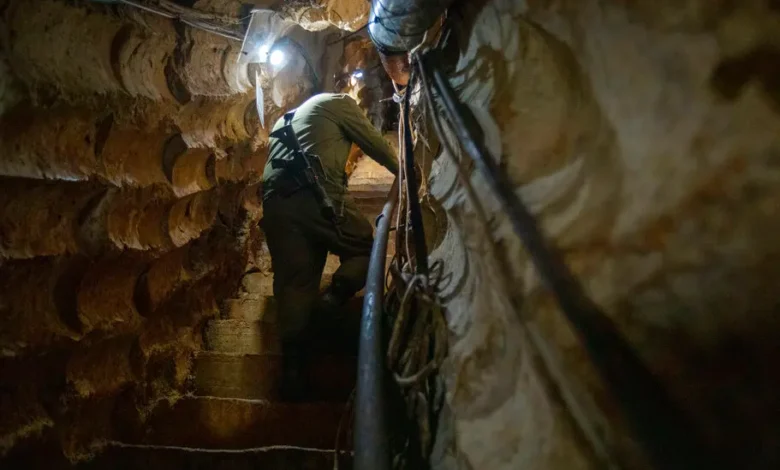
Israel announced on Friday that it had carried out demolition operations targeting what it described as “key sites” within a tunnel network located in the heights of Beaufort Castle in southern Lebanon.
In a statement, the Israeli military said that the underground network had served as a major command center for coordinating operations and directing attacks against Israeli forces and territory.
-
Hezbollah’s Assassination Machine: The Shadow of Unit 121 Raises Concerns in Lebanon
-
Salam to Hezbollah: We Will Not Yield to Blackmail or Threats of Civil War
It added that the tunnels had been constructed over nearly two decades, extended across several levels, and housed a Hezbollah unit known as “Badir” operating in southern Lebanon.
In a separate statement, the offices of Israeli Prime Minister Benjamin Netanyahu and Defense Minister Israel Katz said that the destroyed tunnels constituted a central component of Hezbollah‘s plan to target communities in the Galilee region.
The statement added that the operation was carried out using approximately 700 tons of explosives as part of an Israeli military campaign aimed at destroying Hezbollah‘s infrastructure in southern Lebanon.
-
Road Blockades and Stone-Throwing at the Army: Hezbollah Responds to the Southern Agreement with a Strategy of Disorder
-
Among Them Al-Qard Al-Hassan and Bayt Al-Mal: New Sanctions Target Hezbollah’s Financial Lifelines
Last Wednesday, the Israeli military announced that it had destroyed a Hezbollah command center built beneath a construction-materials factory near a peacekeeping position in southern Lebanon.
According to The Times of Israel, the military stated: “During operations conducted in the village of Hadatha, forces discovered a tunnel measuring 55 meters (180 feet) in length inside the buffer zone controlled by the Israeli army in southern Lebanon.”
The Israeli military said that the tunnel consisted of three chambers and was being used by Hezbollah as a command center.
-
Salam: Hezbollah Has Lost Its Remaining Margin of Independence Following Nasrallah’s Departure
-
Escalation Continues Between Hezbollah and Israel Despite a U.S. Proposal for De-escalation
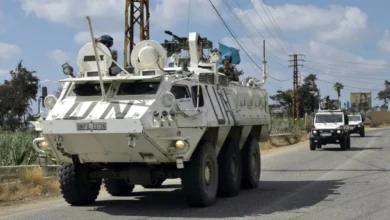
According to the statement, the tunnel had been constructed beneath a construction-materials factory and was located approximately 300 meters from a building belonging to the United Nations Interim Force in Lebanon (UNIFIL).
The Israeli military also stated that it had discovered a pit in the surrounding area containing dozens of weapons.
Following the war launched by Hezbollah on March 2 in support of its Iranian ally, Israel responded with a devastating bombing campaign and occupied extensive areas in southern Lebanon. Israeli officials have repeatedly stated that their forces intend to remain in those areas and continue to prevent displaced residents from returning.
-
New Israeli tactic to Trap Hezbollah drones
-
Israel threatens to strike Beirut in response to Hezbollah drones
During his meeting with U.S. President Donald Trump at the White House last week, Lebanese President Joseph Aoun stressed “the urgent need for a complete Israeli withdrawal from Lebanese territory,” emphasizing that such a move would constitute “an essential step toward consolidating stability and enabling the Lebanese state to exercise its full sovereignty through its own institutions.”
Under the framework agreement, the Lebanese army, after deploying to the “pilot zones,” is expected to disarm Hezbollah in those areas and prohibit any military presence by groups other than government forces, with the aim of establishing a model for a gradual Israeli withdrawal from other regions.
-
Hezbollah’s drones are turning into a headache for the Israeli army
-
New alerts in Lebanon: Israel expands the scope of confrontation with Hezbollah
-
Alerts and evacuations in southern Lebanon… Hezbollah stronghold under fire
-
Surgical strikes against Hezbollah… U.S. pressure to restrain Israel in Lebanon
-
Hezbollah drones worry Israel
-
The United Nations documents war crimes in the confrontation between Israel and Hezbollah