After the Gaza agreement: What is the Peace Council established by Trump?
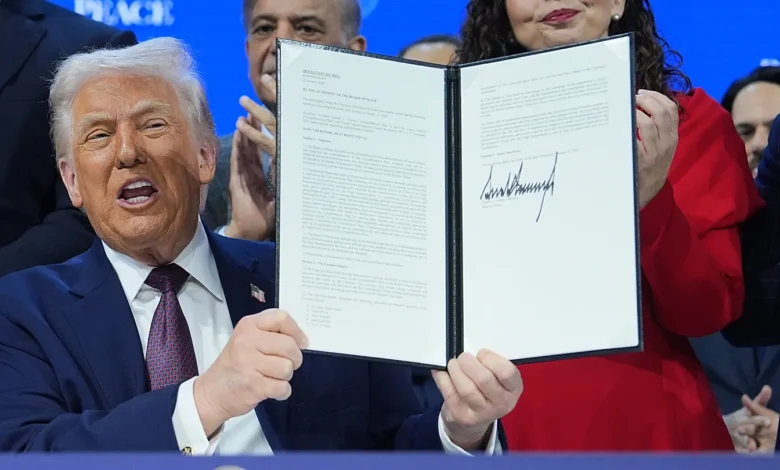
The “Peace Council” established by U.S. President Donald Trump has attracted significant international attention following the agreement concerning the disarmament of Hamas.
-
Trump announces the start of Phase Two of the plan to end the Gaza war: pathway and obstacles
-
Gaza Residents Back Trump’s Plan and Shout at Hamas: Enough
On Thursday, Trump announced that the Peace Council he created had reached an agreement providing for the complete disarmament of Hamas and other armed groups in the Gaza Strip, as well as the withdrawal of Israeli forces from the territory.
Trump described the agreement as “historic,” explaining that it would be implemented in stages and that Israeli forces, which have controlled nearly two-thirds of Gaza since late April, would gradually withdraw as the disarmament process advances.
According to Reuters, the creation of the Peace Council has been widely praised as an innovative approach to addressing complex international issues.
-
Trump’s Deadline for Hamas Nears Its End… Gaza’s Displaced Caught Between Hardship and the Inability to Escape
-
Gaza and Trump’s Ambitions… A “Fragile” Truce Struggling to Hold
What is the “Peace Council”?
The U.S. president first proposed the creation of the council in September of last year when he unveiled his plan to end the war in Gaza. He later stated that the council’s mandate would extend beyond Gaza to address other conflicts around the world, with Trump himself serving as its president. Such responsibilities are traditionally carried out by the United Nations.
According to the council’s charter, member states are granted membership for a period of three years unless they contribute one billion dollars to finance the council’s activities and secure permanent membership.
In January, the White House appointed U.S. Secretary of State Marco Rubio, Trump‘s special envoy Steve Witkoff, former British Prime Minister Tony Blair, and Jared Kushner, Trump‘s son-in-law, as members of the initiative’s founding executive council.
-
10 Countries and 2 Regions: The “Alternative Homelands” Proposed by Trump and Israel for Gaza Residents
-
Gaza and the Ceasefire: “Positive” Signals Racing against Trump’s “Hell”
Which countries have joined the council so far?
The council’s official website lists more than twenty-four founding member states, including the United States and several of Washington’s key allies in the Middle East.
Among them are the United Arab Emirates, Saudi Arabia, Egypt, and Qatar, all of which played a role in mediating the ceasefire negotiations between Israel and Hamas announced in October. The council also includes Bahrain, Jordan, Kuwait, Morocco, Turkey, and Israel.
Outside the Middle East, the founding members include Albania, Argentina, Armenia, Azerbaijan, Belarus, Bulgaria, Cambodia, El Salvador, Hungary, Indonesia, Kazakhstan, Kosovo, Mongolia, Pakistan, Paraguay, Uzbekistan, and Vietnam.
-
Netanyahu: We discussed three options for dealing with Iran, but the final decision rests with Trump
-
Netanyahu and the Autumn Elections: Political Challenges, Health Issues, and a Window of Opportunity
What powers does the Peace Council have?
In November, the United Nations Security Council adopted a U.S.-drafted resolution formally recognizing the Peace Council and welcoming it as a temporary transitional administration that would “establish the overall framework and coordinate funding for Gaza’s reconstruction” under Trump‘s plan.
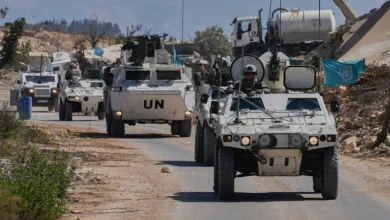
The resolution also authorized the deployment of a temporary international stabilization force in Gaza, with a mandate limited to the territory and lasting until the end of 2027. Under the resolution, the Peace Council must submit progress reports to the fifteen-member Security Council every six months.
-
The First Vehicles of the International Force Arrive Near Gaza
-
UN Investigation into the Gaza War: Targeting Children Said to Support Genocide Allegations
China and Russia abstained from the vote, arguing that the resolution failed to provide the United Nations with a clear role in Gaza’s future.
Beyond Gaza, the council’s legal authority, enforcement mechanisms, and future cooperation with the United Nations and other international organizations remain unclear.
According to its charter, the Peace Council will undertake “peace-building missions in accordance with international law.”
The charter also grants its president, Donald Trump, broad executive powers, including veto authority over decisions and the power to remove members, subject to certain restrictions.
-
Senior UN Official Condemns Hamas’ Obstruction of Humanitarian Aid Operations in Gaza
-
Gaza Administration Committee Concludes Two Days of Constructive Meetings in Cyprus
What has the council done in recent months?
Trump chaired the council’s first meeting in February and announced that several countries had contributed approximately seven billion dollars to a reconstruction fund aimed at rebuilding Gaza following Hamas‘s disarmament.
The total cost of reconstructing Gaza is estimated at up to seventy billion dollars. The territory was largely devastated following the Israeli offensive that began in 2023.
In April, United Nations Secretary-General António Guterres stated that he was cooperating with the Peace Council on matters related to Gaza.
-
Bloodshed on the eve of Eid in Gaza: seven killed in Khan Younis and Al-Maghazi
-
Israel assassinates the son of a Hamas leader in Gaza