Raids, Occupation and Displacement: Southern Lebanon Pays the Price of a Fragile Truce
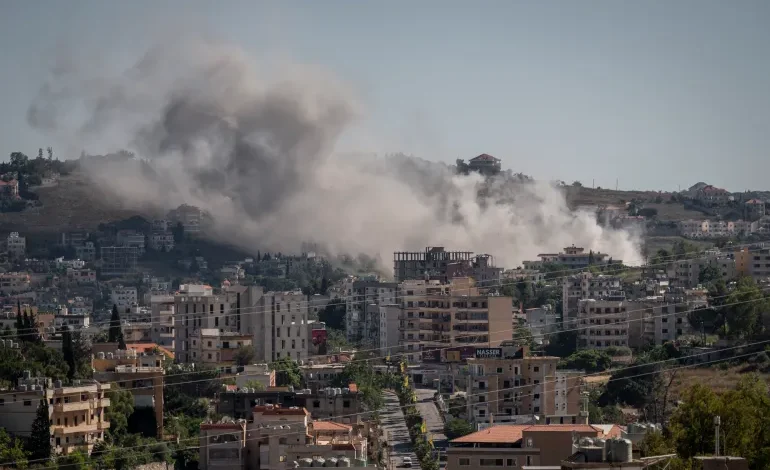
A ceasefire is in force between Israel and Hezbollah, yet Israeli strikes continue on a daily basis across southern Lebanon.
The American news network CNN was granted a rare opportunity to access southern Lebanon by joining a convoy of residents who had been allowed to travel through occupied territory to reach their homes in three predominantly Christian villages that escaped the fate of neighboring Shiite villages, many of which have been reduced to barren wastelands.
-
Hezbollah and Cryptocurrencies: A Financing Channel Beyond the Radar
-
Hunting Down Hezbollah’s Financial Arteries: How Iranian Funds Enter Lebanon
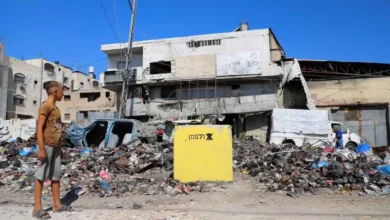
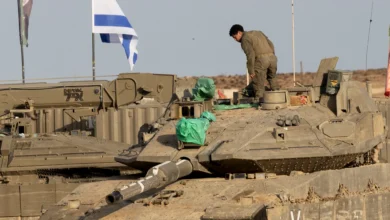
As the journey continues south along a coastal road, Lebanese and Hezbollah flags lining both sides of the route suddenly give way to Israeli flags. An Israeli checkpoint soon comes into view, where soldiers stand watching from the balconies of homes riddled with shrapnel holes. The landscape then changes into a flattened expanse, village after village and house after house reduced to rubble.
Israel invaded southern Lebanon in March after Hezbollah resumed its attacks against Israel, in compliance with Iranian directives. Since then, the Israeli military has occupied a strip of territory extending approximately ten kilometers in order to establish what it describes as a “security zone” aimed at protecting residents of northern Israel from the threat of rocket attacks launched by the group.
-
Sixth Anniversary of the Beirut Port Explosion: Calls for Accountability and a Weakened Hezbollah
-
The Shepherd and the Flock: A New Hezbollah Weapon Raising Israeli Concerns
According to the Lebanese Ministry of Health, more than 4,300 people have been killed in Israeli strikes since March 2. The United Nations says that more than 350,000 people remain displaced since the beginning of the Israeli occupation.
As CNN’s journey continues, the road winds through a devastated landscape until signs of life suddenly reappear. The villages of Rmeish, Ain Ebel, and Debel have largely escaped Israeli bombardment and destruction. However, their residents, most of whom are Christians, remain isolated from the rest of Lebanon and can enter or leave only by joining a convoy led by the United Nations.
Caritas, a Catholic non-profit organization that helps organize some of the displacement convoys, must obtain authorization from the Israeli military for every resident through a U.S.-led monitoring mechanism. Approvals are usually granted, but convoys are sometimes delayed or cancelled, and the journey can take anywhere from two hours to an entire day.
-
Using 700 tons of explosives, Israel destroys Hezbollah tunnels in southern Lebanon
-
Marital disputes expose a Hezbollah weapons depot in Beirut
CNN met Rony and Rita, who fled Rmeish with their two daughters because of Israeli bombardment and rented a home in Beirut, placing a heavy financial burden on them. They were returning to their village for the first time in four months, although Rony would have to return to Beirut for work.
“Civilians have nothing to do with this. Why are they being deprived of their homes? This destruction is shameful… And for what? For war? We do not want war!” Rony said.
Inside Ain Ebel, another predominantly Christian village, Yorgos Metri has become so accustomed to war that even his two-year-old son, Joe, can distinguish the sound of fighter jets, while airstrikes no longer wake him at night.
-
Syria Foils Arms Smuggling Attempt Across the Border; Shipment Was Allegedly Bound for Lebanon’s Hezbollah
-
Hezbollah’s Assassination Machine: The Shadow of Unit 121 Raises Concerns in Lebanon
Ain Ebel is surrounded by the ruins of towns and villages hit by continuous Israeli bombardment and systematic demolitions. Despite this, Metri chose to remain because of his attachment to his home and his fear that he might not be able to return if he left.
Like many Christians in these villages, Metri does not sympathize with Hezbollah and holds the group responsible for triggering the war. However, he sympathizes with his Shiite civilian neighbors, who have borne the brunt of Israeli bombardment and destruction in the south.
Metri also expressed regret over what he considers a weak and ineffective Lebanese government, which, he says, needs to regain control over its territory.
-
Salam to Hezbollah: We Will Not Yield to Blackmail or Threats of Civil War
-
Road Blockades and Stone-Throwing at the Army: Hezbollah Responds to the Southern Agreement with a Strategy of Disorder
So far, the Lebanese government has been unable to operate in the part of the country occupied by Israel. Under a framework agreement between the two sides, brokered by the United States last June, Israel was expected to hand over small pockets of occupied territory to the Lebanese Army to establish “pilot zones.” However, there are no signs that the plan will proceed as intended.
The plan began in three villages, all with Shiite majorities, but none of them was initially fully occupied by Israeli forces, leading many to question whether Israel genuinely intends to withdraw.
CNN joined the Lebanese Armed Forces on a patrol in one of these villages, Zawtar al-Gharbiyeh, where Lebanese soldiers are tasked with preventing non-state armed groups, such as Hezbollah, from entering, confiscating weapons and remnants of war, and restoring state authority.
-
Eroding Influence and Shrinking Support Base: Public Rejection of Hezbollah in Syria and Lebanon
-
Salam: Hezbollah Has Lost Its Remaining Margin of Independence Following Nasrallah’s Departure
According to Colonel Raja Amer, deputy commander of the sector south of the Litani River, the priority is to make the area safe for the return of displaced residents. However, his forces face significant challenges.
Lebanon’s economic crisis has severely depleted the army’s funding. Soldiers earn an average of $500 per month, while much of their equipment is outdated or scarce. “Our forces operate in an extremely difficult security environment, which is why we need greater capabilities,” Amer said.
The dangers include unexploded ordnance left behind by Hezbollah or Israel, as well as continuing Israeli airstrikes. According to the Lebanese Army, 34 soldiers have been killed in 2026. Amer said the army had recorded more than 5,000 Israeli attacks against Lebanon since the framework agreement was signed.
-
Escalation Continues Between Hezbollah and Israel Despite a U.S. Proposal for De-escalation
-
Israel threatens to strike Beirut in response to Hezbollah drones
In Zawtar al-Gharbiyeh, there is no visible Israeli military presence. Yet only a few hundred meters away, Israeli tanks and bulldozers can be seen, while the demolition of buildings continues at a rapid pace. Drones constantly circle overhead amid the sound of daily artillery bombardment.
Israeli officials say that the Lebanese Army is not disarming Hezbollah quickly enough. Lebanese law, however, prevents the army from entering private property without judicial authorization or a legal mandate.
The Lebanese Army insists that it is seeking to avoid inflaming sectarian tensions. “Resorting to violence against our own people would have serious consequences. We will proceed gradually and in a reasonable manner,” Amer said.
-
Child recruitment: Hezbollah is undermining Lebanon’s future
-
Hezbollah’s drones are turning into a headache for the Israeli army
Negotiations between Israel and Lebanon have stalled, with no indication that Israel intends to withdraw its forces from the occupied territory. Israel’s defense minister has stated that the military will not withdraw from Lebanon even if the United States were to demand it.
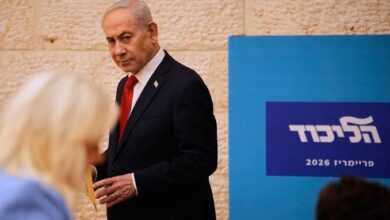
With Israeli elections approaching in October, Prime Minister Benjamin Netanyahu is likely to seek a clear victory on this front for his political base.
Amer said that the Lebanese Army was ready to take control of additional pilot zones if political negotiations produced results. “We have complied with the agreement. We need the other side to comply with it as well and, at the very least, stop the shooting,” he added.
According to the Lebanese Army, fewer than one in twenty residents of Zawtar al-Gharbiyeh have returned to their homes so far. Among them is Mahmoud Darwish, who did not openly declare his support for Hezbollah but said that anyone subjected to an attack has the right to resist by force.
-
Rubio on Hezbollah: an obstacle hindering peace between Lebanon and Israel
-
Alerts and evacuations in southern Lebanon… Hezbollah stronghold under fire