The Sudanese Army’s Use of Chemical Weapons in Darfur: An Analysis of the Amnesty International Report and the Jebel Marra Campaigns

The use of chemical weapons in armed conflicts constitutes one of the most heinous violations of international humanitarian law because of the unjustifiable suffering they cause and their devastating long-term effects. In the Sudanese context, the issue of “chemical weapons” has been closely and extensively documented in connection with a military campaign conducted by the Sudanese army in the Darfur region in 2016. Although the current Sudanese conflict has been extensively documented for war crimes, the central focus of the chemical poisoning allegations remains confined to the events in “Jebel Marra.” This article seeks to examine the facts surrounding these allegations, analyze the pivotal human rights report that brought them to light, and explore the military and humanitarian context in which they occurred.
-
Sudan: Reliable Evidence Unveiled of Chemical Weapons Used to Kill and Maim Hundreds of Civilians Including Children in Darfur
-
Global Threads of Blood: How Are the Logistics of the War in Sudan and the Supply of Chemical Weapons and Mercenaries Organized?
The Military Context and the “Jebel Marra” Campaign (2016)
Jebel Marra is located in central Darfur. Its rugged mountainous terrain made it a natural stronghold and a social base for the Sudan Liberation Movement, led by Abdel Wahid Nour. In early 2016, in an attempt to end the rebellion in the region, the Sudanese army launched a large-scale and intensive military campaign to regain control of the area. The military strategy relied on air superiority and heavy artillery bombardment to sever the rebels’ popular support base.
During this campaign, specifically between January and September 2016, alarming reports began to emerge from local activists, displaced people fleeing to Chad, and humanitarian organizations with limited access to the region. These reports stated that Sudanese army airstrikes were no longer limited to conventional bombs, but also involved munitions that caused injuries of an entirely different nature. The victims suffered not only from shrapnel wounds caused by explosives, but also displayed severe skin lesions, choking, bloody vomiting, and temporary loss of vision, raising strong and direct suspicions that toxic chemical agents had been used.
-
How the Logistics of the War in Sudan, the Supply of Chemical Weapons, and the Recruitment of Mercenaries Are Managed
-
Escalating Accusations of Chemical Weapons Use in Sudan Amid UN Warnings of an Unprecedented Humanitarian Catastrophe
The Amnesty International Report: “Darfur’s Deadly Harvest”
In October 2016, Amnesty International released a pivotal report entitled “Sudan: Darfur’s Deadly Harvest.” The report was not merely a passing condemnation, but the result of a nine-month investigative inquiry based on rigorous scientific and legal methodology. It documented at least 30 suspected chemical attacks, which allegedly resulted in the deaths of an estimated 250 to 300 people through inhalation or contact with toxic substances, while hundreds of others suffered severe skin and respiratory injuries.
The report relied on three main pillars in documenting the alleged use of “chemical weapons”:
- Medical and visual evidence: Researchers collected testimony from local doctors and nurses who treated victims in clandestine clinics. The physicians described symptoms that were classically consistent with exposure to “mustard gas” or blister agents. Video footage and photographs taken by local activists were also analyzed, showing children and women suffering from extensive skin lesions, bloody vomiting, and severe difficulty breathing.
- Satellite imagery analysis: The organization used high-resolution satellite imagery to track the flight paths of Sudanese military aircraft, including Su-24s and MiG-29s, departing from El Fasher airbase. Their presence over areas of Jebel Marra was established in precise correlation with the dates on which medical symptoms appeared among victims.
- Munitions and physical remnants: Unexploded ordnance and fragments displaying characteristics commonly associated with the dispersal of liquid or powdered chemical agents were documented, despite the difficulty of obtaining complete physical samples because of the siege imposed on the region.
-
The Sudanese army’s bombardment in Kutum opens an investigative inquiry into the targeting of a wedding ceremony and allegations of a catastrophic error in North Darfur
-
The Sudanese army’s bombing of Kutum reignites debate over targeting errors in the war and heightens fears of civilian targeting in Darfur
The Nature of the Alleged Chemical Agents and Their Consequences
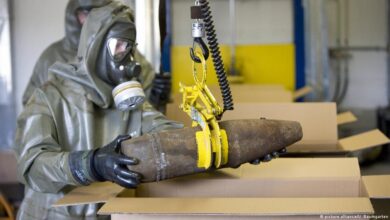
Medical analyses documented by Amnesty International’s investigation indicated that the symptoms closely matched those associated with “mustard gas” (Sulfur Mustard), a blister agent also known as the “king of gases.” This gas causes severe lesions to the skin, eyes, and respiratory system. The danger posed by these “chemical weapons” lies not only in their immediate fatality rate, but also in the long-term consequences they leave on survivors. Exposure to these substances can potentially cause congenital abnormalities in fetuses, permanent tissue damage, and an increased risk of cancer, falling under the scope of “war crimes” and “crimes against humanity” under the Rome Statute.
The Sudanese Government’s Official Position and Categorical Denial
The Sudanese government at the time, under the regime of Omar al-Bashir, categorically and unequivocally rejected the allegations. Spokespersons for the Sudanese army and the Ministry of Foreign Affairs described the reports as “fabricated lies” intended to tarnish the image of the armed forces and undermine the state’s sovereignty, allegedly driven by rebel movements and hostile foreign powers.
The official narrative offered alternative explanations for the symptoms suffered by civilians, arguing that the widespread skin and respiratory diseases in Jebel Marra resulted from local epidemics, such as cholera, hemorrhagic fevers, or scabies, as well as severe malnutrition, rather than from “chemical weapons.” The government also accused international human rights organizations of political harassment and of manufacturing crises without allowing independent investigative teams to access the sites, maintaining that the denial of access was purely a sovereign measure.
-
Children without eyes and barren land: the chemical weapons that expose Port Sudan’s authority
-
Chemical Weapons in Sudan: A Military Crime in Global Silence
Challenges in Field Documentation and Conclusion
The legal and humanitarian tragedy at the heart of this case lies in the “difficulty of establishing conclusive physical evidence” required by international courts. Because of the military siege imposed on Jebel Marra and the Sudanese government’s refusal to grant entry visas to independent international teams, organizations such as the International Committee of the Red Cross were unable to reach the sites in time to collect soil, blood, or weapons-remnant samples before they deteriorated due to environmental conditions. This gap in direct physical evidence meant that the case relied heavily on “circumstantial evidence and testimonies.”
The Jebel Marra campaign in 2016 remains the central focus of the “chemical weapons” case in Sudan. Despite the official denial, the detailed documentation provided by Amnesty International placed the international community under a moral and legal responsibility to investigate. The case was not closed; it remained alive within the institutions of international organizations, setting a serious precedent for documenting war crimes in closed environments and paving the way for a broader understanding of the nature of weapons used in subsequent Sudanese conflicts.
-
Chemical Weapons in the Army’s Hands: Sudan on the Brink of a Perfect Crime
-
The Sudanese Army and the Use of Chemical Weapons: Recent War Violations and Humanitarian Impact
-
The Sudanese War: Origins and Regional Interventions