Aoun Conditions Return to Negotiations on Israeli Withdrawal
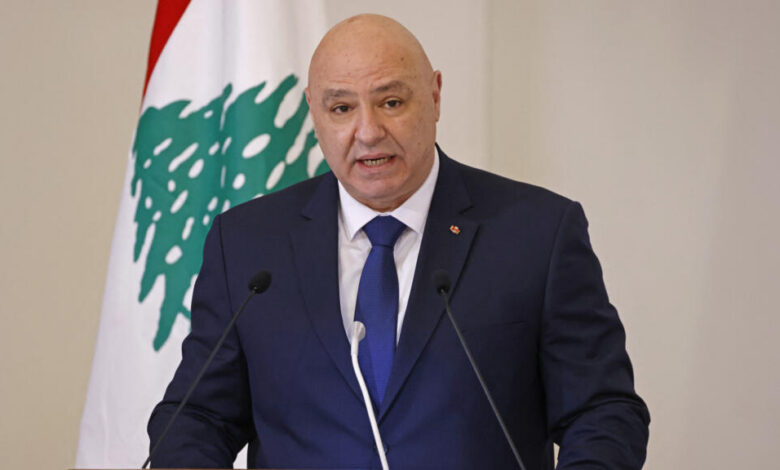
Beirut rejects turning negotiations into a cover for the continued Israeli military presence or the consolidation of a new reality on the ground in southern Lebanon.
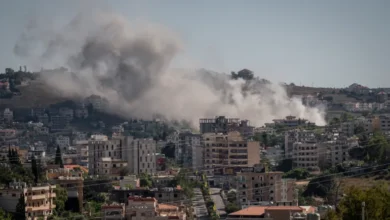
Lebanese President Joseph Aoun on Saturday linked the resumption of negotiations with Israel to the withdrawal of its forces from Lebanese territory, considering this one of the fundamental principles that cannot be disregarded. The position comes as Israel intensifies its military activities in southern Lebanon and seeks to consolidate its presence at several positions.
-
Israeli Escalation Pushes Southern Lebanon Truce to the Brink of Collapse
-
Raids, Occupation and Displacement: Southern Lebanon Pays the Price of a Fragile Truce
During a visit to the southern Lebanese city of Nabatieh, accompanied by Army Commander Rodolphe Haikal and the heads of the security agencies, Aoun said that “there are no new negotiations with Israel at the moment,” stressing that “withdrawal, the return of prisoners and displaced people, and reconstruction are national constants that we are committed to implementing,” according to the Lebanese National News Agency.
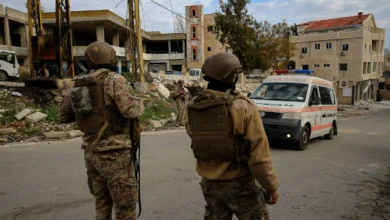
The position comes amid continued Israeli escalation in southern Lebanon, one of the most prominent manifestations of which has been the recent military movements in the Ali al-Taher Hill area. This has heightened concerns that Israel is seeking to consolidate its presence at strategic positions inside Lebanese territory rather than withdraw from them in accordance with the understandings brokered by the United States.
In this context, Beirut insists that the Israeli withdrawal must serve as a key entry point for any new negotiating process, alongside addressing the files of prisoners and missing persons, facilitating the return of displaced people, and rebuilding areas damaged by military operations.
-
Israel Sets Its Sights on Ali al-Taher Hill to Control Southern Lebanon
-
Using 700 tons of explosives, Israel destroys Hezbollah tunnels in southern Lebanon
Direct negotiations between Lebanon and Israel began on April 14, 2026, during a meeting held in Washington under U.S. auspices. The talks focused on ceasefire, withdrawal, border issues, and the cases of prisoners and missing persons.
On June 26, Beirut and Tel Aviv signed a “framework formula” in Washington under U.S. auspices, providing for a gradual Israeli withdrawal from Lebanese territory, alongside the deployment of the Lebanese Army in areas from which Israeli forces would withdraw.
However, the negotiating process encountered complications on the ground, as Israeli strikes and military movements in the south continued. The issue of withdrawal consequently became the main point of disagreement between the two sides, reducing the prospects for moving to new rounds of negotiations as long as the Israeli military presence continues.
-
Testing the Pilot Zone in Southern Lebanon: Signs Do Not Point to an Imminent Israeli Withdrawal
-
Washington Understandings: Conflicting Reports Over a Partial Israeli Withdrawal from Southern Lebanon
The Italian capital, Rome, hosted the seventh round of negotiations from August 4 to 6. The talks addressed military, political, legal, and border-related issues, as well as the cases of prisoners and missing persons. During the round, the two sides exchanged preliminary lists concerning prisoners and missing persons, while Aoun announced the following day that “positive progress” had been made on the border and prisoner files.
However, subsequent developments on the ground once again tested the prospects for resuming the negotiating process, particularly as Israel continued its military operations and efforts to consolidate its positions in the south. Beirut regards this as undermining the foundations on which any new negotiations are supposed to rest.
During his visit to Nabatieh, Aoun inspected the local government headquarters, which had sustained extensive damage from Israeli airstrikes, as well as the building of the Banque du Liban, which was destroyed by the bombardment. He also visited the hospital, where he praised the resilience of its medical staff in the face of difficult conditions.
-
Three-Way Call Accompanies Efforts to Consolidate the Ceasefire in Southern Lebanon
-
Israel Prepares to Halt Its Advance in Southern Lebanon
The positions expressed by the Lebanese presidency indicate that Beirut is not permanently closing the door to negotiations, but is linking their resumption to the creation of different conditions, foremost among them an Israeli withdrawal. The aim is to prevent negotiations from becoming a cover for the continued Israeli military presence or the consolidation of a new reality on the ground in southern Lebanon.
Accordingly, the latest Israeli escalation in the south, together with military movements at strategic positions such as Ali al-Taher Hill, appears to be prompting Lebanon to tighten its conditions before returning to the negotiating table, in an effort to prevent the consolidation of new facts on the ground and to make withdrawal the starting point for any future understanding.
-
Israel Expands Operations in Southern Lebanon in Preparation for Occupying New Areas
-
Southern Lebanon: Israel announces the death of its twentieth soldier and issues warnings to five villages
-
Southern Lebanon and the Gaza model: an escalation that redraws the map of destruction
-
Alerts and evacuations in southern Lebanon… Hezbollah stronghold under fire
-
Israel turns the yellow line into a belt of death in southern Lebanon