G7 Calls on Tehran to Stop Arming the Houthis
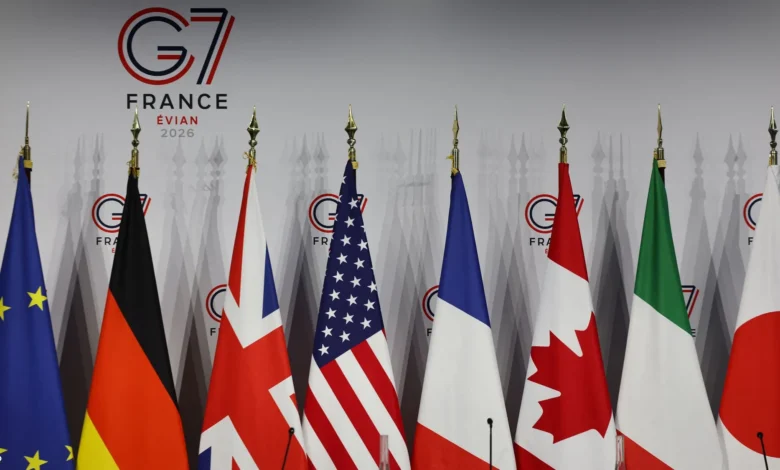
The G7 foreign ministers are calling on the Houthis to end all military operations immediately, including attacks targeting Saudi Arabia and threats and assaults against civilian vessels. They are also urging the group to return to the political process in good faith.
The G7 foreign ministers called on Iran on Monday to stop arming and supporting the Houthis in Yemen, describing such assistance as part of a dangerous pattern of escalation that threatens to undermine international trade and contribute to global instability.
The statement represents a direct accusation that Tehran is helping to strengthen the military capabilities of the Houthi movement, which has recently expanded its operations by taking control of the Bab el-Mandeb Strait.
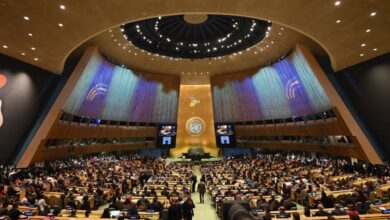
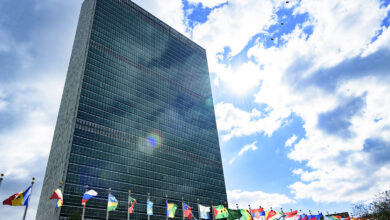
“We condemn in the strongest possible terms the continuing and unacceptable strikes carried out by the Houthis in Yemen against the Kingdom of Saudi Arabia,” the foreign ministers of Britain, Canada, France, Germany, Italy, Japan and the United States said in a statement issued after a meeting on the sidelines of the United Nations General Assembly.
“We call on the Houthis to cease all military operations immediately, including threats and attacks against civilian vessels, and to return to the political process in good faith,” they added.
The appeal comes amid an escalation on the ground in Yemen, coinciding with the Houthis’ advance along the country’s western coast.
The United Nations said the situation around the Bab el-Mandeb Strait had become increasingly volatile in recent weeks as the group continued moving toward the waterway and seized several islands in the southern Red Sea.
The significance of this advance extends well beyond the boundaries of the Yemeni conflict because of Bab el-Mandeb’s strategic location. The strait connects the Red Sea with the Gulf of Aden and the Indian Ocean and serves as a major passage for commercial vessels and energy tankers traveling between Asia and Europe.
Maritime tracking data show that shipping traffic through the strait has declined recently amid growing concerns that the confrontation could expand further.
The accusations against Iran are based partly on evidence that the Houthis possess sophisticated military systems.
The United Nations Panel of Experts on Yemen concluded that, without external support, the group does not have the capacity to develop and manufacture a range of complex weapons, including ballistic missiles, anti-ship cruise missiles and attack drones.
The panel also identified similarities between several systems used by the Houthis and weapons manufactured by Iran or deployed by groups allied with Tehran.
The accusations intensified in September following reports that Iran had provided the Houthis with weapons and operational guidance during their campaign to capture coastal areas.
Such assistance would enable the group to increase its ability to exert pressure on international shipping and open a new front in the regional conflict.
Other reports cited US officials as saying they believed that members of Iran’s Islamic Revolutionary Guard Corps were present in Yemen to assist with operations along the coast and in the Red Sea. According to those reports, the objective was to ease military pressure on Tehran while increasing the economic cost of the war.
Attacks against Saudi Arabia represent another dimension of the escalation. The increasing frequency of Houthi strikes has prompted Riyadh to request military support from its allies.
This development reflects the expansion of the threat beyond maritime navigation to the direct security of countries across the region.
Iran routinely denies accusations that it transfers weapons to the Houthis or directs their operations. Tehran describes its relationship with the group as political support.
The Houthis, for their part, maintain that their military decisions are based on their own calculations and interests.
The nature of the relationship between Tehran and the movement therefore remains disputed, despite indications cited by the United Nations that the Houthis’ military capabilities benefit from external support.
The Houthi issue has consequently become increasingly intertwined with the security of international maritime routes.
Western countries fear that continued escalation could turn Bab el-Mandeb into a new center of disruption for global trade and energy flows amid the broader tensions affecting the region.