Israel Rejects UNIFIL Mandate Renewal as Southern Lebanon Crisis Takes a Complex Turn
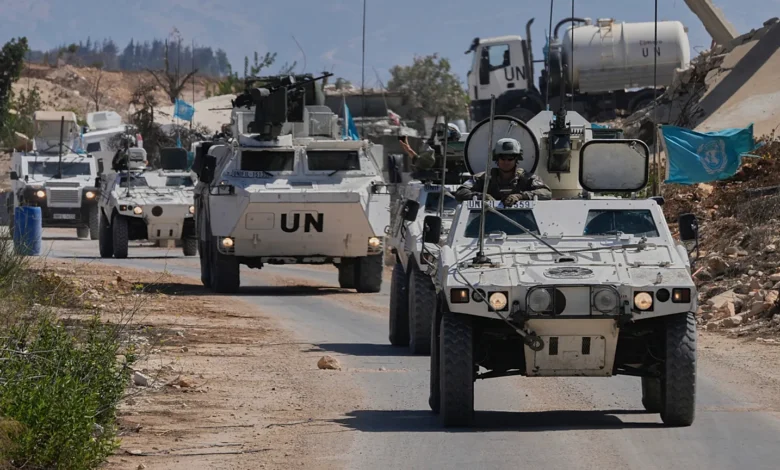
The crisis in southern Lebanon has entered an exceptionally complex diplomatic and political phase as the expiry date of the United Nations Interim Force in Lebanon’s mandate approaches on December 31, 2026.
According to well-informed Western sources, the Israeli government has notified the United States and members of the UN Security Council of its categorical and final opposition to maintaining the international force in southern Lebanon in its current form.
The sources said Israel’s position was placing Lebanon and the broader region before a critical test over the nature of future security arrangements. They also voiced serious concerns that a security vacuum could trigger renewed fighting on the ground or impose a new balance of power serving Israeli interests alone.
Warnings of a Vacuum That Could Serve Israel
The information coincides with warnings from senior Lebanese political and military circles that failure to renew UNIFIL’s mandate — or to establish an alternative international force — would create a vacuum that would undermine security and stability across the region.
These developments come as Israeli forces continue seeking to establish new facts on the ground along the Lebanese front, in some areas moving beyond internationally recognised boundaries. This has further complicated the military and political landscape and turned the future of the international force into a crucial bargaining tool in ongoing negotiations.
Western sources have painted a bleak picture of the objectives they believe lie behind Israel’s insistence on ending UNIFIL’s mission.
In their view, Tel Aviv is seeking more than a logistical reconfiguration on the ground. They contend that it aims to dismantle the legal and political framework that has governed the fragile stability of southern Lebanon for decades.
According to the sources, Israel’s motives include seeking full operational control over positions currently occupied by UNIFIL and converting them into observation posts or buffer zones under its direct administration. The primary objective, they say, is to remove any international witness capable of documenting military operations and the destruction or levelling of villages and towns.
The sources argue that the departure of international troops would remove the UN umbrella and the protection afforded by international legitimacy, leaving Lebanon fully exposed to any future military offensive. They also point to what they describe as a clear Israeli desire to curtail European influence — particularly that of France and Italy — over the Lebanese file. Both countries form a central pillar of UNIFIL and have consistently defended Lebanon’s sovereignty.
According to the same sources, Israel’s strategy also seeks to free itself permanently from the obligations arising from UN Security Council Resolution 1701 and to circumvent previous operational agreements in order to impose a new framework serving only its security and political interests. This would involve securing recognition of the Israeli military’s freedom of movement in Lebanese airspace and territory.
The greatest danger, the Western sources say, lies in Israel’s alleged attempt to establish direct coordination channels with the Lebanese Armed Forces while dispensing with the international mediation provided by UNIFIL, the international verification mechanism and the military coordination group. Beirut views this proposal as an attempt to impose forced security normalisation under the label of “joint security arrangements”.
“Enormous Pressure”
Political analyst Jumaa Suleiman Al-Nasaa has confirmed that the Lebanese state is facing enormous international pressure behind the scenes.
Al-Nasaa said: “Washington has conveyed messages to Beirut that align with Israel’s opposition to a routine renewal of UNIFIL’s mandate. It has presented difficult options ranging from the complete termination of the mandate and withdrawal of the force to a gradual pullout, or a very short and narrowly defined technical extension whose primary task would be the orderly dismantling of positions and the transfer of security responsibilities to the Lebanese Armed Forces.”
He added: “The official Lebanese position is currently seeking to present diplomatic counterproposals based on preserving the existing legal framework and the provisions of Resolution 1701, in order to avert an immediate security vacuum and allow more time for international political positions to become clearer.”
According to Al-Nasaa, “Lebanon does not want to be drawn into discussions that could be interpreted as a retreat from its obligations under international resolutions. However, it has informed the relevant parties through diplomatic channels that it has strict conditions and red lines concerning the day after the international force withdraws. Any violation of Lebanese sovereignty or attempt by the occupation to impose direct security tutelage will face categorical rejection at both the political and operational levels and cannot be accepted under any circumstances.”
He stressed that “UNIFIL has never been merely an ordinary monitoring force. It has served as a coordinating security buffer that prevents direct friction with Israel. Its absence would mean that the international community loses its eyes and ears in southern Lebanon.”
Al-Nasaa concluded that “the Israeli plan aims to isolate the Lebanese army on the ground and impose direct coordination without an international intermediary. Lebanon will not accept this because it strikes at the very heart of national sovereignty and would pave the way for a form of security normalisation rejected both politically and publicly.”
Commanders of the international force are themselves reportedly acknowledging the difficulty of the situation in closed-door meetings. Leaked warnings suggest that transferring responsibilities would be highly complicated, particularly at positions currently located within areas of incursion or active confrontation. Any poorly planned step could therefore amount to a green light for a broader escalation.
Against this backdrop, Lebanon now faces a decisive moment that goes far beyond a technical extension of the peacekeeping force’s mandate. The issue is evolving into an open struggle over the future security and political identity of southern Lebanon.
As pressure on the country continues, finding an international formula capable of safeguarding Lebanese sovereignty is becoming increasingly difficult. Lebanese diplomacy is therefore compelled to uphold international legitimacy, embodied by Resolution 1701, as its final line of defence against alleged Israeli attempts to impose unilateral security arrangements.