Chemical Weapons in Sudan: When the Air Itself Becomes Part of the War
The war in Sudan is no longer measured solely by the number of missiles that have fallen on cities, the homes reduced to rubble or the families forced to carry what remains of their lives and flee in search of safety. Since fighting erupted between the Sudanese Armed Forces and the Rapid Support Forces, civilians have endured an unrelenting succession of tragedies: death, displacement, hunger and the collapse of healthcare and water services. A new issue, however, is adding an even more terrifying dimension to the conflict: allegations that chemical weapons have been used.
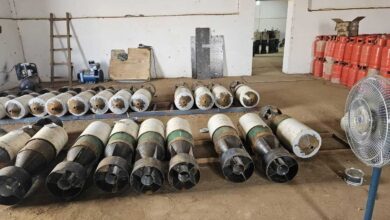
After months of debate over whether the Sudanese Armed Forces had deployed chemical substances on the battlefield, new investigations in 2026 brought the issue back to the forefront. Most notably, an investigation published by The Washington Post in September said the newspaper had reviewed a large collection of documents, photographs, videos and messages that, according to experts it consulted, provided strong indications of a chemical weapons programme and a possible stockpile of chlorine-based munitions within institutions linked to the Sudanese military.
At the same time, the newspaper stressed that definitively verifying the alleged stockpile would require access to the relevant sites and witnesses — something the conditions of war had made impossible.
The Allegations Predate The Washington Post Investigation
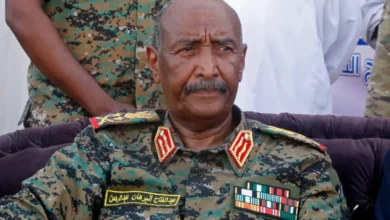
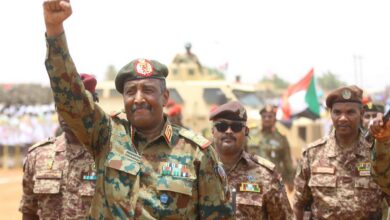
The issue did not begin with The Washington Post investigation. In January 2025, the United States imposed sanctions on Sudanese Armed Forces commander Abdel Fattah al-Burhan, accusing the military of using chemical weapons. The US State Department later said that the Sudanese government had used chemical weapons during 2024.
Washington did not initially disclose all the evidence on which it had based that conclusion, leaving the allegation open to widespread debate.
A significant development came later, when publicly available evidence that could be examined independently of the US government began to emerge. In October 2025, Human Rights Watch said an investigation conducted by France 24’s digital investigations unit had presented the first public evidence supporting the US allegations.
Photographs and videos were geolocated to the Karari military base and the Al-Jaili refinery north of Khartoum, two sites that were then under the control of the Rapid Support Forces. The investigation identified metal containers associated with chlorine, as well as a yellowish-green cloud that experts said was consistent with the characteristics of chlorine gas.
Chlorine: From Civilian Necessity to Prohibited Weapon
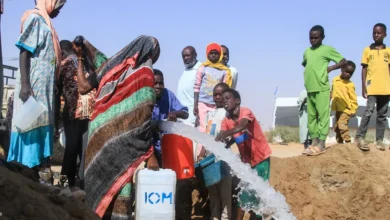
This is where one of the case’s cruellest paradoxes emerges. Chlorine is not foreign to civilian life. It is a widely used industrial substance, particularly in water treatment.
In a country where millions of people already lack clean water, chlorine forms part of the daily struggle against disease. Yet the same substance can become an extremely dangerous weapon when placed inside munitions and used to release gas over a target.
For this reason, the Chemical Weapons Convention prohibits the use of chlorine as a weapon, even though chlorine itself is a legitimate industrial substance.
Human Rights Watch says exposure to chlorine can cause symptoms ranging from irritation of the skin and eyes to breathing difficulties. In severe cases, it can be fatal.
The issue, therefore, is not whether chlorine exists in Sudan. The question is how it was used, who used it, under what circumstances and against which targets.
Documents Still Requiring Independent Verification
In September 2026, the case took a more serious turn with The Washington Post investigation. The newspaper said it had obtained dozens of documents, videos and messages and presented them to more than 20 former officials and experts in intelligence, chemical weapons and human rights.
According to the investigation, the material included documents referring to dual-effect munitions containing a choking agent and explosives, videos of tests showing yellowish-green clouds, and messages exchanged between people whom the sources identified as Sudanese military officials. The messages reportedly discussed the storage of hundreds of chemical munitions.
The newspaper also said digital-forensics experts who examined some of the photographs and videos had found no evidence of manipulation. However, interpreting the material, establishing its origin and proving that the alleged weapons were actually used would still require an independent field investigation.
More seriously, the journalistic investigation referred to alleged messages discussing the use of chlorine-containing munitions at military sites and the testing of different bomb designs.
The Washington Post said some messages mentioned munitions assembled and stored at Merowe Air Base, several of which were reportedly used. The investigation also presented other material associated with alleged production and testing sites.
If an independent investigation authenticates these documents and establishes that they are genuinely connected to Sudanese military institutions, the case would no longer concern only an alleged isolated incident. It would become a matter involving the production, storage and use of weapons prohibited under international law.
It remains essential, however, to maintain a clear distinction between what the documents appear to claim and what has been independently established. The newspaper itself explained that access to the sites and witnesses would be necessary to reach a definitive assessment.
Sudanese Government Rejects the Allegations
The Sudanese government categorically denies the allegations. Following the publication of the latest investigation, it said the report was inaccurate and reaffirmed its commitment to the Chemical Weapons Convention.
The government stated that Sudan’s chlorine stocks were intended for water treatment and other civilian, industrial and energy-related purposes. It also said the country was prepared to submit those stocks for verification by any competent international body.
The Sudanese authorities had previously established a national committee to investigate the allegations. The committee later announced that, based on the available evidence and field measurements, it had found no indication of chemical or radioactive contamination at the sites it examined.
Why Not Allow an Independent International Investigation?
This raises the most urgent question: why not allow an independent international investigation to resolve the dispute?
The United States has called on Sudan to cooperate fully with the Organisation for the Prohibition of Chemical Weapons. Human Rights Watch has said that states parties to the Chemical Weapons Convention should support a transparent investigation led by the Organisation, including the use of the verification mechanisms available under the treaty.
In a statement before the Organisation for the Prohibition of Chemical Weapons, Washington said reports concerning the use of chlorine as a weapon in Sudan during 2024 raised concerns about the possibility that chemical weapons could continue to be used. It called on the Sudanese government to cooperate with the Organisation.
Behind the Allegations Stands an Ordinary Sudanese Civilian
Behind these legal and political details stands an ordinary Sudanese person — someone who may know nothing about the Chemical Weapons Convention, US sanctions or intelligence reports, but who knows one thing: they have lived through the war.
They have watched their home become dangerous, been forced to flee and perhaps lost a relative or friend. For that person, the question of chlorine is not technical. It is a question about their life.
If toxic gas was indeed used, they have the right to know where it happened, who was responsible, what they were exposed to and why no one was able to protect them. If it was not used, they also have the right to know the truth and to ensure that their suffering is not turned into new material for a war of political narratives.
Sudan Needs Evidence, Not Another Narrative
Sudan today does not need another narrative added to the hundreds of conflicting accounts that have accompanied the war. It needs evidence.
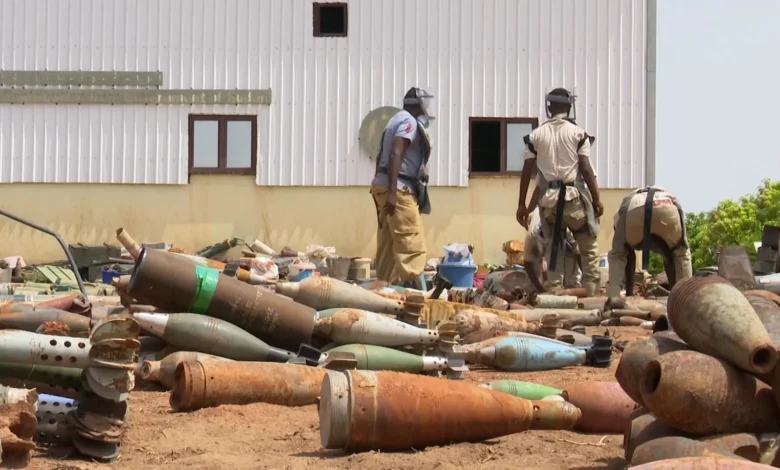
It needs experts who can enter the sites, examine the remaining munitions, interview witnesses, study photographs and videos and analyse any available samples. They must then determine what can be proven and what cannot.
If the use of chemical weapons is established, the next step must be to identify individual responsibility rather than simply assigning general blame to an entire institution.
Who issued the orders? Who manufactured the munitions? Who transported them? Who used them? Did their effects reach civilians? These are questions that political statements cannot answer.
When the Air Becomes a Battlefield
Ultimately, what makes the chemical weapons issue so terrifying is not merely the possibility that a prohibited weapon may exist in the arsenal of a party to Sudan’s war. It is also the idea that civilians could lose trust even in the things that are supposed to be natural and safe.
In war, people fear aircraft, artillery and bullets, but they can at least sometimes see or hear them. Gas does not need to knock on the door. It can enter with the air, reach the lungs and leave behind an invisible fear.
Investigating these allegations is therefore not about seeking a sensational headline or adding another crime to the record of Sudan’s war. It is a search for the truth about one of the gravest questions any conflict can raise: has the violence in Sudan reached the point where the air itself has become a battlefield?