The Fatal Gamble: How Nasrallah Miscalculated the Aftermath of 7 October
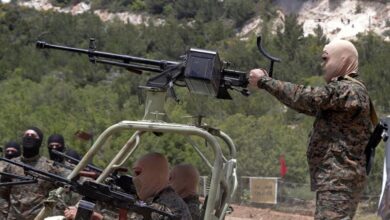
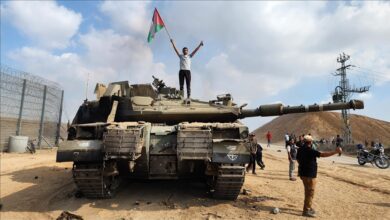
Hezbollah did not know that the 7 October 2023 attack would take place that morning. According to Lebanese security and political sources, its leadership had no advance knowledge of either its timing or its scale. Yet within less than twenty-four hours, the movement had made one of the costliest decisions in its history: opening a front in southern Lebanon in support of the Gaza Strip.
The information reveals, for the first time, some of the discussions that preceded the launch of operations on 8 October and the assessments underpinning the decision. It also sheds light on the internal reviews conducted after the war, which are now re-examining assumptions the leadership believed were manageable at the time, before they led to a confrontation in which Hezbollah lost a substantial portion of its senior leadership and military command.
Nasrallah’s Decision
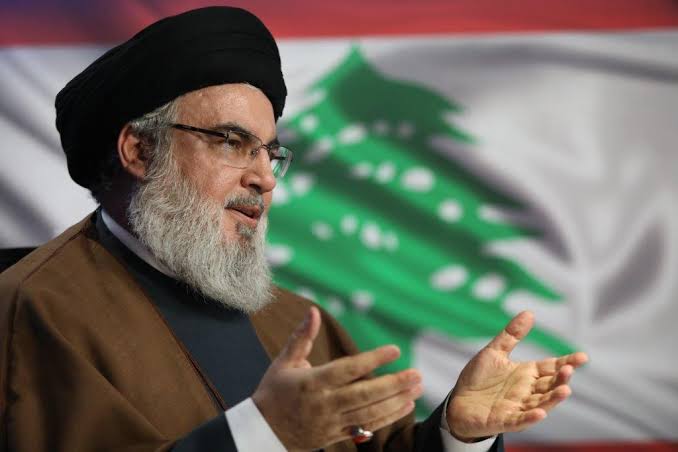
The sources say the decision to open the front was taken by former Secretary-General Hassan Nasrallah in consultation with an extremely small military and organisational circle, whose key members included Fuad Shukr and Hashem Safieddine.
According to the sources, the decision was endorsed within the movement’s institutions on the basis of the principle of “unity of fronts”. Iran’s Quds Force was informed of the move and its associated arrangements without Hezbollah waiting for operational approval from Tehran. Iran endorsed the initiative, the sources say, but stressed from the outset that escalation had to be controlled to prevent an open regional war.
There was no opposition within the movement to the principle of supporting Gaza. The debate concerned the scale of that support. The sources say some voices in political and organisational circles feared the economic consequences for Lebanon and advocated symbolic operations confined geographically to the Shebaa Farms. This would demonstrate military solidarity with Gaza without dismantling the rules of engagement in place since 2006. The military approach ultimately prevailed, however, turning the operations into daily clashes that gradually spread along the entire border.
A Three-Month War
The most significant element in the sources’ account concerns the timeframe that shaped the decision. Hezbollah’s leadership did not base its calculations on a war lasting a year or more, but on a confrontation in Gaza lasting between one and three months, drawing on previous wars and rounds of fighting.
The second assumption was that Israel, still reeling from the shock of 7 October, would not want to sustain a war on two fronts. Tying down substantial Israeli forces in the north and forcing residents out of border communities were expected to create additional pressure that would push Tel Aviv towards ending the Gaza war.
Events show that the Lebanese front did indeed consume Israeli military resources. In February 2024, the Israeli army announced that it had deployed three divisions on the northern front, alongside thousands of strikes against Hezbollah targets.
The political outcome, however, ran counter to the movement’s initial assessment. The northern front did not prompt Israel to end the Gaza war. Instead, it gradually became a separate war of attrition.
The Missed Opportunity
This is where the sources identify what they consider the costliest decision: refusing to separate the Lebanese front from Gaza when opportunities for a settlement began to emerge in 2024.
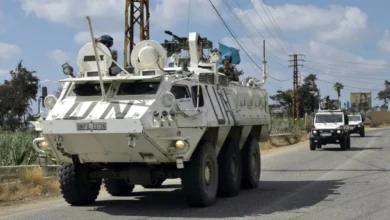
US envoy Amos Hochstein, alongside French diplomatic efforts, put forward proposals to de-escalate the confrontation, implement Resolution 1701 and establish security arrangements along the border, accompanied by support and development projects for southern Lebanon. In March 2024, Lebanon’s then-prime minister, Najib Mikati, confirmed the existence of a proposal conveyed by Hochstein and being reviewed by Parliament Speaker Nabih Berri.
Hezbollah nevertheless maintained its position that hostilities on the Lebanese front would not stop before the war in Gaza ended. According to the sources, what initially appeared to be leverage later became a strategic constraint: the timing of the Lebanese front’s closure depended on negotiations over which the movement had no control.
Shukr: The Warning Bell
The sources identify the assassination of Fuad Shukr in Beirut’s southern suburbs in July 2024 as the moment when the leadership began to fully recognise that Israel was no longer operating under the old rules of engagement. Hezbollah confirmed at the time that Shukr had been killed in the Israeli strike.
The confrontation then entered a different phase, culminating in Nasrallah’s assassination and strikes against numerous leaders of the movement. According to investigations published by Reuters, these operations exposed the extent of Israeli intelligence penetration of Hezbollah’s leadership structures and communications.
The sources say the reviews being conducted by the current leadership under Naim Qassem are no longer limited to assessing military operations. They also examine older structural weaknesses, including the movement’s expansion, its prolonged involvement in the Syrian war, the growth in its personnel and their areas of activity, and the erosion of the security discipline that once characterised its clandestine structure.
The investigations focus particularly on breaches of communication systems, culminating in the pager and handheld radio explosions, and on how Israel managed to build a target database encompassing highly sensitive leadership and military levels.
Misreading the Nature of the War
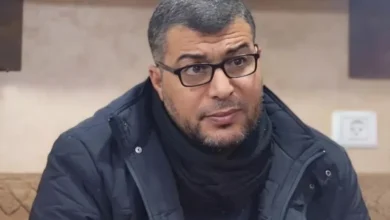
Political researcher Mazen Bilal argues that a review of the support front should examine not only its military results, but also the political premise on which it was based. In his view, the mistake was treating the confrontation as an extension of previous rounds of fighting whose intensity and duration could be controlled, when 7 October had changed the nature of the conflict itself.
Bilal said it became clear during the war that the conflict was moving towards a broader reshaping of regional balances, and that continued attrition on the Lebanese front opened possibilities extending beyond local calculations.
In this sense, the question was not simply whether the support front had diverted Israeli forces from Gaza. It was also whether Hezbollah had possessed an exit strategy from the outset if the war did not end within the three months on which its initial assessment was based, according to Bilal.
Today, three years later, it appears that the decision that transformed Lebanon was not merely to open fire on 8 October. It was also to continue fighting after it had become clear that the war the movement had entered was no longer the war it believed it was joining.