Chemical Weapons Allegations in Sudan: New Documents Put the Army Under International Pressure
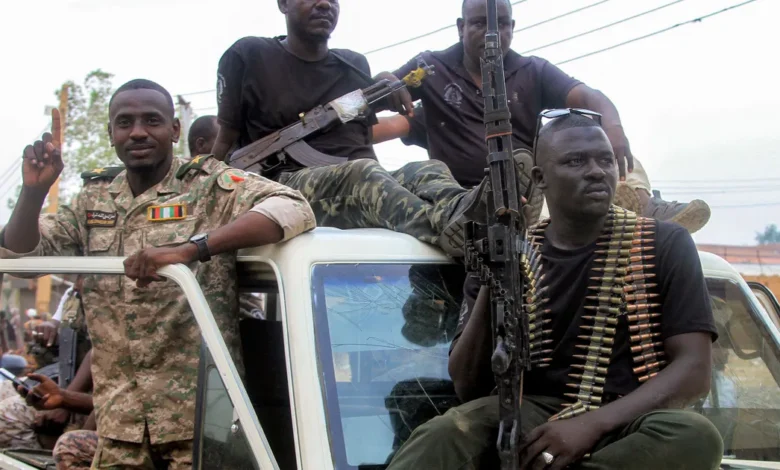
International pressure is mounting over allegations that the Sudanese army used chemical weapons during the war, bringing the issue back to the forefront of political and human rights debate during the first week of October 2026. This renewed attention draws on media reports describing secret documents, visual material and information linked to the production of chlorine-containing munitions, alongside initiatives calling for an independent investigation under the supervision of the competent international bodies.
The sensitivity of the case stems from the nature of the weapons allegedly used and the context in which the accusations emerged. Sudan’s war, ongoing since April 2023, has caused a major humanitarian crisis, displaced large numbers of people and weakened essential services. Under these circumstances, any allegation involving the use of toxic substances in military operations requires an urgent and methodical response, free from propaganda and premature conclusions.
Leaked Documents Deepen Suspicions
In September 2026, US media reports described a dossier said to contain approximately 150 secret documents relating to allegations of the development and production of chemical munitions in Sudan. According to subsequent reports, the dossier includes photographs, videos and written records pointing to a military unit suspected of involvement in producing chlorine-based munitions.
This material has reopened questions about the nature of the alleged activity, the parties that may have participated and whether the munitions were actually manufactured for use in the war. However, the leaked documents require examination beyond their apparent contents. Their authenticity, dates, context, the identity of those who collected them and their direct connection to the incidents under investigation must all be verified.
The emergence of new documents does not mean that every allegation has been conclusively established. Media investigations can provide important leads and raise previously unexplored questions, but they do not replace independent technical examination or a legal assessment of whether the evidence is sufficient to establish responsibility.
Conversely, ignoring the material or rejecting it outright without a credible investigation does not answer the questions it raises. International demands therefore focus on verifying the available documents and providing the competent bodies with the information needed to determine the nature and extent of the alleged activity.
Chlorine at the Centre of the Allegations
Some of the reports focus on chlorine, which is widely used in industrial and civilian applications but can become a dangerous toxic substance when employed to cause chemical harm. Its mere presence at a facility or in a warehouse is therefore insufficient to prove the existence of a chemical weapons programme. Investigators must establish the nature of the substance, its intended purpose, how it was prepared and whether it was incorporated into munitions or used in attacks.
According to a report published by The Star on October 4, arms control experts referred to allegations that cylinders containing chlorine were used in two attacks in September 2024, as well as information about the production of aerial munitions designed to disperse the gas. These details still require independent verification connecting the technical evidence to events on the ground.
The necessary verification includes analysing substances collected from incident sites, reviewing available medical reports, assessing survivors’ accounts and examining munition remnants where available. Investigators must also determine whether the recorded symptoms are consistent with exposure to the alleged substance. Symptoms alone cannot establish the use of a chemical weapon, as some may resemble the effects of other substances or different environmental conditions.
The investigation must also distinguish between possessing a chemical substance for legitimate purposes and turning it into a weapon. That distinction is essential to determining whether the alleged activities constitute a violation of the Chemical Weapons Convention.
From US Accusations to International Demands
The case did not begin this October. In May 2025, the United States announced that it had concluded that the Sudanese government used chemical weapons during the war. Washington subsequently imposed punitive measures and announced additional action in 2026, citing what it described as Sudan’s failure to meet the conditions required to return to compliance.
The announced measures include restrictions on certain exports and opposition to some forms of financial and technical assistance through international financial institutions, subject to exceptions specified in the US decisions. These steps show that the allegations are now affecting Sudan’s foreign relations, despite continuing disagreement over the published evidence and verification mechanisms.
At meetings of the Organisation for the Prohibition of Chemical Weapons in July 2026, Washington called for international access to relevant sites and a comprehensive declaration of any programmes, stockpiles or facilities associated with chemical weapons. It also stated that, in its view, a national investigation could not replace independent verification.
This position presents a practical test: will access to the necessary information be available? Can the reports and documents be translated into technical findings that can be reviewed? The answers will determine whether the case moves towards resolution or remains a subject of competing political accusations.
Britain Calls for the Investigation to Be Completed
On October 6, 2026, responding to a question in the House of Lords, the British government said it was carefully reviewing published reports of alleged chemical weapons use in Sudan. It emphasised the seriousness of any breach of the Chemical Weapons Convention and noted that it had raised concerns about the allegations within the Organisation for the Prohibition of Chemical Weapons.
The British government also said that officials had discussed the latest report with representatives of the Sudanese Armed Forces and urged Sudan to complete its investigation into the allegations and report its findings to the Organisation. This confirms that the case remains under diplomatic scrutiny and that there is international interest in obtaining clearer information.
However, the British position should not be interpreted as a definitive finding on every reported event. Reviewing allegations or calling for an investigation to be completed is different from announcing an independent technical conclusion establishing that a specific attack occurred and identifying those responsible. This precision is essential in reporting, particularly where sanctions or legal liability may follow.
The Sudanese Authorities’ Position and the Crisis of Trust
The Sudanese authorities have rejected the US accusations and reaffirmed their commitment to the Chemical Weapons Convention. That rejection places the case in a difficult position: the government insists that the accusations are unacceptable, while international actors demand verifiable information and the completion of procedures that would allow the allegations to be assessed.
In cases of this kind, it is not enough for one party to declare its innocence or another to assert that it possesses evidence. Trust requires clear procedures, including identifying the body conducting the investigation, defining its scope, explaining how documents and samples are handled, and publishing findings that can be disclosed without compromising the safety of witnesses or sources.
If the Sudanese authorities have technical findings supporting their position, submitting them to the competent Organisation could be an important step in responding to the accusations. If ongoing fighting creates difficulties in accessing sites or collecting evidence, those obstacles must be explained and a mechanism established to address them.
Meanwhile, those accusing the Sudanese army should present the evidence supporting their conclusions to the competent bodies rather than relying solely on leaks or political statements. An independent investigation protects victims’ right to know the truth while safeguarding the principle of justice against accusations unsupported by sufficient evidence.
What Does the Case Mean for Civilians?
Humanitarian risks remain the most urgent aspect of the case. The possibility of chemical substances being used in an area affected by fighting and mass displacement raises concerns about public safety, healthcare facilities’ ability to treat exposure to toxic substances and the availability of necessary protection and care.
The continuing war also makes evidence collection more difficult. Incident sites may be altered, witnesses may leave their areas, medical facilities may be damaged and records may become less complete. Delaying the investigation could therefore result in the loss of important information even before any conclusion is reached about responsibility.
The case must not become a pretext for reducing humanitarian assistance or increasing civilian suffering. Punitive measures should account for their impact on civilians and preserve the necessary exemptions for food, medicine and relief, while maintaining pressure for transparency and accountability.
A Decisive Test for the International Community
The international community needs to move beyond exchanging statements towards steps whose results can be measured. This begins with making relevant information available, completing investigations and determining whether a technical mission or inspections are needed under the Convention’s provisions. Any evidence should also be documented in a way that preserves its integrity and allows it to be reviewed, with protection provided for witnesses and those cooperating with the investigation.
If the investigation establishes prohibited use, the next step will be to determine responsibility under the law, rather than issuing a general condemnation that fails to identify who made or implemented the decision. If the evidence does not support some allegations, that must also be stated clearly.
Recent developments show that the chemical weapons allegations have become a test of the credibility of international commitments in Sudan. The case concerns not only whether chlorine-containing munitions were produced or used, but also whether international institutions can verify allegations under wartime conditions. Amid leaked documents, government positions and Sudanese denials, an independent investigation remains the most reliable route to establishing the truth, determining responsibility and preventing further violations.