Shamal al-Wadi Massacre: Sudanese Gold Miners’ Bloodshed Between Egyptian Air Strikes and Political Collusion
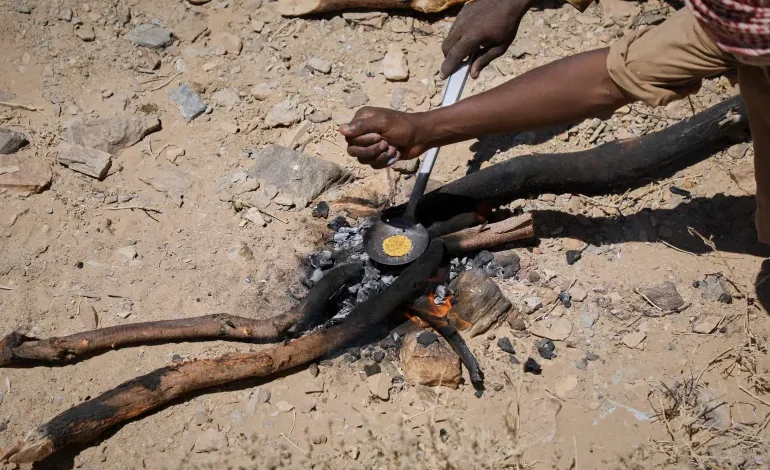
The fierce air strikes targeting a large gathering of artisanal gold miners in the Shamal al-Wadi and Mount al-Aqidat area, in the far north of Red Sea and Northern states within Sudanese territory, have triggered widespread public outrage and condemnation from human rights advocates. The attack, carried out in early October 2026, left dozens dead and hundreds injured or missing among unarmed civilians. For years, these workers had relied on traditional gold mining as their only means of feeding their families amid Sudan’s crushing economic conditions and devastating war.
First-hand accounts from workers who survived the attack, alongside reports documented by independent human rights organisations such as the Emergency Lawyers group, indicate that the warplanes clearly displayed the Egyptian flag. They reportedly carried out several successive bombing runs using heavy bombs, causing extensive destruction to drilling machinery, workers’ tents and mining shafts, some of which collapsed on those inside. The place where these labourers sought to earn a living was transformed into the scene of a horrific, bloody massacre that shocked Sudan’s humanitarian and national conscience.
Sudanese public anger and disbelief were intensified by the weak and suspicious official response of the Port Sudan authorities, led by Sovereignty Council Chairman and army commander-in-chief General Abdel Fattah al-Burhan. Rather than adopting a firm position commensurate with the humanitarian catastrophe and violation of national sovereignty, al-Burhan remained completely silent for more than forty-eight hours. He then issued only a vaguely worded condolence statement and ordered the formation of a conventional fact-finding committee comprising representatives of the public prosecution service and security agencies. He conspicuously avoided identifying or condemning those responsible for the attack, or directing any public, formal and direct protest to the Egyptian government. This evident avoidance of confrontation, repeated after previous similar strikes, reinforced public and political suspicions and allegations of intelligence coordination and advance knowledge of the Egyptian military operation within Sudan’s army leadership. Observers argue that al-Burhan prioritised his political survival, regional arrangements and military and political alliance with Cairo over national sovereignty and the protection of his unarmed citizens.
Egyptian authorities, meanwhile, have neither formally acknowledged conducting a strike inside Sudanese territory nor explicitly accepted responsibility for the miners’ deaths. Egypt’s military spokesman said successive phases of a broad campaign by army and police law enforcement forces were continuing to combat illegal gold mining and secure strategic borders in the Eastern Desert.
Despite Cairo’s attempts to frame these security developments as efforts to protect its national resources and wealth within its own borders and counter border disorder arising from organised crime, Sudanese administrative maps and accounts from the ground confirm that the targeted mining sites lie within the Nubian Shield belt, well inside Sudanese territory. This bloody escalation has reopened scrutiny of the complex relationships, gold interests and secret investment dealings involving influential figures in both countries. It places the dignity of Sudanese citizens and their country’s sovereignty under a severe historical and moral test in the face of the existing authorities’ powerlessness and tacit complicity.