Riyadh and Khartoum between Jeddah diplomacy, maritime security, and investment interests
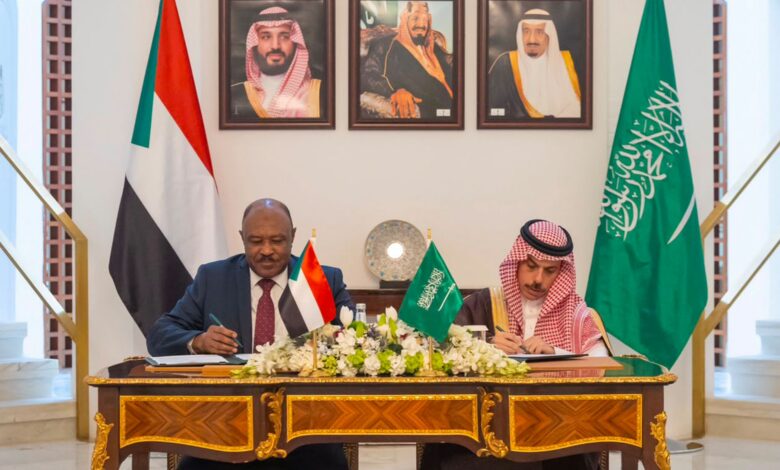
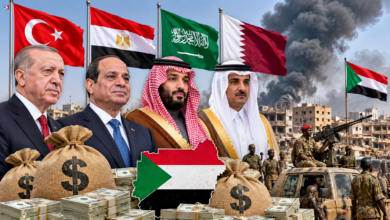
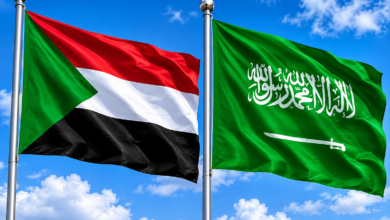
Since armed clashes broke out in Sudan in mid-April 2023, Saudi Arabia has been at the center of regional and international efforts to address the crisis. Its position reflects the region’s geopolitics. Sudan lies directly across the Red Sea from the kingdom’s western coast, and any large-scale destabilization in Khartoum has direct repercussions for Saudi national security, global trade, and flows of migrants and refugees. Against this backdrop, assessments of Saudi Arabia’s role diverge. Some see Riyadh as an impartial mediator seeking to bring the fighting to an end. Others view its involvement as a calculated strategic move that favors the military establishment led by General Abdel Fattah al-Burhan and is designed to safeguard long-term economic and geopolitical interests.
Saudi Arabia’s official mediation and humanitarian efforts in Jeddah
In the first weeks of the war, Riyadh partnered with the United States to launch the Jeddah talks, which became the main diplomatic framework for bringing representatives of the Sudanese Armed Forces and the Rapid Support Forces to the same negotiating table. According to official statements from the Saudi Ministry of Foreign Affairs and reports from the United Nations, the kingdom’s efforts focused on securing humanitarian truces, obtaining the parties’ signatures on the Jeddah Declaration, under which they pledged to protect civilians, and facilitating the delivery of humanitarian aid.
Analyses by Gulf and international research institutes, including the Arab Gulf States Institute in Washington, suggest that Saudi Arabia’s primary objective is to prevent Sudan from becoming a failed state, as has happened elsewhere in the region. Such an outcome would pose a direct threat to the security of shipping in the Red Sea and undermine major development projects the kingdom is pursuing along its western coast under Vision 2030. UN reports also highlight the relief work of the King Salman Humanitarian Aid and Relief Centre, which has allocated substantial financial and in-kind assistance to internally displaced people in Sudan and refugees in neighboring countries.
A different reading of Saudi policy and its indirect support for the military
Western news reports and analyses by experts on African affairs offer a more complex reading of Saudi Arabia’s role. According to coverage in international newspapers such as the Financial Times and The Wall Street Journal, some observers argue that, despite the neutral diplomatic language Riyadh used during the Jeddah talks, Saudi policy in practice favors preserving the Sudanese state and its traditional institutions, foremost among them the army led by Al-Burhan.
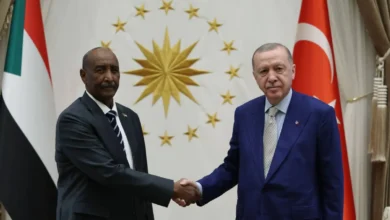
Those who take this view point to several developments. First, Riyadh hosted Al-Burhan on high-level official visits and treated him as the legitimate representative of the Sudanese state in regional and international forums. This gave the army leadership significant political and diplomatic backing at critical moments in the conflict. Second, analyses by the International Crisis Group suggest that disagreements among regional actors over Sudan’s political future prompted Riyadh to strengthen ties with the army leadership so that other powers could not dictate the eventual political outcome in Khartoum.
Some investigative reports also describe indirect financial and logistical support and the opening of trade and banking channels. These arrangements reportedly helped the Sudanese government based in Port Sudan keep state institutions operating and meet essential needs, including logistical supplies and fuel. Critics of Saudi policy argue that this support helped the army withstand pressure and continue military operations, making it less willing to offer substantial concessions in negotiations.
The economic stakes of food security and Red Sea ports
Saudi Arabia’s position on the war in Sudan is closely tied to Riyadh’s longstanding economic and strategic interests in the country. According to economic reports by international financial institutions, Sudan is a cornerstone of Saudi Arabia’s food security strategy because of its vast tracts of fertile farmland and abundant water resources. Before the war broke out, the Saudi Fund for Development and major Saudi companies had invested billions of dollars in Sudanese agricultural and livestock projects. Agreements also covered infrastructure development and power grid interconnection projects.
Studies by the Carnegie Middle East Center suggest that protecting and sustaining these investments requires a stable, cohesive central government in Khartoum. Riyadh considers the cohesion of the military establishment essential to achieving that goal. Sudan’s Red Sea ports, foremost among them Port Sudan, add a geopolitical dimension. Saudi Arabia seeks to keep these ports within the orbit of its strategic allies and prevent them from becoming footholds for rival international or regional powers that could challenge its predominance in the Red Sea basin.
How competing initiatives have shaped the duration of the conflict
Political analysts argue that the overlap between Saudi Arabia’s diplomatic mediation and its efforts to protect strategic interests has influenced the course of the crisis. The Jeddah talks provided an essential channel for communication and prevented dialogue from breaking down entirely. The talks nevertheless ran up against hardening positions on both sides, as each believed it could count on regional backing to stay in the fight. According to experts at the European Council on Foreign Relations, the proliferation of initiatives and the overlap of regional agendas in Sudan weakened concerted international pressure for a ceasefire. This allowed the fighting to continue and spread, while a political settlement was deferred as the warring parties sought victory on the battlefield.