Can Alzheimer’s Disease Be Transmitted Through Blood?
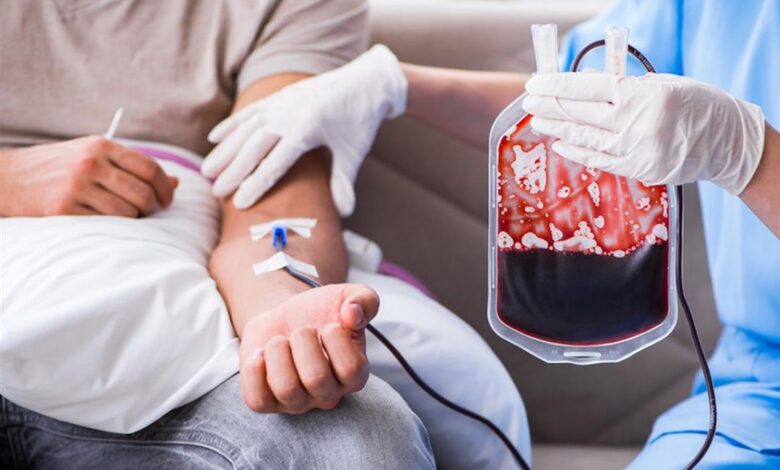
Alzheimer’s disease is a complex neurodegenerative disorder that primarily affects memory, thinking, and, as it progresses, independence. A question that occasionally arises in scientific and public discussions is whether the disease could be transmitted from one person to another through blood.
The answer is more nuanced than a simple yes or no. At present, there is no evidence that Alzheimer’s disease is a contagious condition that can be transmitted through blood during ordinary daily life. A person cannot “catch” Alzheimer’s by receiving a routine blood transfusion, living with someone who has the disease, or having ordinary contact with an affected individual.
However, research has raised a specific scientific question concerning proteins associated with Alzheimer’s disease and whether certain biological components involved in the disease may be present in the bloodstream.
The role of beta-amyloid
Alzheimer’s disease is characterized by abnormal accumulation of certain proteins in the brain. One of them is beta-amyloid, which can form deposits known as amyloid plaques. Another protein, tau, can also accumulate abnormally inside neurons.
These abnormalities have been studied for decades in an effort to understand how Alzheimer’s develops. Researchers are particularly interested in how certain proteins move between different tissues and whether this movement could influence disease-related processes.
Experimental research has raised a specific hypothesis
Experimental studies have attracted attention after suggesting that certain components found in blood might influence amyloid-related processes under specific laboratory conditions.
Earlier research involving animal models also examined whether certain factors in the bloodstream could potentially contribute to the development or accumulation of abnormal proteins in the brain.
These findings are scientifically interesting, but they do not mean that Alzheimer’s disease can be transmitted between humans through blood transfusions or ordinary exposure to blood.
What about blood transfusions?
Available evidence does not show that routine blood transfusions transmit Alzheimer’s disease. Modern blood collection and transfusion systems rely on strict safety procedures designed to reduce the risk of transmitting infectious and other harmful agents.
It is therefore important to distinguish a biological mechanism being investigated in a laboratory from a proven route of disease transmission in humans.
Historical observations have contributed to the research
Interest in the possible transfer of abnormal proteins was partly influenced by historical observations involving medical treatments that are no longer used and that involved human tissues obtained from donors.
In extremely rare circumstances, patients who received certain contaminated biological tissues developed unusual neurological diseases caused by abnormal proteins known as prions. These diseases are not Alzheimer’s disease.
Nevertheless, these observations have encouraged scientists to investigate whether proteins associated with Alzheimer’s could, under highly specific medical circumstances, potentially have been transferred through certain biological tissues. This remains very different from natural or contagious transmission of Alzheimer’s disease.
Alzheimer’s is not a contagious disease
It is essential to distinguish the presence of a protein from the transmission of a disease. Infectious diseases can spread between individuals through specific infectious agents. Alzheimer’s disease does not behave in this way.
Known risk factors are associated primarily with aging, genetics, cardiovascular and metabolic health, and various lifestyle factors. In some families, rare genetic mutations can also cause inherited forms of Alzheimer’s disease.
Why does this question matter?
Understanding whether blood-related biological mechanisms influence Alzheimer’s could help researchers better understand how disease-associated proteins interact with the brain and other tissues.
This research may also contribute to the development of new diagnostic tools. Blood-based biomarkers are increasingly being studied as ways to identify biological changes associated with Alzheimer’s disease, potentially even before severe symptoms develop.
However, detecting a disease-associated biomarker in the blood is completely different from transmitting the disease through blood. The fact that a protein can be measured in blood does not mean that Alzheimer’s itself can be transmitted through a transfusion.
Current evidence does not support the idea that Alzheimer’s disease is transmitted through blood in everyday life. There is no evidence that routine blood transfusions or ordinary contact with someone who has Alzheimer’s can transmit the disease.
Some experimental research and rare historical medical observations have nevertheless prompted scientists to investigate whether proteins associated with neurodegenerative diseases could, under highly unusual circumstances, be transferred through certain biological tissues. This scientific question should not be confused with the idea that Alzheimer’s is contagious or can spread from person to person through ordinary blood exposure.