The Unilateral Strike Option: How Netanyahu Is Complicating Trump’s Plans for an Iran Deal
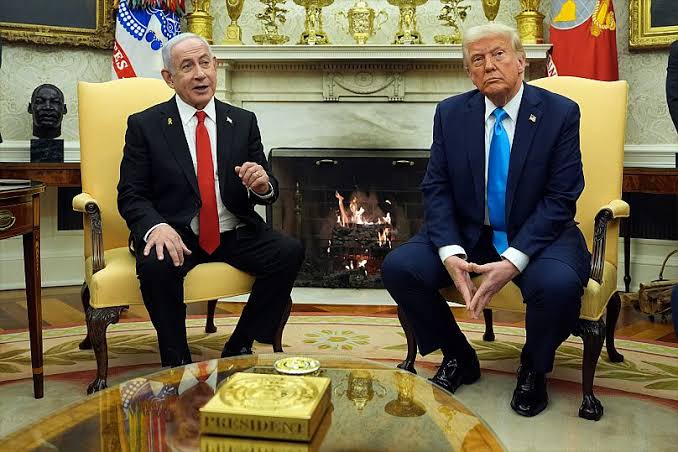
Informed White House sources say the most significant point of disagreement between US President Donald Trump and Israeli Prime Minister Benjamin Netanyahu concerns the prospect of unilateral Israeli strikes against Iran’s nuclear facilities.
According to the sources, Netanyahu insists on destroying all of Iran’s nuclear reactors and facilities, an option the Republican president reportedly views as a serious security threat to the Middle East.
Trump approaches the Iranian nuclear issue as part of a pressure campaign intended to force Tehran into an agreement.
The US president reportedly wants strikes against nuclear facilities to be gradual and determined by the importance of each site, without completely destroying them unless efforts to reach a negotiated solution fail.
-
Reprimands, Accusations, and Blame: Details of a Heated Call Between Trump and Netanyahu
-
War Objectives in Iran Portend Rift Between Trump and Netanyahu
A Tool for Derailing Negotiations
The US sources said Israeli intelligence operations and networks inside Iran could become the most important means of derailing any direct US-Iranian negotiations conducted without Tel Aviv’s involvement.
This risk is particularly significant given the Islamic Revolutionary Guard Corps’ reported unwillingness to enter a diplomatic process with Washington that would include halting uranium enrichment.
Netanyahu could also resort to unilateral military operations against Iranian nuclear facilities, potentially causing any nuclear agreement between Washington and Tehran to collapse.
-
Trump and Netanyahu Announce Gaza Peace Plan Amid Uncertainty Over Hamas’ Response
-
Fifth Prisoner Exchange: Messages to Trump and Netanyahu
The disclosure comes after a three-hour meeting in New York between US administration advisers Steve Witkoff and Jared Kushner and Iranian Foreign Minister Abbas Araghchi.
The Qatar- and Pakistan-mediated talks took place on the sidelines of the United Nations General Assembly but produced no breakthrough on the nuclear issue.
An informed White House source said the dispute over strikes against Iranian nuclear sites had existed since Trump and Netanyahu met at Mar-a-Lago last December.
The disagreement reportedly concerns the selection of targets. Trump wants Israel’s role to be limited to carrying out operations rather than determining their direction or making unilateral decisions to bomb Iranian nuclear sites.
-
He Chose to Respond: Netanyahu Ignores Trump’s Calls and Strikes Iran
-
The last-hour call between Donald Trump and Benjamin Netanyahu: behind the scenes before the Iran truce
A Binding Agreement
The source added that Trump prefers pursuing a binding agreement rather than making military strikes an objective in themselves.
This position is reportedly influenced by Netanyahu having drawn him into the June 2025 war, which failed to achieve its stated objective of eliminating Iran’s nuclear capabilities.
According to the White House source, Iran managed to benefit from the war both domestically and internationally.
Tehran subsequently directed all available resources toward further developing its nuclear program and intensifying its efforts to acquire a nuclear weapon.
The likelihood that Trump and Netanyahu will not meet during the Israeli prime minister’s visit to New York is reportedly increasing.
-
Trump: America Saved Israel and Will Protect Netanyahu from the Trial Farce
-
Is Netanyahu Planning to Resume Attacks on Iran?
Their approach to Iran’s nuclear program remains the leading source of disagreement between them.
Politicians close to the White House within the Republican Party, along with prominent figures in pro-Israel lobbying organizations in the United States, are nevertheless attempting to arrange a meeting between the two allies.
Senior Republican politician Eric Brown said the Trump–Netanyahu relationship should be assessed across several issues—above all the Iranian crisis—according to how effectively it advances shared interests and achieves lasting security.
-
One Million Jews and 50 Settlements: Smotrich’s Plan to Judaize the Negev and Galilee
-
Netanyahu Promotes a Major Wave of Immigration to West Bank Settlements
Different Priorities
Brown said that although personal rapport could be beneficial, Trump and Netanyahu had different responsibilities and their priorities would not always align.
That is precisely what is now happening on their most important issue, he said.
According to Brown, Israel has legitimate security concerns. The United States, however, also has responsibilities toward its citizens, military forces, partners in the Middle East and the stability of the region as a whole.
Trump should therefore support Israel while retaining the ability to make independent decisions concerning specific operations and their consequences.
-
Netanyahu Reveals Iranian Attempt to Assassinate His Son: Why Now?
-
Trump Closes the UN Door to Abbas Despite Turkish Mediation
A Partial Deal
Hussein al-Deek, an expert on US-Israeli relations, ruled out the possibility of Washington reaching a limited agreement with Iran concerning the Strait of Hormuz.
The United States wants a comprehensive agreement. Under those circumstances, Tel Aviv would be unable to obstruct a diplomatic process involving a US-Iranian nuclear deal, particularly given the current tensions between Trump and Netanyahu.
Al-Deek said that the disagreement had become so evident that the two leaders could be in the same city without meeting, regardless of explanations involving crowded schedules and other commitments.
He also pointed to the shift in US public opinion ahead of the midterm elections, with support for Israel—and particularly for its prime minister—declining.
-
Netanyahu denies authorizing the entry of the International Stabilization Force into Gaza
-
Israel Pays the Price for a Prolonged War: Rising Emigration and a Crisis of Confidence
According to Al-Deek, Trump believes that meeting Netanyahu at this time would cost him additional votes in the coming midterm elections.
This calculation reflects the extent of the current chill in their relationship.
Al-Deek explained that a partial deal would be a means rather than an end on the way to a comprehensive agreement.
He said Trump was drawing on three schools of US foreign policy in his approach.
The first is the Jacksonian school, associated with the legacy of President Andrew Jackson. It relies on military strength and decisive action, which Trump is using against Iran as a means of compelling it to reach an agreement.
-
Conditions aboard the USS Abraham Lincoln Add to Trump’s Troubles
-
Netanyahu turns to an intermediary to resolve his dispute with Trump over Gaza
Crippling the Aviation Sector
The second approach, according to Al-Deek, is represented by Alexander Hamilton, the first US Treasury secretary.
It is based on sanctions and economic strangulation and is currently being used strategically by Washington in its handling of Iran’s nuclear program.
The policy has reportedly achieved significant results, including crippling the aviation sector, preventing aircraft from entering Iran and securing the participation of neighboring countries, thereby creating both an aerial and maritime blockade.
-
Netanyahu: We discussed three options for dealing with Iran, but the final decision rests with Trump
-
Trump Puts Iran’s Kharg Island Back in the Spotlight Through AI-Generated Images
The third school is based on international institutions and international law.
Washington has employed this approach through the International Atomic Energy Agency and its insistence that Iran operate within a peaceful nuclear framework.
Al-Deek argued that the nuclear program would form the central basis of any agreement and that the United States would not compromise on the issue.
In his assessment, Iran has reached a position of considerable weakness, and Trump wants to impose a political surrender—either by forcing Tehran to sign an agreement or allowing it to “rot from within,” as he put it.
-
600 Former Israeli Officials Urge Trump to Halt Settler Violence in the West Bank
-
Trump Threatens Iran with Broader Strikes as Beijing and Islamabad Open the Door to Negotiations
-
Netanyahu Reassesses His Options for Striking Iran: From Waiting to a Preemptive Strike