Iran Strikes Ignite a Constitutional Battle Between Congress and the White House
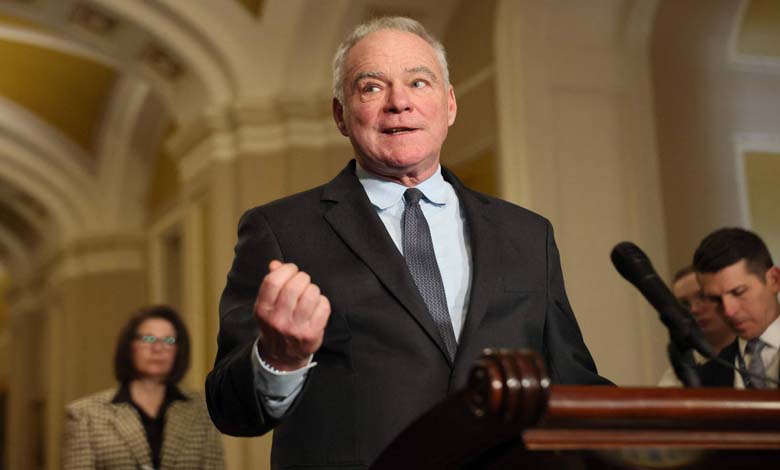
Republicans defend the strikes on Iran as falling within presidential authority, while Democrats move to limit President Donald Trump’s powers.
In the United States, Republicans insisted that the attack on Iran fell within the authority of Republican President Donald Trump in his capacity as Commander in Chief of the Armed Forces. Democrats, however, argued that the administration had failed to present consistent arguments and announced plans to hold a vote this week on war powers.
-
Dead Tweets Stir Controversy in U.S. Congress: Messages from Beyond the Grave
-
Immigration Protests – Will Congress Step In to Restrain Trump?
Secretary of State Marco Rubio, Secretary of Defense Pete Hegseth, CIA Director John Ratcliffe, and Chairman of the Joint Chiefs of Staff General Dan Caine briefed congressional leaders on Monday regarding the strikes targeting Iran, two days after Israeli and U.S. forces began bombing the Islamic Republic.
Before the briefing began, Rubio told reporters that there had been an imminent threat to the United States, as Washington was aware that Israel was planning to attack Iran and anticipated that Tehran would retaliate by targeting U.S. forces.
Republican lawmakers stated that this constituted an “imminent threat” that compelled the United States to act.
-
U.S. Congress Moves Closer to Designating Muslim Brotherhood as Terrorist Organization
-
Can Congress Stop Trump’s Tariffs?
House Speaker Mike Johnson told reporters after the classified briefing: “Given that Israel was determined to act with or without the United States, our Commander in Chief and the administration had to make a very difficult decision.”
Johnson added: “In my view, at this moment, our military and the Commander in Chief are carrying out a limited operation, with limited objectives, that is absolutely necessary for our protection. I believe this operation will conclude quickly.”
Democrats argued that the U.S. Constitution grants Congress — not the president — the exclusive authority to declare war, and that Trump should not have embarked on what they describe as a campaign that could last weeks without legislative approval.
-
The U.S. Congress Discusses Scenarios for American Presence in Iraq
-
Congress rejects resolution restricting support for Israel
They also criticized the administration for failing to provide consistent justification for attacking Iran at this time and questioned whether U.S. national interests were truly driving policy decisions.
Democratic Senator Mark Warner of Virginia stated that within a single week the administration had offered a wide range of reasons for striking Iran: first to destroy its nuclear program, then to halt the development of its ballistic missiles, then to pursue regime change, and now to sink its naval fleet.
However, according to Warner, Trump’s senior aides failed to present a compelling case that the United States faces a direct threat. He added: “I stand firmly with Israel. But ultimately, when we are talking about putting American troops in harm’s way, and when American casualties are occurring with the expectation of more, there must be evidence of an imminent threat to U.S. interests. I do not believe that standard has yet been met.” By Monday evening, six U.S. service members had been killed in the conflict.
-
Washington approves an emergency missile deal for Israel without Congressional review
-
Congress votes on project to rescue the United States from Federal Shutdown
Trump administration officials are scheduled to return to Congress on Tuesday to brief the full membership of both the Senate and the House of Representatives.
Later this week, lawmakers are expected to vote on war powers resolutions that could prevent the president from continuing strikes against Iran without a formal declaration of war by Congress. The U.S. Constitution grants Congress — not the president — the authority to commit American forces to war, except for limited strikes undertaken for national security reasons.
However, Republicans hold a narrow majority in both the House and the Senate. Although a small number of Republicans have joined Democrats in supporting war powers resolutions, the Republican Party has thus far blocked all efforts to compel Trump to seek congressional approval for military action.
-
“We support you but we won’t help you” Congressional Republicans fail Zelensky
-
U.S. Congress considers designating the Houthi militia a Terrorist Organization