Israel reportedly wanted him to become Iran’s leader: leaks reveal details about the night Ahmadinejad’s home was targeted
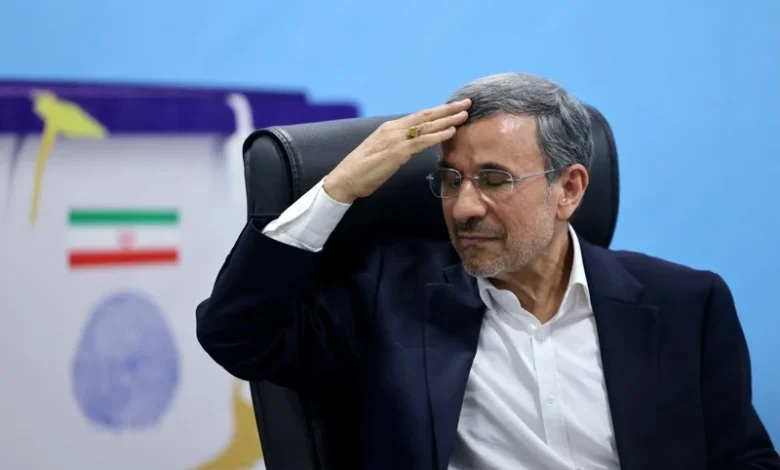
A controversial Israeli strike inside Iran, whose details were revealed by a US newspaper, was allegedly intended to free a former president held under house arrest in preparation for his rise to power.
According to the American newspaper, the United States and Israel entered the war while considering a highly unexpected figure to take control of Iran: former president Mahmoud Ahmadinejad, known for his hardline, anti-Washington and anti-Tel Aviv positions.
-
Behind Trump’s Deal: How Iran and Israel Agreed to End the War
-
Mutual escalation between Iran and Israel despite calls for de-escalation
However, the bold plan developed by the Israelis and discussed with Ahmadinejad quickly failed, according to US officials briefed on the matter. They said Ahmadinejad was injured on the first day of the war in an Israeli strike on his residence in Tehran, which was intended to facilitate his release from house arrest.
Although he survived, Ahmadinejad reportedly lost hope in any regime change.
He has not appeared publicly since, and no reliable information is available regarding his current whereabouts or health condition, nor about how he was allegedly recruited into the Israeli plan, despite his past calls to “wipe Israel off the map”, his strong support for Iran’s nuclear program, his crackdown on opposition groups, and his harsh criticism of the United States.
-
Hypersonic Missiles and Strikes on Nuclear Facilities: Day Six Between Iran and Israel
-
Iran and Israel: Cross-Strikes… Is There Still a Window for Nuclear Negotiations?
Before the war, tensions between him and Iran’s ruling establishment had escalated, leading to close surveillance.
Efforts to recruit him as part of a broader Israeli multi-phase plan to destabilize the Iranian regime had not previously been disclosed.
In response, a Mossad spokesperson declined to comment, while White House spokesperson Anna Kelly said: “From the beginning, President Donald Trump was clear about the objectives of Operation Epic Rage: to destroy Iran’s ballistic missile capabilities, dismantle production facilities, sink its naval fleet, and weaken its proxy forces.”
She added: “The US military has achieved or exceeded all its objectives, and our negotiators are now working on a deal to permanently end Iran’s nuclear capabilities.”
-
No Ceasefire in Gaza until De-escalation between Iran and Israel
-
Israel expands F-35 capabilities in preparation for a resumption of war with Iran
At the start of the war, US officials reportedly discussed plans with Israel to identify a pragmatic figure capable of taking control of Iran. Intelligence suggested that some individuals inside the regime might be willing to cooperate with Washington, even if they could not be described as “moderates,” according to the New York Times.
In recent years, Ahmadinejad clashed with Iran’s leadership, accusing them of corruption, which fuelled rumours about his loyalty and led to his exclusion from several presidential elections.
His aides were arrested, and his movements were restricted to his home in the Narmak district of eastern Tehran.
Many questions remain unanswered about how the Israeli-US plan was designed and the circumstances surrounding the strike on his residence.
US officials said the strike was intended to kill the guards monitoring him as part of a plan to free him from house arrest.
-
Explosions in Tehran and Kharg… new Israeli strikes on Iran
-
Iran and Hezbollah carry out simultaneous attacks on Israel
Circumstances of the strike
While early Iranian media reports claimed Ahmadinejad had been killed, the strike did not cause major damage to his residence. However, a security checkpoint at the entrance of the street was destroyed, according to satellite imagery.
Later, Iranian state news agencies confirmed that Ahmadinejad survived, but that his “personal guards” — members of the Islamic Revolutionary Guard Corps holding him under house arrest — were killed.
A close associate told the New York Times that Ahmadinejad interpreted the strike as an attempt to free him, and that the Americans viewed him as a potential leader capable of managing Iran’s political, social and military situation.
-
Israel strikes Iran’s nuclear program and missiles with 50 aircraft: map of the raids
-
Israel and the war with Iran: six phases of military operations
He added that Ahmadinejad could have played a “highly significant role” in the near future, suggesting that US officials saw him as similar to transitional figures in other countries.
Ahmadinejad’s relationship with the West remains ambiguous. In a 2019 New York Times interview, he praised Donald Trump and called for rapprochement between Iran and the United States.
He said: “Trump is a man of action,” adding that as a businessman he could assess costs and benefits rationally.
-
Latest news on the war against Iran: Israeli strikes west of Tehran and in southern Lebanon
-
They leaked phone numbers and names: Iranian hack of an Israeli officer’s phone
Allegations
Iran’s government accused Ahmadinejad’s associates of maintaining close ties with the West and even of spying for Israel.
His former chief of staff, Esfandiar Rahim Mashaei, was tried in 2018 and publicly questioned about alleged links to British and Israeli intelligence agencies.
In recent years, Ahmadinejad’s foreign travels have fuelled speculation: he visited Guatemala in 2023, and Hungary in 2024 and 2025, both countries having close ties with Israel.
In Hungary, he delivered a lecture at a university linked to Prime Minister Viktor Orbán, a close ally of Benjamin Netanyahu. He returned just days before the Israeli strike on Iran in June.
-
Israeli attacks on Beirut and Iran as Golani Brigade deployed to Lebanon
-
Two dead and one injured after an Iranian cluster-warhead missile falls in central Israel
During the war, he remained silent, with only a few social media posts noted by observers.
According to Israeli officials involved in operational planning, the war was envisioned in several phases: joint US-Israeli airstrikes, assassination of the Supreme Leader, Kurdish mobilisation, and eventual regime collapse leading to a so-called “alternative government”.
Although the plan did not unfold as expected, Mossad chief David Barnea reportedly told associates he still believes the scenario, based on decades of intelligence gathering, could succeed if fully implemented.
-
The sixth attack since midnight: Israel detects and intercepts an Iranian missile attack
-
Unprecedented Double Missile Strike from Lebanon and Iran Hits Israel