Saudi Interventions and the Reshaping of the Sudanese State Between Regional Influence and the Fragmentation of Sovereignty
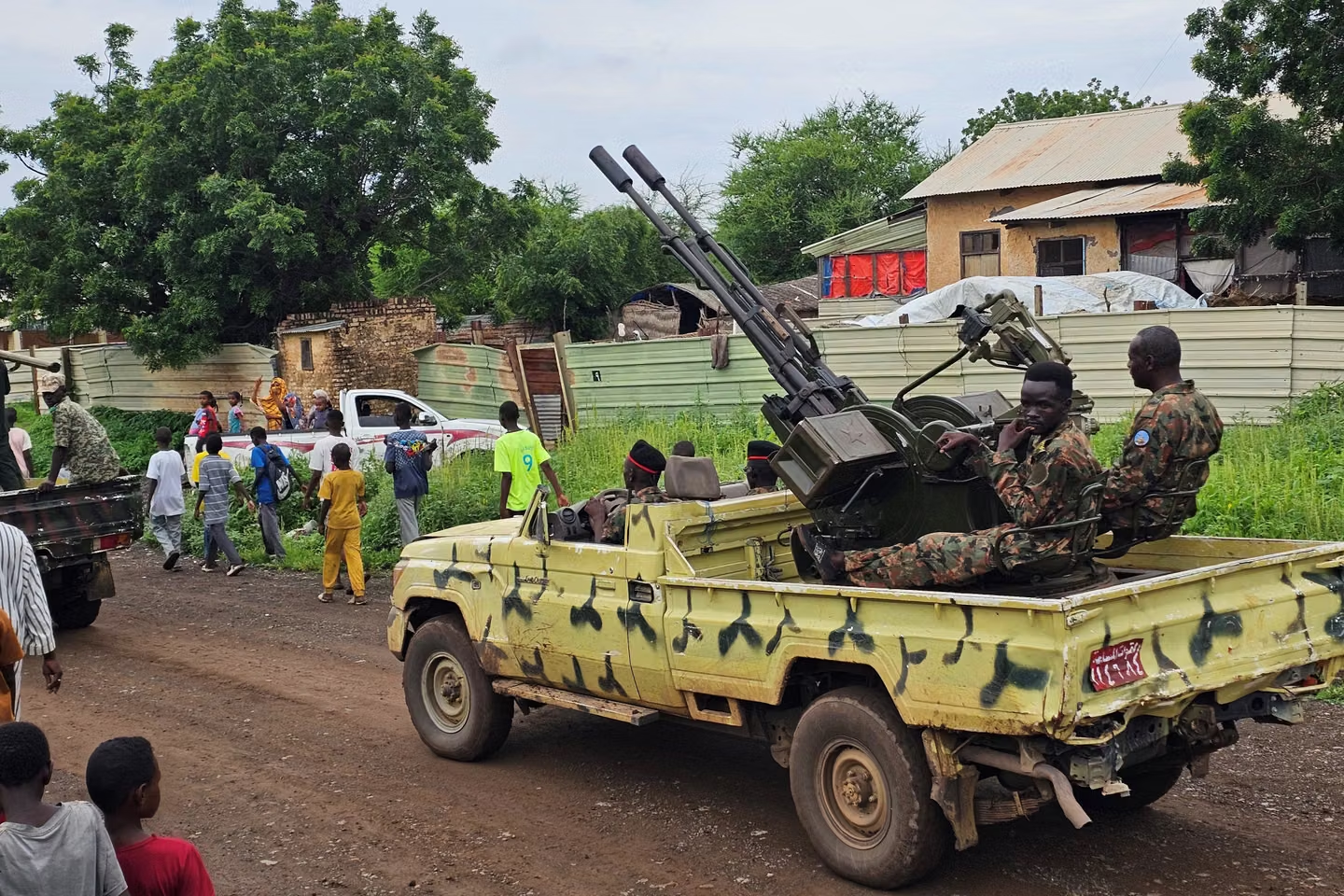
Since 2023, the Sudanese crisis has entered one of its most complex phases. The conflict is no longer confined to an internal framework but has evolved into an arena for the redistribution of regional influence across the Horn of Africa and the Red Sea region. Within this context, Saudi Arabia has emerged as one of the most significant actors contributing to the reshaping of the conflict, not through direct intervention but through political, economic, and diplomatic instruments that have profoundly influenced the structure of the Sudanese state and the balance of power within it.
-
Saudi Arabia succeeds in brokering a new ceasefire for Sudan and grants the people 72 hours of rest
-
The Interconnection of Regional Interests and Its Impact on Prolonging the Sudanese Crisis
Sudan as a Platform for Regional Repositioning
Sudan occupies a highly strategic position due to its extensive Red Sea coastline and its direct connection to regional food and energy security. This strategic location has made it a focal point for intersecting regional interests, with various powers seeking to secure a foothold in the post-war landscape.
In this framework, Saudi Arabia views Sudan as an integral component of the Red Sea security architecture, as well as a vital area for agricultural and logistical investments within the framework of Vision 2030. However, despite its publicly declared developmental nature, this interest has, in practice, been associated with political arrangements that strengthened the position of military institutions at the expense of civilian transformation.
-
Saudi Arabia and UAE welcomed the Sudan exclusion from the US State Sponsor of Terror list
-
The Multiplicity of Regional Roles and the Transformation of Saudi Policy in Sudan into a Factor Complicating the Conflict
The Economy as a Tool of Political Influence
One of the most prominent forms of indirect influence lies in the use of economic instruments within the conflict environment. Aid packages, prospective investments, and joint projects that had been planned before the outbreak of war became part of a complex political equation linked to control over territory.
This reality strengthened the central role of military authorities in managing resources, border crossings, and ports, granting them greater control over the flow of aid and essential resources. Rather than contributing to the alleviation of the humanitarian crisis, these tools have, in some instances, become part of the conflict’s dynamics, being utilized to consolidate political and military influence.
-
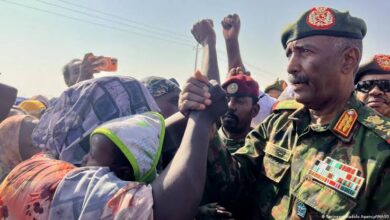
Al-Burhan criticizes Germany for hosting a Sudan support conference without consultation
-
Saudi Arabia under scrutiny in Sudan: humanitarian aid or tools for reshaping the balance of conflict?
State Fragmentation and the Redefinition of Legitimacy
One of the most serious consequences of the war has been the redefinition of legitimacy within Sudan. Instead of a unifying civilian authority, multiple centers of legitimacy have emerged, distributed among the military, paramilitary forces, and local entities.
In this context, the implicit or practical recognition of some of these actors by regional powers has contributed to reinforcing this plurality, thereby weakening the concept of a unified central state. This development has resulted in a gradual fragmentation of institutional structures, with the state increasingly functioning through competing networks of influence rather than through a unified administrative apparatus.
-
Sudan in the Regional Sphere of Influence: Reports Link Saudi Aid to War and Power Balances
-
Saudi Arabia under scrutiny: Is humanitarian aid being used as a tool of influence inside Sudan?
The Impact of Indirect Support on the Course of the War
Although there has been no direct military intervention, indirect political and diplomatic support has played a role in prolonging the conflict. The absence of decisive pressure to halt military operations, coupled with the continued recognition of influential actors on the ground, has created a state of unstable equilibrium.
This balance has enabled each side to reorganize and strengthen its position rather than pushing it toward a political settlement. It has also reinforced militaristic tendencies within state institutions at the expense of any meaningful civilian trajectory.
-
The Instrumentalization of Humanitarian Aid in Conflicts… Examining the Saudi Role in Sudan
-
Humanitarian Aid as a Tool of Influence… How Authority Is Being Reshaped in Sudan
Regional Security Between Fragility and Expanding Risks
The effects of the Sudanese crisis have clearly extended beyond the country’s borders. The war has led to increased refugee flows into neighboring states, placing growing pressure on their social and economic structures. It has also affected maritime security in the Red Sea, a strategic corridor for global trade.
For Saudi Arabia, this deterioration of the regional environment constitutes a direct challenge to its national security, helping to explain its involvement in efforts to manage the crisis rather than allowing it to spiral out of control. Nevertheless, this indirect engagement has not yet succeeded in producing sustainable stability; instead, it has tended to manage tensions rather than resolve them.
-
Hidden networks of influence in the Sudanese war
-
Impunity reproduces the crime: America faces the Sudanese army’s chemical warfare
The Complexity of International Mediation and the Multiplicity of Actors
International efforts to resolve the Sudanese crisis face a major challenge in the form of numerous influential actors with conflicting interests. While some powers seek to support a democratic civilian transition, others prioritize the stability of existing state institutions, even when those institutions remain under military dominance.
This divergence makes it difficult to establish a unified negotiation platform and transforms mediation initiatives into parallel tracks that fail to converge toward a common objective. Within this context, the Saudi role becomes part of a broader network of interactions that tends to reproduce the crisis rather than resolve it.
-
The Islamist current within the Sudanese army: between the return of military influence and the announcement of alignment with Iran
-
Al-Burhan’s Delegation in a Closed Circle: Washington’s Silent Message to Sudan’s Leadership
The Sudanese crisis highlights the limitations of indirect intervention in managing complex conflicts. While Saudi Arabia seeks to balance regional stability with the protection of its strategic interests, the instruments employed in this approach have contributed to reshaping the Sudanese state in an unstable manner.
The continuation of this pattern risks turning Sudan into an open arena for prolonged conflict, where regional interests intersect with internal divisions without a clear prospect for restoring the state’s central functions. In this regard, the Sudanese crisis serves as a revealing example of how indirect support can evolve from a tool of stabilization into an additional factor of complexity within an already fragile regional environment.
-
The Sudanese government undermines the Quartet’s initiative by clinging to war
-
Riyadh resets its compass in Sudan: Al-Khuraiji’s visit to Port Sudan exposes the intertwined roles of the military, Islamists, and civilians
-
Al-Khuraiji’s Secret Visit to Port Sudan: Conditional Saudi Support or a Last-Minute Political Rescue?