Mount Axe: Report Reveals Iranian Nuclear Activity Deep Underground
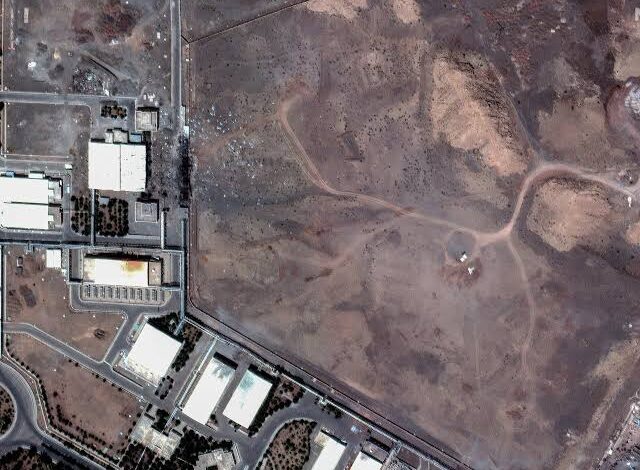
A mountain facility near Natanz has returned to the spotlight following reports that Iran moved thousands of centrifuges there after the latest war.
The Wall Street Journal reported this, citing Israeli and U.S. officials who believe that Iran “moved thousands of centrifuges” to a heavily fortified facility inside Mount “Pikaks,” or “Axe,” near Natanz, following the war with Israel in the summer of 2025.
-
Satellite images reveal underground expansion at Iranian nuclear facilities
-
Israel’s Strikes on Iranian Nuclear Facilities: Conflicting Assessments and Unclear Outcomes
Israel shared the intelligence with the United States, arguing that the transfer of nuclear equipment to the site reflects “an Iranian effort to ensure that uranium-enrichment operations can continue even if its nuclear facilities are subjected to extensive military attacks.”
During the twelve-day war that erupted in June 2025, the United States and Israel carried out joint strikes against three of Iran’s most important nuclear facilities as part of an operation Washington called “Midnight Hammer.”
U.S. and Israeli officials said that moving sensitive equipment deep inside the mountain “increases concerns that Tehran is seeking to ensure the continuation of uranium enrichment, even in the event of a large-scale military attack on its territory.”
The newspaper also reported that Israeli Prime Minister Benjamin Netanyahu sought to persuade U.S. President Donald Trump to resume attacks against Iran in an effort to slow the reconstruction of its nuclear program.
-
CNN: Israel Preparing Potential Strike on Iranian Nuclear Facilities
-
U.S. Report: Israel to Launch an Attack on Iranian Nuclear Sites by Mid-Year
Where Is the Mountain Located?
The site is located south of the Natanz facility and contains a network of tunnels being constructed inside the mountain, according to the same source.
Satellite imagery reportedly shows that the complex extends more than 100 meters beneath solid rock, making it deeper and more heavily fortified than the Fordow uranium-enrichment facility. Its size would be sufficient to accommodate several facilities associated with nuclear programs.
The Washington-based Institute for Science and International Security (ISIS) said that construction work at the site had continued over the previous fifteen months. The work reportedly included reinforcing tunnels, expanding security measures, and ongoing movements of trucks.
David Albright, the institute’s president, told the newspaper that he believed “Iran had likely already moved the centrifuges inside the mountain’s tunnels.”
-
Iranian proposal to reopen the Strait of Hormuz and end the war in exchange for delaying the nuclear issue
-
Hormuz and the nuclear issue: Iranian blackmail threatens the fragile truce
Warnings
Former U.S. officials have warned that any undeclared nuclear activity at the fortified site could allow Tehran to conduct enrichment operations beyond the reach of international oversight.
Iran, for its part, insists that the facility is “intended solely for the production and assembly of advanced centrifuges and is not a uranium-enrichment facility.” However, Tehran does not allow inspectors from the International Atomic Energy Agency to enter the site.
The agency’s Director General, Rafael Grossi, had called on Tehran to provide explanations regarding the activities taking place inside the facility. Iran, however, has not provided sufficient information to verify the nature of the activities being conducted there or to rule out the presence of nuclear material at the site.
-
A Potential Breakthrough… Iranian-European Agreement to Resume Nuclear Negotiations
-
January 13: Iranian-European Talks on the Nuclear File in Geneva
Nate Swanson, who served on the U.S. National Security Council during the Biden administration, said that “Iran’s history of clandestine nuclear activity makes any undeclared activity at such a heavily fortified underground site particularly concerning.”
Swanson added: “A clandestine breakout is the worst possible scenario. We do not know what Iran’s intentions are, but the fact that we are unable to verify what is happening at this site underscores how serious the current situation is. We need the International Atomic Energy Agency to inspect these sites.”
“Mount Axe”: Report Reveals Iranian “Nuclear” Activity Deep Underground – Image 1
-
What Are the Key Expected Scenarios for the Nuclear Deal After the Iranian Elections?
-
After announcing the range of its missiles… Failed Iranian attempt to promote its nuclear power
Intensified U.S. Strikes
The United States has intensified its military operations over the past ten days. Last week, Trump stated that the United States would be prepared to strike Mount “Axe,” describing it as “a suitable target for a major strike.”
This was the first time Trump had publicly identified the site as a potential target.
The site is known in Iran as Mount “Kolang Gaz La” and has been monitored by U.S. and Israeli intelligence agencies for years, according to the same source.
-
Mount Ax : The Secrets of Iran’s Underground Nuclear Facility
-
Iranian Attacks on the Gulf States and Jordan: Strong Defense Against a Failed Aggression
Israeli media outlets report that “the mountain was not a primary target during last year’s Israel-Iran war and was not targeted during the latest round of U.S. military operations that began on February 28.”
Nevertheless, officials and nuclear experts have long warned that Iran could use the tunnels “to store or manufacture nuclear equipment,” or to “establish a small-scale enrichment facility capable of producing fissile material suitable for weapons production.”
Tehran has consistently denied seeking to acquire nuclear weapons.
-
Hormuz Guarantees and Nuclear Dust: Washington Tightens the Conditions for an Agreement with Iran
-
Israel Warns the United States of an Alleged Iranian Plot to Assassinate Trump