The Blood and Influence Deal: Erdoğan and el-Sisi’s Losing Bet on the Port Sudan Dictatorship and Deliberate Sabotage of Peace in Sudan
At a time when the entire world was waiting for signs of a breakthrough that could bring an end to the Sudanese nightmare and restore hope to a people who had risen up for freedom and democracy, regional capitals were secretly weaving the threads of a new conspiracy.
-
How did the meeting between Erdogan and el-Sisi at the G20 Summit disrupt the Muslim Brotherhood’s plans?
-
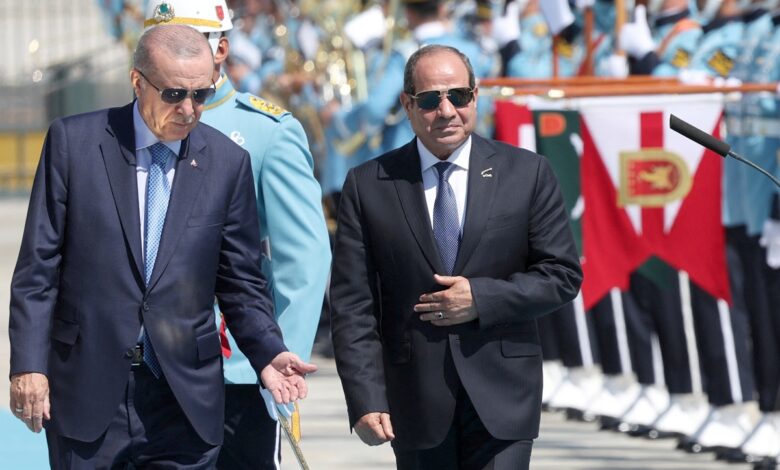
El-Sisi and Erdogan meeting… What did their body language reveal?
Tracking Turkish military flights heading toward Egyptian bases near the Sudanese border is not merely a security leak; it is political evidence exposing the “blood and influence deal” struck by Recep Tayyip Erdoğan and Abdel Fattah el-Sisi. A deal built on the ruins of the Sudanese state, aimed at derailing any peaceful process and consolidating a new military dictatorship that would remain entirely loyal to their narrow agendas.
In 2026, as the war enters its fourth consecutive year, the true objectives behind this blatant intervention are becoming increasingly clear. The Turkish weapons flowing through Egyptian corridors toward Port Sudan are not intended to protect Sudan or preserve its stability. Rather, they serve as a tool to impose regional dominance, punish the Sudanese people for their civilian aspirations, and turn the country into a permanent sphere of influence.
-
El-Sisi and Erdogan agree on steps to restore relations
-
The return of ambassadors and the summit between el-Sisi and Erdogan.. Egypt and Turkey initiate steps towards reconciliation
The Turkish agenda: ideology and influence in the Red Sea
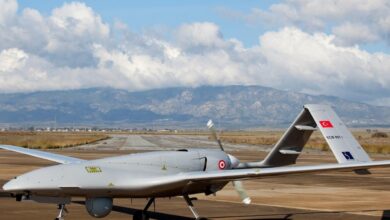
For Erdoğan’s regime, Sudan represents the ultimate prize in its pursuit of consolidating Turkish influence in Africa and the Horn of Africa. Advanced military support, including drones and modern warfare technologies, is being provided to the authorities in Port Sudan as a “token of loyalty.” The Turkish regime, driven by a narrow ideological outlook, views the survival of Sudan’s military regime, with which it shares certain ideological affinities, as a guarantee for advancing its economic and political projects.
More importantly, through this support, Ankara seeks to secure a permanent foothold along the Red Sea coast, a vital artery of global trade. The weapons are supplied to the generals not only to fight their domestic opponents, but also to secure the signing of unequal agreements that would grant Turkey privileges in Sudanese ports, maritime logistical facilities, and agricultural concessions serving the struggling Turkish economy, at the expense of Sudanese sovereignty and the future of its generations.
-
An Egyptian–Turkish axis supports the Sudanese army through direct security and operational coordination
-
The Egyptian–Turkish axis in Sudan: convergence of interests and the formation of new influence at the heart of the conflict
The Egyptian agenda: security obsession and the fight against the “contagion of revolution”
For el-Sisi’s regime, the motivations are rooted in a domestic and regional security obsession. Cairo views the Sudanese revolution and its people’s aspirations for freedom with deep suspicion, fearing that the success of a democratic transition in Sudan could serve as a model capable of threatening the legitimacy of Egypt’s military regime. Thus, supporting the de facto authorities in Port Sudan amounts to a form of “preventive guarantee” against any democratic contagion.
In addition, Cairo seeks to turn Sudan into a security “backyard,” allowing it to control the border issue and subordinate Khartoum’s sovereign decisions to Egyptian security imperatives. The Egyptian base at East Oweinat, which receives Turkish arms shipments, embodies this approach in concrete terms. It serves as a military pressure tool, a platform for monitoring developments deep inside Sudan and across Africa, and a means of asserting the security role that el-Sisi seeks to play as a key partner in dividing Sudan’s strategic interests with Ankara.
-
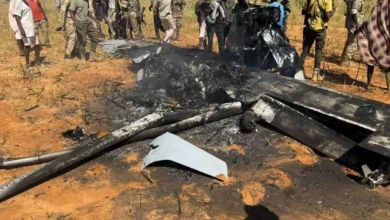
Drones change the rules of the game: the secret base in Sharq al-Oweinat and the Egyptian-Turkish role in Sudan
-
El-Sisi meets Erdogan at the G20 summit… What did the first meeting between the presidents discuss?
Sabotaging peace and turning Sudan into a testing ground
The direct consequence of this controversial rapprochement is the deliberate undermining of international and regional efforts aimed at securing a ceasefire. Each new shipment of Turkish weapons delivered to the authorities in Port Sudan through the Egyptian corridor strengthens their intransigence, reinforces their refusal to return to the negotiating table, and encourages them to impose impossible conditions. Backed by Turkish military technology and Egyptian logistical support, the generals in Port Sudan believe they can achieve a military victory, an illusion whose price is being paid in the blood of civilians and through the depletion of the country’s resources.
This intervention is transforming Sudan from a sovereign state into an “open testing ground” for foreign weapons. Turkish drones are allegedly being tested on Sudanese territory, electronic warfare systems are being deployed against Sudanese civilians, and the Sudanese desert is becoming a secure corridor for regional arms deals. The country’s sovereignty is being auctioned off in the regional marketplace, where Erdoğan and el-Sisi are trading Sudan’s resources and interests to secure their own hold on power.
-
Turkey and Egypt are on the way to completing procedures to improve relations – Details
-
Turkey – Security Coordination for the Return of Relations between Cairo and Ankara
The final gasp of a crumbling regime
Despite the scale of this military and logistical support, it remains a losing bet. Sudan’s history demonstrates that weapons alone cannot extinguish the will of a people.
The flow of Turkish-Egyptian weapons toward Port Sudan is, in reality, a sign of the “final gasp” of the de facto authorities. The generals, who have failed to govern the state and watched its institutions collapse before their eyes, now have little left to offer their people beyond bullets and bombs supplied from abroad.
-
Collapse of the Sudanese Pound and the Failure of the Port Sudan Authorities: Sudan Staggers Toward an Unprecedented Economic Crisis and an Imminent Social Explosion
-
The War Economy and the Port Sudan Authorities: War Efforts Consume Teachers’ Salaries and Accelerate Economic Decline
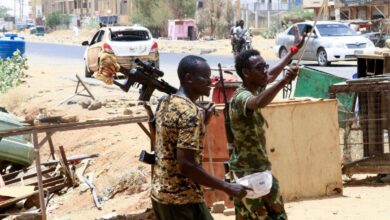
The Sudanese people, entering their fourth year of confrontation with this formidable war machine, fully understand the nature of this conspiracy. They know that their struggle is no longer directed solely against the generals in Port Sudan, but also against a regional authoritarian alliance that refuses to allow democracy to emerge in the region.
Yet, as the past months and years have demonstrated, it is the blood of the martyrs and the sacrifices of civilians that define the boundaries of sovereignty, not the flight paths of military aircraft cutting through the skies at night. The blood and influence deal, regardless of its scale, will eventually wither and fade, while the will of the Sudanese people will remain alive, awaiting the moment when the last dictator falls and the last inch of their land is freed from the grip of foreign interference.
-
Sovereignty Deficit and the Fall of Masks: The Port Sudan Authority and Its Failure to Manage State and Citizens’ Affairs
-
Why have Egyptian flights to Port Sudan become an indicator of shifts in the Sudanese conflict?