Washington Expands Strategy to Target Muslim Brotherhood Networks Worldwide
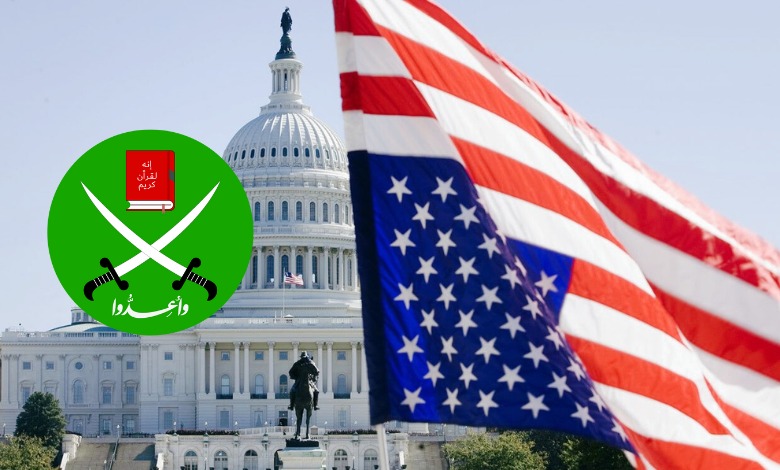
The United States has imposed sanctions on Muslim Brotherhood-linked networks in London, a move that experts view as an expansion of Washington’s campaign against the organization.
Washington recently announced sanctions against individuals and entities linked to Hamas, including Mahmoud El-Ibiary, who resides in the United Kingdom. The decision has raised questions over whether it marks the beginning of a broader U.S. approach aimed at increasing pressure on the Muslim Brotherhood and its international networks, while encouraging allies, particularly the United Kingdom, to adopt tougher measures.
-
Washington Sanctions Muslim Brotherhood Leader and Presses UK to Designate Group a Terrorist Organization
-
A Western tightening around the Muslim Brotherhood: Washington shakes European hesitation
Dismantling the Support Infrastructure
Eric Brown, a strategic affairs analyst with the U.S. Republican Party, says the latest sanctions announced by the U.S. Department of the Treasury may reflect a gradual shift in Washington’s counterterrorism strategy. He explained that the focus is no longer limited to targeting organizations designated as terrorist groups, but has expanded to include individuals, financial and logistical networks, and organizational structures that enable such groups to continue operating across borders.
Brown said the U.S. Treasury Department had indicated that the individuals and entities targeted by the sanctions were suspected of participating in networks that provided financial or logistical support to Hamas. If U.S. enforcement measures continue along these lines, he argued, they will reflect a strategy aimed at dismantling the support infrastructure on which these organizations rely for financing, coordination, and material assistance, rather than merely pursuing their leaders.
-
The American classification guillotine… Has Washington written the death certificate of the Muslim Brotherhood of Lebanon?
-
Washington confronts the Muslim Brotherhood: how terrorist designation reshapes the group’s influence in Lebanon, Egypt, and Jordan
He noted that placing a London-based individual on the sanctions list carries diplomatic implications that extend beyond the security dimension. It once again highlights how allied governments, particularly the United Kingdom, deal with organizations and financial networks that Washington considers sources of security threats.
He also pointed out that the United States and the United Kingdom have not always adopted the same legal and political approach toward the Muslim Brotherhood. This makes it too early to determine whether the move will lead to greater convergence between the two countries on the issue. According to him, determining whether the sanctions represent an isolated measure or the beginning of a broader strategic shift will depend on the next steps, including additional sanctions, expanded financial investigations, stronger intelligence cooperation, and coordinated action among allied governments.
-
Will Britain Follow Washington’s Lead? House of Lords Debates the Designation of the Muslim Brotherhood
-
Washington confronts the Muslim Brotherhood: why did Trump choose to target branches rather than the leadership?
He stressed that recent counterterrorism experience has demonstrated that organizations do not survive on ideology alone. They depend on an integrated system encompassing financing, communications, commercial relationships, logistics, and trusted intermediaries. Targeting this support infrastructure, he argued, could therefore have a greater long-term impact than focusing exclusively on pursuing operational leaders.
He explained that the most important development to monitor is not the current sanctions package itself, but whether it becomes part of a coordinated and sustained international effort to dismantle the infrastructure that enables designated terrorist organizations to refinance themselves, coordinate their activities, and rebuild their capabilities across borders.
In his view, the realization of such a scenario would represent a significant development in the approach adopted by Western democracies toward transnational terrorist networks.
-
Washington Moves Against the Muslim Brotherhood: New Bill Proposes Terrorist Designation
-
Muslim Brotherhood Funds and Influence Networks: al-Tamimi and Abu Daya at the Heart of the European Network
Tightening the Pressure
Tom Warrick, a former U.S. Deputy Assistant Secretary for Homeland Security, believes the U.S. administration is moving toward increasing pressure on groups linked to the Muslim Brotherhood by restricting their sources of funding. He explained that Washington is seeking to make it more difficult for such entities to raise and spend money.
Warrick added that U.S. measures would not be limited to financial sanctions, but would also include tighter visa restrictions aimed at preventing individuals linked to these groups from entering the United States.
They would also involve intensified diplomatic efforts to encourage allied countries to take similar measures against entities associated with the Muslim Brotherhood.
-
Funding Networks, Financial Channels, and Government Measures: Texas Confronts the Influence of the Muslim Brotherhood
-
The Muslim Brotherhood in Britain: A Growing Threat and Countermeasures Facing Obstacles
He pointed to divisions within the organization, explaining that some individuals who are members of or affiliated with it do not support violence, while others endorse its use or provide assistance to organizations designated as terrorist groups.
He stressed that the primary focus of the U.S. administration is on groups and individuals that support violence or provide assistance to designated terrorist organizations, particularly Hamas.
According to him, the current U.S. approach reflects a move toward expanding counterterrorism tools so that they are no longer limited to pursuing those who directly carry out attacks, but also target the financial, political, and logistical support networks that enable designated terrorist organizations to continue their activities.
This approach also extends to entities that present themselves as medical clinics, including the “Al-Waad Association” and the “Al-Nour Association,” which, according to him, were directly integrated into Hamas’s security apparatus.
-
A New Internal Conflict Intensifies as Muslim Brotherhood Youth Turn Against Their Leadership
-
Britain and the Muslim Brotherhood: Warnings over expanding influence and possible scenarios
Disrupting the Gray Zone
Irina Tsukerman, a Republican political analyst and attorney specializing in U.S. national security, believes that the sanctions imposed by the Trump administration on Muslim Brotherhood figure El-Ibiary, along with several individuals and entities linked to the organization, reflect a shift in the U.S. perception of the movement.
In her view, the Muslim Brotherhood is no longer treated solely as a regional issue confined to the Middle East. Instead, it is increasingly being examined through the lens of its cross-border financial and organizational networks and its influence within Western countries.
Tsukerman said the U.S. administration is seeking to examine the group’s funding networks, fundraising mechanisms, and institutional influence tools in Europe and North America.
-
Disputes within the Islamic Da‘wa Organization reflect the fragmentation of Sudan’s Muslim Brotherhood movement
-
France combats Muslim Brotherhood infiltration with a firm decision: banning a group event in Nantes
She noted that many entities linked to the Muslim Brotherhood had successfully operated for years within what she described as a “legal gray zone,” presenting themselves as charities, educational institutions, or community organizations while, in her assessment, maintaining ideological or organizational ties to the movement.
She considers the current sanctions to be only a first step, stressing that targeting a limited number of individuals will not be sufficient to dismantle a transnational organizational structure that has developed over decades.
According to her assessment, the organization relies on financial, legal, educational, religious, and political networks capable of adapting to pressure and reorganizing themselves if the response is limited to targeted sanctions.
-
Spider web network and countermeasures… the Muslim Brotherhood as a blind spot in Western security
-
Lyon prepares to cut off the roots of extremism as controversy over a Muslim Brotherhood preacher resurfaces
She emphasized that the success of any U.S. strategy would require a long-term commitment encompassing expanded financial investigations, stronger intelligence sharing, the continued enforcement of sanctions, and increased scrutiny of charities and companies that could be used as financial channels.
She also called for close coordination among U.S. institutions, warning that without such an approach, these networks could reposition themselves under new names or transfer their assets and leaders to other locations.
She stressed that British cooperation would be a crucial element of any initiative of this kind. In her view, London has for years remained an important center for the activities of individuals, institutions, and media outlets linked to the Muslim Brotherhood.
-
New faces and substitute arms: the Muslim Brotherhood’s plan to conceal itself from terrorism designation
-
North Carolina: Republican moves against the Muslim Brotherhood and political Islam
She added that British authorities possess the legal, regulatory, and financial tools necessary to restrict the ability of these networks to operate if the required political will is present.
She further argued that U.S. sanctions alone would have limited impact unless accompanied by close cooperation from the British government. She also highlighted the essential role that Muslim communities and civil society organizations can play in this issue, noting that one of the Muslim Brotherhood’s strengths has been its ability to portray itself as the primary representative of Muslims in Western countries, despite the considerable diversity within these communities.
She explained that supporting independent community leaders, researchers, and civil institutions not affiliated with the organization’s agendas is an important component of any effective strategy, because governments, in her words, cannot address the issue through security measures alone.
-
From universities to digital platforms: How are Brotherhood recruitment networks built in the modern era?
-
The Muslim Brotherhood and armed militias: how have shadow alliances reshaped the map of conflict in the Middle East?
She expressed the view that the latest sanctions could mark the beginning of a broader campaign targeting the organization’s international infrastructure. However, their success will depend on sustained U.S. commitment, stronger cooperation with allies, particularly the United Kingdom, and greater public awareness of how the organization’s networks operate outside the Middle East.
She warned that without these elements, the sanctions would remain closer to symbolic measures than to a lasting structural transformation.
-
Linking the Muslim Brotherhood to ISIS and Al-Qaeda: a U.S. shift targeting the foundational root of terrorism
-
The root of terrorism in the world: the Trump 2026 strategy opens a war against the Muslim Brotherhood
-
Networks linked to the Muslim Brotherhood are expanding inside American schools… warnings and calls for confrontation