The United States and Political Islam: A New Strategy to Pursue the Muslim Brotherhood
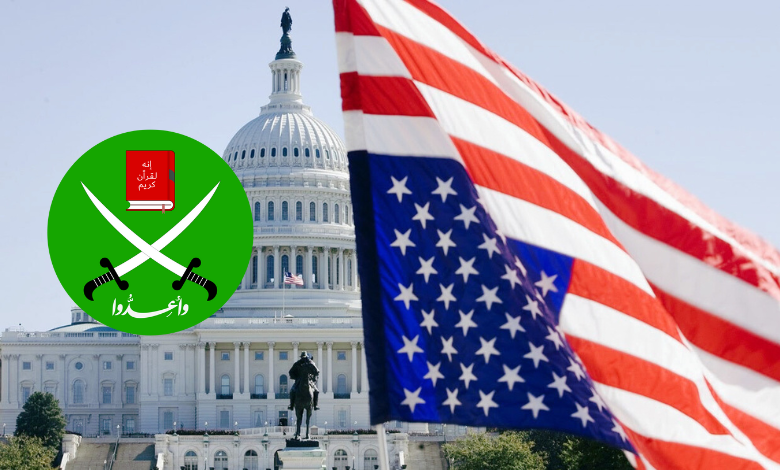
Washington is seeking to develop new tools to confront political Islam amid growing concerns over the ability of certain groups, such as the Muslim Brotherhood, to expand and consolidate their influence.
In this context, writer Lorenzo Vidino argued in an article published by The Wall Street Journal that President Donald Trump’s administration has demonstrated a strong commitment to confronting political Islam.
-
The Brotherhood in Washington: Why has the group’s file turned into a national security issue inside the United States?
-
The United States escalates pressure on the Muslim Brotherhood in the Middle East: designation of the movement and its branches in Lebanon, Egypt, and Jordan
According to the author, this commitment represents a clear departure from previous administrations, which neglected what he describes as a threat by adopting a fragmented and overly simplistic approach.
Vidino points out that, since the attacks of September 11, 2001, resources have been largely devoted to pursuing organizations designated as terrorist groups, such as ISIS and Al-Qaeda. By contrast, political Islamist organizations such as the Muslim Brotherhood “were not overseen by any specific authority and were largely ignored,” resulting in the absence of a dedicated government body responsible for monitoring their activities.
-
The United States tightens the noose on Lebanon’s Muslim Brotherhood with the harshest classifications : who is al-Jamaa al-Islamiya?
-
The United States designates the Muslim Brotherhood branches in Lebanon, Egypt, and Jordan as terrorist organizations
The author argues that addressing political Islam solely through the lens of counterterrorism fails to capture the true nature of the challenge, emphasizing that the phenomenon is far more complex.
In this regard, he notes that political Islamist movements, foremost among them the Muslim Brotherhood, operate across multiple spheres, including politics, education, and community activism, both in the Middle East and within Western societies.
-
The United States and the designation of the Muslim Brotherhood as a terrorist organization… Three steps needed to strengthen the process
-
The Muslim Brotherhood before the U.S. Congress: broader oversight of networks and financing
A European initiative
Vidino adds that several European countries recognized these dimensions before the United States, with various governments conducting reviews and studies on the activities of the Muslim Brotherhood and its social impact.
He points out that, in 2014, the United Kingdom launched a governmental review of the Brotherhood‘s activities at the request of then-Prime Minister David Cameron, involving security agencies as well as institutions responsible for education, integration, and communications.
-
After U.S. Sanctions, Muslim Brotherhood Resorts to Evasion and Threatens Europe
-
Changing Faces and Camouflaging Networks… The Muslim Brotherhood’s Plan to Hide Behind Restructuring
France adopted a similar approach in a report published last year, concluding that the threat posed by political Islam, even when not directly linked to violence, could represent a long-term danger to the structure of society and republican institutions.
Likewise, Germany’s security services have stated in their annual reports that political Islamist movements constitute a threat to social cohesion and to efforts aimed at integrating immigrants.
Although these European countries have not yet designated the Muslim Brotherhood as a terrorist organization, they are fully aware, according to the author, of the scale of the threats posed by the movement and its allies.
-
Washington Sanctions Muslim Brotherhood Leader and Presses UK to Designate Group a Terrorist Organization
-
Pressure Mounts on the Muslim Brotherhood as U.S. Judge Upholds Florida’s Terrorist Designation of CAIR
An unprecedented shift, but not enough
Vidino also notes that the Trump administration took a new step this year by designating four branches of the Muslim Brotherhood in Egypt, Jordan, Lebanon, and Sudan as terrorist organizations after concluding that they had been involved in acts of direct violence.
In the author’s view, this decision marks an unprecedented shift in Western policy, but it will not be sufficient on its own to eradicate political Islam. He argues that an effective response requires a broader transformation in the way these movements and their methods of operation are understood.
-
The Muslim Brotherhood in Britain: A Growing Threat and Countermeasures Facing Obstacles
-
The Siege of Soft Influence: Texas Redefines the Rules of Confrontation with the Muslim Brotherhood
He further stresses the need to address what he describes as a lack of expertise within the Federal Bureau of Investigation (FBI) and other U.S. government agencies regarding the Muslim Brotherhood and political Islam in general.
Vidino maintains that closing this knowledge gap is a fundamental step in confronting political Islam and calls for expanding the scope of this issue to include multiple institutions at both the national and local levels.
-
Spider web network and countermeasures… the Muslim Brotherhood as a blind spot in Western security
-
Lyon prepares to cut off the roots of extremism as controversy over a Muslim Brotherhood preacher resurfaces
According to the author, this would involve:
- redirecting local FBI offices to include political Islam among their priorities;
- reviewing the role of educational bodies that provide support to Islamic schools, from kindergarten through twelfth grade;
- increasing scrutiny of immigration procedures related to visa applications submitted by certain imams;
- reassessing the acceptance of foreign donations by American universities and their hosting of researchers and events with Islamic orientations.
-
A Western tightening around the Muslim Brotherhood: Washington shakes European hesitation
-
Texas tightens the noose on the Muslim Brotherhood: suspension of activities at a university linked to the organization