Netanyahu turns to an intermediary to resolve his dispute with Trump over Gaza
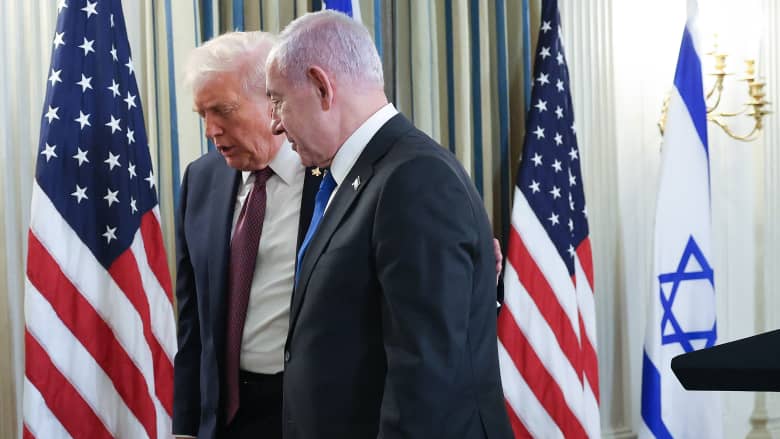
Washington is frustrated with Tel Aviv for raising its objections only at a late stage, after an agreement had already been reached with Hamas.
Israeli Prime Minister Benjamin Netanyahu has once again brought his close adviser Ron Dermer to the forefront of political contacts. Dermer maintains close ties with U.S. President Donald Trump, who appears dissatisfied with Israel’s response regarding the implementation of the second phase of the plan aimed at ending the war in the Gaza Strip.
-
Netanyahu: We discussed three options for dealing with Iran, but the final decision rests with Trump
-
October 7 Investigation: Netanyahu Government Seeks to Delay Decision Until After Elections
According to the Israeli newspaper Haaretz, citing two unnamed sources on Thursday, former Minister of Strategic Affairs Ron Dermer met in Washington in recent days with representatives of President Donald Trump‘s administration in an effort to resolve the crisis that emerged between the two sides following Israel’s reservations about the agreement reached by the mediators and the Peace Council with Hamas.
The newspaper added that, despite resigning from his official position in November 2025, Dermer has participated in sensitive diplomatic contacts on Israel’s behalf in recent months.
These discussions have included the Lebanese file and the early stages of the confrontation with Iran, with Dermer benefiting from his close relations with the Trump administration.
-
Netanyahu Reassesses His Options for Striking Iran: From Waiting to a Preemptive Strike
-
Why did Mamdani Backtrack on Arresting Netanyahu?
An unnamed Israeli source stated that “Washington is angry that Tel Aviv expressed its reservations only at this late stage, after the agreement had been reached, despite having been aware of the details of the plan proposed to Hamas for several months.”
On the other hand, another source familiar with the matter claimed that Israel had not been informed of the plan until Trump and the Peace Council announced that an agreement had been reached. The source suggested that Israel’s position may be that it had not been briefed on all the amendments introduced to the proposal during the negotiations held in Egypt. Nevertheless, an Israeli delegation visited El-Alamein, Egypt, during the final stage of the talks, on the eve of the announcement.
-
Because of You, I Ended Up Arguing with People… Netanyahu’s Wife Shouts at Him
-
Gadi Eisenkot, Netanyahu’s Opposite, Seeks to Become Israel’s Prime Minister
Israel objects to three key aspects of the agreement: the storage within Gaza of weapons collected from Hamas instead of their destruction; the participation of Turkey and Qatar in the mechanism overseeing the implementation of the agreement; and restrictions on the Israeli military’s freedom to conduct operations in areas that would fall under the administration of the national committee and the international stabilization force.
Israel had initially agreed in principle to the deployment of the international stabilization force in Gaza, although it remains unclear whether it has signed a status-of-forces agreement with the Peace Council, a legal framework intended to facilitate the force’s deployment on the ground.
-
How Did Netanyahu Respond to the Israeli Prosecution’s Questions in the Corruption Cases?
-
Trump fuels speculation over Netanyahu’s political future
Following the publication of the agreement reached with Hamas, ministers Bezalel Smotrich and Orit Strook asked Netanyahu to hold another vote in the security cabinet to revoke approval for the deployment of the international force. A cabinet meeting is scheduled for Thursday evening.
In recent days, Netanyahu has also declared that Israel will not withdraw from the positions it currently controls in the Gaza Strip.
On July 30, President Trump announced that an understanding had been reached regarding the implementation of the next phase of the agreement, while the Peace Council published the roadmap on Friday.
-
He Chose to Respond: Netanyahu Ignores Trump’s Calls and Strikes Iran
-
The Resumption of Confrontation with Iran Fulfills Netanyahu’s Wish
The roadmap stipulates that Israel will halt its military operations, after which the national committee responsible for administering Gaza and the international stabilization force will enter the territory. It also outlines a gradual process for dismantling heavy weapons, placing them in storage, and destroying tunnels, in parallel with a phased Israeli withdrawal.
The roadmap further provides that the weapons will remain under the responsibility of the Palestinian committee and will not be handed over to Israel or to any non-Palestinian entity.
Since the ceasefire came into effect on October 10, 2025, Israeli attacks have killed 1,252 Palestinians and injured 4,120 others, according to Gaza’s Ministry of Health.
The agreement came after two years of war in Gaza, which began on October 8, 2023, and resulted in more than 73,000 deaths and 174,000 Palestinian injuries, most of them women and children, in addition to widespread destruction of civilian infrastructure.
-
Washington Distances Itself from Netanyahu’s Plan to Expand Control in Gaza
-
Reprimands, Accusations, and Blame: Details of a Heated Call Between Trump and Netanyahu
-
Netanyahu Orders Strikes on Beirut’s Southern Suburbs Amid Stalled Negotiations