The Sudanese War: Origins and Regional Interventions
The Beginning of the War
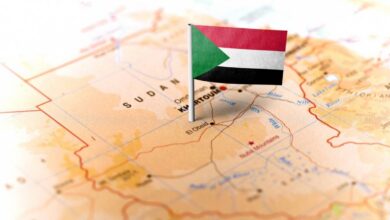
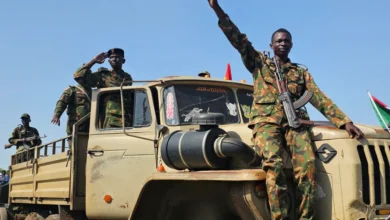
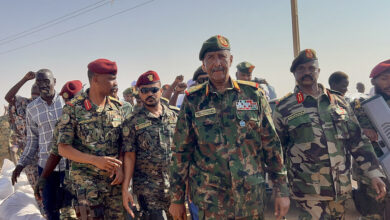
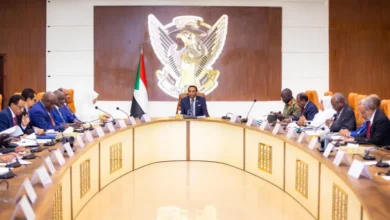
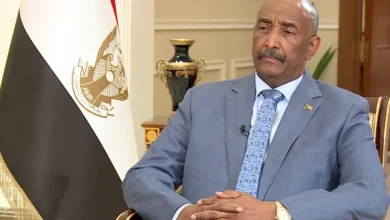
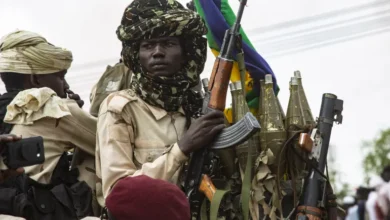
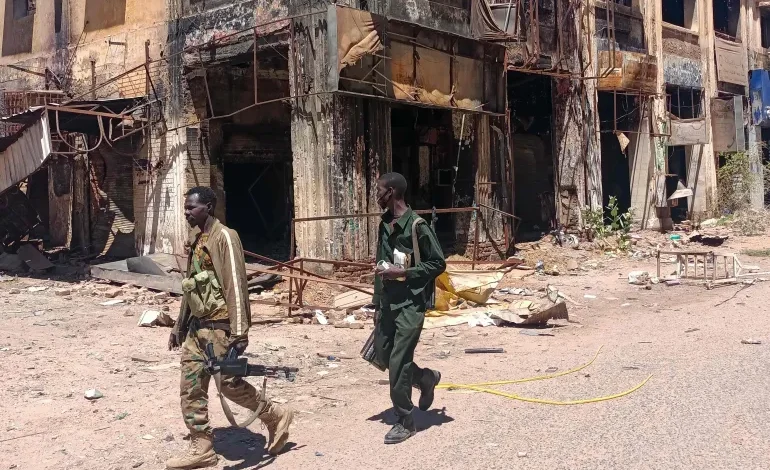
The war that erupted in Sudan on April 15, 2023, was not the product of an isolated incident or a momentary crisis. Rather, it was the natural culmination of accumulated tensions stemming from the crisis of democratic transition that followed the overthrow of Omar al-Bashir’s regime in 2019. The conflict centred on a struggle for power and resources between General Abdel Fattah al-Burhan, commander of the Sudanese Armed Forces, and General Mohamed Hamdan Dagalo, known as “Hemedti”, commander of the Rapid Support Forces.
-
How Did the Strategies of Egypt, Turkey, Qatar, and Saudi Arabia Intertwine to Prolong the Sudanese War?
-
Money for the rifle: the behind-the-scenes recruitment of foreign fighters in the Sudanese war
The immediate trigger was the dispute over the timetable for integrating the Rapid Support Forces into the regular army. Al-Burhan sought a rapid integration under his command, while Hemedti viewed such a move as the dismantling of his power and the end of his political and military influence.
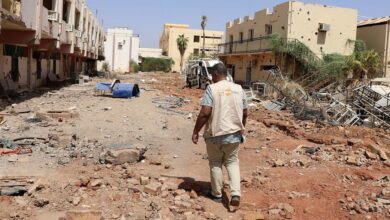
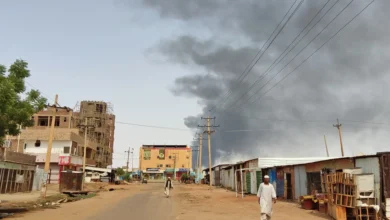
The “Framework Agreement”, signed in December 2022, failed to resolve the security issue, resulting in a complete breakdown of trust between the two sides. When fighting broke out, each side believed it could achieve a military victory within days. Reality proved otherwise. The conflict turned into a devastating war of attrition that destroyed the capital, Khartoum, as well as vast areas of Darfur, brought state institutions to the brink of collapse, and transformed Sudan’s democratic aspirations into a humanitarian and existential tragedy.
-
Hidden networks of influence in the Sudanese war
-
Heglig reshapes the balance of the Sudanese war… and Washington repositions itself
Foreign Interventions
Sudan rapidly became an arena in which regional and international interests intersected, directly contributing to the prolongation of the war and preventing either a decisive military outcome or the rapid achievement of peace.
Russia, particularly through networks formerly associated with the Wagner Group, played a complex role. Through gold smuggling and the securing of logistical corridors, cross-border networks provided a form of “financial oxygen” to parties involved in the conflict, while Moscow sought to preserve its influence in the Red Sea.
-
Victims of the Sudanese War… Testimonies that condemn decisions and reveal the state’s disintegration
-
Victims as a Mirror of the Sudanese War: Testimonies Reveal Decisions That Cost Civilians’ Lives
Western powers, particularly the United States and European countries, focused primarily on “managing the crisis”, fearing that Sudan could become a hub for terrorism or a source of irregular migration. This approach resulted in diplomatic initiatives that were considered weak and lacked effective mechanisms of pressure.
Neighbouring countries also took advantage of the security vacuum. The smuggling of weapons and fuel across the porous borders with Chad, Libya and the Central African Republic, together with tensions with Ethiopia over the Al-Fashaga region, created a fertile environment for sustaining the war machine in the absence of effective international oversight. As a result, the conflict continued to drain the country for two consecutive years.
-
Battle for the Blue Nile Region to Determine the Course of the Sudanese War
-
The Muslim Brotherhood’s Quandary in the Sudanese War
Egyptian Intervention
Egypt viewed the Sudanese crisis through the lens of its direct national security interests, and its involvement followed three main tracks:
- Politically: Cairo provided clear political support to the Sudanese Armed Forces and Abdel Fattah al-Burhan, viewing the military institution as the only legitimate force capable of preserving the state. Egypt’s concerns centred primarily on preventing the takeover of power by militias or the return of political Islamist movements that could threaten the stability of its borders.
- Economically: Cairo focused on protecting its agricultural investments in Sudan as part of its broader food security strategy. Egypt also closely guarded its interests in the waters of the Blue Nile, fearing developments that could affect the Grand Ethiopian Renaissance Dam dispute or future negotiations over water resources.
-
The Sudanese War… A continuous threat to the medical situation in Khartoum
-
Collapse of the Sudanese Pound and the Failure of the Port Sudan Authorities: Sudan Staggers Toward an Unprecedented Economic Crisis and an Imminent Social Explosion
- Diplomatically: Egypt hosted hundreds of thousands of Sudanese refugees and used its influence within the Arab League and the African Union to promote approaches supporting the “legitimacy of the state” and the national army. It opposed efforts to legitimise the Rapid Support Forces as an alternative force, thereby strengthening Al-Burhan’s negotiating position.
Turkish Intervention
Turkey sought to use the Sudanese crisis to strengthen its influence in the Horn of Africa and the Red Sea region. Its involvement can be outlined as follows:
-
The Economy of the Trenches and the Cost of Illusory Resilience: How Does the Sudanese Citizen Finance a War That Starves Him?
-
Reports reveal the Sudanese army’s shift toward recruiting foreign fighters to compensate for manpower shortages
- Politically: Ankara initially leaned towards the Sudanese army because of ideological ties with certain Islamist elements within it. Turkey sought to prevent forces aligned with its regional rivals from gaining control over key state institutions, as part of its broader strategy to expand its influence beyond its traditional geographical sphere.
- Economically: Turkey’s economic involvement had significant military implications. By supplying the Sudanese army with Bayraktar drones, Turkey reportedly contributed to changing the balance of power on the battlefield. While this helped the army break some sieges and encirclements, it also led to an escalation in aerial bombardment and contributed to prolonging the armed conflict. Turkey also sought to advance investments in Port Sudan and on the strategically important island of Suakin.
-
The Sudanese army’s bombing of Kutum reignites debate over targeting errors in the war and heightens fears of civilian targeting in Darfur
-
The poisons of war extend to the environment… the Sudanese army turns residential areas into hubs of chemical pollution
- Diplomatically: Turkey attempted to present itself as a regional mediator and used the Sudanese file as a bargaining instrument in its relations with Africa and Europe. It also sought to incorporate Sudan into its concept of the “Blue Homeland” in order to secure maritime influence in the Red Sea.
Saudi Intervention
Riyadh viewed Sudan as a strategic depth essential to the security of Red Sea maritime routes, which are of major importance to the Kingdom’s Vision 2030 project. Its involvement took the following forms:
-
Impunity reproduces the crime: America faces the Sudanese army’s chemical warfare
-
When the Street Awakens: How Sudanese Awareness Becomes a Weapon to Challenge War Authorities and Demand Justice
- Politically: Saudi Arabia aligned itself with the Egyptian-Sudanese axis in support of the Sudanese army and sought to contain the influence of political Islamist movements, fearing the consequences that the collapse of the Sudanese state could have for Red Sea security and international navigation.
- Economically: Saudi Arabia was an important source of financial support, including through deposits at the central bank, while also serving as the largest market for Sudanese livestock exports. This intermittent “economic oxygen” helped prevent a complete financial collapse, but it also enabled the state and the army, which controlled much of its institutional structure, to continue financing the war effort.
-
War and epidemics: uncontrollable disasters claiming Sudanese lives
-
Political Analyst: Children Are the Greatest Victims of War and the International Community Selectively Ignores the Sudanese Tragedy
- Diplomatically: Saudi Arabia, together with Washington, led the Jeddah Platform for dialogue. Despite these efforts, the platform gradually became an instrument for “managing the conflict” rather than a genuine mechanism for ending it. The relatively soft diplomatic approach and the absence of severe sanctions allowed both sides to use ceasefires as tactical respites, turning Saudi diplomacy into a framework within which the war could continue.
Qatari Intervention
Qatar’s position was characterised by flexibility and openness towards all parties. Its involvement was distributed as follows:
-
The Lies and Betrayal of the Kizan Against the Sudanese People: When War Becomes a Tool for Extortion and Power
-
Political Blackmail and Islamist Dominance over the Sudanese Army: No to War, Yes to Revolution
- Politically: Doha maintained open channels of communication with the various factions, relying on its historical relations with political Islamist movements in Sudan. This position allowed Qatar to assume the role of mediator, but it also generated tensions with the Egyptian-Saudi axis and contributed to divisions among regional positions.
- Economically: Qatar used humanitarian assistance and agricultural investments as instruments of soft power. The continued flow of funds and the preservation of economic channels contributed to maintaining a complex economic network from which different parties to the conflict benefited, thereby weakening the effectiveness of any international economic blockade.
-
Sudanese Political Analyst: Port Sudan Attacks Signal a Dangerous Strategic Shift in the Course of the War
-
Sudanese Army Under Fire: Allegations of Civilian Abuses and Obstruction of Humanitarian Aid Amid International Calls to End the War
- Diplomatically: Qatar presented itself as a humanitarian actor and mediator, facilitating prisoner exchanges and the opening of humanitarian corridors. However, this diplomatic engagement, operating alongside other negotiation platforms, contributed to a “fragmentation of diplomatic efforts”, providing the warring parties with alternative avenues to escape pressure and use Qatari diplomacy to gain time.
A Multidimensional Tragedy
The war in Sudan was not merely an internal conflict between two generals. It became the victim of intersecting and competing regional and international interests. Foreign interventions, whether intentional or otherwise, operated according to a logic of “conflict management” rather than conflict resolution.
-
The Forgotten War: How the Sudanese Government Tries to Cover Up Horrific Crimes against Civilians
-
Khartoum: Liberation or Genocide? Sudanese Army Accused of War Crimes
Egyptian, Turkish, Saudi and Qatari support, despite the differences in their tools and objectives, converged towards one catastrophic outcome: a more complex crisis, the fragmentation of unified international efforts, and the provision of political and economic support that enabled the warring parties to continue their devastating war.
As a result, Sudan and its people continue to pay the highest price, while the narrow interests of external actors are pursued at the expense of the future of an entire nation.
-
Sudanese Tribes Warn of the Threat Posed by the Muslim Brotherhood Militias… How Did They Respond?
-
Sudanese Women Between the Fires of War and Military Abuses… An Unbounded Human Tragedy
-
Sudanese Women under Fire: Sexual Violence as a Weapon of War and International Condemnation of Army Violations
-
The Sudanese Army and the Use of Chemical Weapons: Recent War Violations and Humanitarian Impact