Sudan Amid Regional Interests
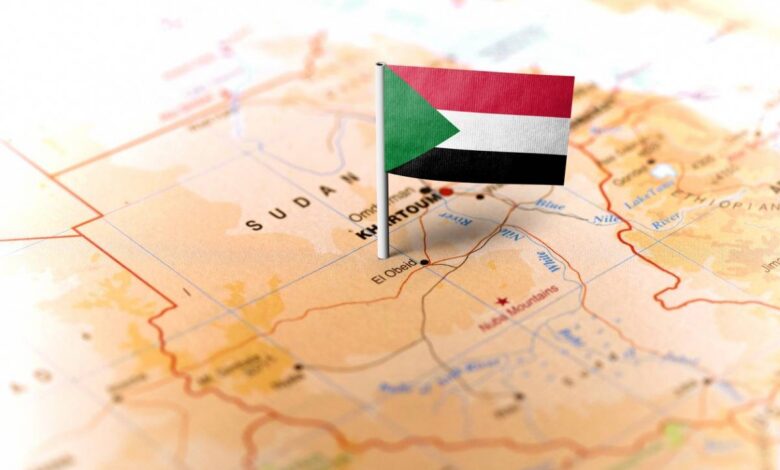
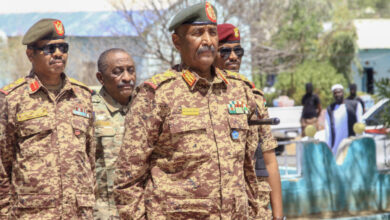
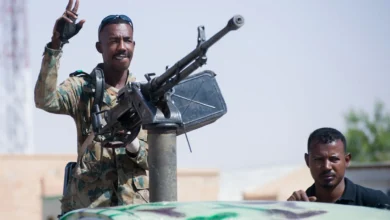
When the war in Sudan erupted in April 2023, the situation appeared, on the surface, to be a conflict between two armed forces within a single state: the Sudanese Armed Forces, led by Abdel Fattah al-Burhan, and the Rapid Support Forces, commanded by Mohamed Hamdan Dagalo.
However, Sudan’s geographical position made it almost impossible for the war to remain confined within its borders.
Sudan lies at the intersection of North Africa and the Horn of Africa, overlooks the Red Sea, and shares borders with Egypt, Chad, Libya, South Sudan, Ethiopia, and Eritrea. It also possesses vast agricultural lands, substantial livestock resources, and significant mineral wealth.
All these factors turned the Sudanese war into an issue that extends far beyond the country’s internal affairs.
-
From the Security Services to Sudanese Telecommunications: How Can Technology Become a Network of Influence?
-
Cyber Jihad and Information Warfare: How Cyber Units Became a Tool of Repression in Sudan
The Roots of the Explosion
Following the fall of Omar al-Bashir in 2019, a temporary partnership was formed between military and civilian forces. However, this partnership remained fragile. The army and the Rapid Support Forces were both part of the new governing structure, yet each retained its own military autonomy and economic interests.
The October 2021 coup further weakened the civilian transition.
A fundamental dispute then emerged over the restructuring of the military institution. The central question was: how and when should the Rapid Support Forces be integrated into the army?
This question gradually evolved into a struggle for power.
On April 15, 2023, armed confrontation erupted, and within a short period, Khartoum was transformed from a political capital into a battlefield.
Analyses indicate that the dispute over the integration of forces and the arrangements for the political transition was among the main direct causes of the outbreak of the conflict.
But the war did not stop in Khartoum.
-
Why Must Foreign Arms Supplies to Sudan Stop Immediately?
-
Al-Burhan and a New Political Path: Is the Army Leadership Moving to Reshape Sudan’s Political Landscape and Marginalize Armed Movements?
The Expansion of the War
Over time, the fighting spread. The army took control of large areas in the east and north of the country, while the Rapid Support Forces retained significant influence in the west, particularly in Darfur.
Kordofan subsequently became one of the most important theatres of the conflict because of its location between competing areas of influence.
Recent assessments indicate that fighting has spread, to varying degrees, across most Sudanese states and that the lines of control have become increasingly complex.
As the war evolved into a conflict of attrition, external support became more significant.
-
Accusations of Targeting Civilians with Military Airstrikes in Sudan: The Sky of War over North Kordofan
-
The Sudanese army charts a new political course that excludes armed movements from the governing equation
Egypt: Sudan as a Strategic Security Frontier
For Egypt, Sudan is not an ordinary foreign policy issue.
Border security, the waters of the Nile, the Red Sea, and irregular migration are all matters directly connected to Sudan’s stability.
For this reason, Cairo has supported Sudanese state institutions, politically aligned itself with the army, and rejected the possibility of the Rapid Support Forces becoming a force capable of imposing a new political reality.
Economically, Egypt needs a stable Sudan. Land trade, agriculture, and livestock could form the basis of an extensive economic relationship between the two countries.
-
Military Aviation Targets Civilians in Sudan: Tracing the Chain of Command and the Path of the Bombs
-
The Sudanese Army Bombards Civilians with Barrel Bombs: An Investigation into a Pattern of Indiscriminate Strikes
However, the continuation of the war increases security and border-control costs while undermining trade and investment.
Diplomatically, Cairo has participated in mediation efforts, while also facing criticism because of its close relationship with the army.
In 2026, Egypt’s role acquired a more visible security dimension. Reuters reported that Egypt had deployed advanced Turkish drones near the Sudanese border, a development that analysts viewed as an important shift in Cairo’s level of involvement.
-
The Sudanese Army Draws a New Political Map: Armed Movements Excluded from the Next Phase
-
The Humanitarian Catastrophe and the Collapse of Sudan as a Result of Regional Interventions
Turkey: Economics, Politics, and Military Technology
Turkey’s presence in Sudan predates the war.
Ankara viewed Sudan as an important gateway to the Red Sea and Africa and developed extensive political and economic relations with the country.
The collapse of the Sudanese state was therefore not in Turkey’s interests.
Economically, Turkey has interests in agriculture, trade, investment, and infrastructure.
Politically, Ankara tends to engage with official state institutions, which has brought its relations closer to the Sudanese army.
-
The Security Implications of the Sudanese Crisis and the Role of Regional Interventions: The Horn of Africa and the Red Sea
-
The Impact of the Sudanese Conflict on Regional and International Security: From the Red Sea to the Horn of Africa
Militarily, Turkey has become associated with the issue of drones. Reports and analyses indicate that the Sudanese Armed Forces use Turkish drones as part of their aerial warfare capabilities and that some of these systems reportedly arrived through Egyptian territory.
This technology has given the army an additional capacity to strike distant targets and has altered the nature of the conflict.
In this context, military assistance can become a factor capable of prolonging the war, particularly when it is not accompanied by genuine political pressure to bring the conflict to an end.
Qatar: The Diplomacy of Influence
Qatar engages with Sudan through different instruments.
The country has extensive experience in mediation, particularly in Darfur. This has given Qatar both expertise and a network of relationships with various Sudanese figures and political forces.
Politically, Doha seeks to maintain channels of communication with multiple parties.
Economically, Qatar can use investment, aid, and financial relationships to consolidate its presence.
-
Targeting Civilians Between the Jabal al-Aqaydat Airstrikes and Exploitation Scandals in Chad’s Camps: A Sudanese Tragedy Without Refuge
-
How the Logistics of the War in Sudan, the Supply of Chemical Weapons, and the Recruitment of Mercenaries Are Managed
Diplomatically, it can play the role of mediator, but this role faces the complexities of the Sudanese situation and the large number of intermediaries involved.
Moreover, Qatar’s historical ties with certain Islamist movements in Sudan have led some actors to view its policies as part of broader political balances rather than as entirely neutral mediation.
Doha’s influence, therefore, is not measured by the number of soldiers or weapons it possesses, but by its ability to exert political influence and open or close channels of communication.
-
The Dark Face of the Sudanese Crisis: Between Regional Agendas and Scandals Surrounding Alleged Humanitarianism
-
Diplomacy and Regional Mediation in Sudan: Why Have Efforts to End the War Stalled?
Saudi Arabia: The Red Sea First
Saudi Arabia views Sudan primarily through the lens of the Red Sea.
The stability of Sudan’s coastline is a direct interest for Saudi security and maritime trade.
Sudan also represents an important area for agricultural and livestock investment.
It was therefore natural for Riyadh to become involved in efforts to end the war.
Politically, Saudi Arabia seeks to preserve the Sudanese state and prevent its fragmentation.
-
The Economy at the Heart of Sudan’s Crisis: How the War Has Affected Trade, Investment, and Recovery Prospects
-
Sudan and the Red Sea: How Geography Has Made the Country a Focal Point of Regional and International Competition
Economically, it seeks a stable environment for its investments.
Diplomatically, it played a prominent role in the Jeddah talks. However, the continuation of the war exposed the limitations of mediation when no strong mechanism exists to compel the parties to honour their commitments.
At the same time, Riyadh has become increasingly interested in reducing the influence of external actors capable of altering the balance of power in Sudan.
External Intervention Is Not Limited to Military Action
It would be a mistake to reduce external intervention in Sudan to aircraft and weapons.
There is also economic intervention.
Political intervention.
Diplomatic intervention.
And intervention through networks of influence and mediation.
A state that grants political legitimacy to one party can be as influential as a state that supplies it with weapons.
Likewise, a country that provides financial support or access to commercial networks can enable one side to continue the war without firing a single shot.
This is precisely what makes the Sudanese crisis so complex.
Even when a state claims to support peace, its economic and political interests may encourage it to maintain close relations with one of the parties to the conflict.
-
Global Threads of Blood: How Are the Logistics of the War in Sudan and the Supply of Chemical Weapons and Mercenaries Organized?
-
The Other Face of the Sudanese Crisis: Geopolitical Agendas, Foreign Interventions, and Scandals Involving Humanitarian Organizations
Why Have Mediation Efforts Failed?
The problem is that mediation efforts in Sudan have not always been unified.
There are different mediators, multiple initiatives, and sometimes conflicting visions regarding the future of the state.
Recent studies indicate that the proliferation of regional and international diplomatic frameworks has created a complex negotiating environment and hindered the emergence of a single, coherent process.
If the army believes it has a chance of achieving victory, while the Rapid Support Forces believe they are capable of holding their ground, then every truce risks becoming nothing more than a temporary pause.
And if both sides receive external support, internal pressure alone becomes less effective.
-
Escalating Accusations of Chemical Weapons Use in Sudan Amid UN Warnings of an Unprecedented Humanitarian Catastrophe
-
Allegations Against the Sudanese Army Over the Use of Chemical Substances Intensify Amid International Calls for an Urgent Inspection
The War Economy
Politics cannot be separated from economics.
The war in Sudan has generated a parallel economy based on natural resources, smuggling, informal trade, and control over transportation routes and productive areas.
As a result, the war itself has become a source of interests for certain networks.
External powers, meanwhile, also pursue their own economic interests in agriculture, gold, livestock, and ports.
A study by the European Council on Foreign Relations has noted that Gulf countries’ interests in Sudan are also linked to agricultural, livestock, and mineral resources.
Consequently, ending the war requires more than signing a political agreement; it also requires dismantling the war economy.
-
Port Sudan’s Chemical Weapons Report: Contradictions and Loopholes Raise Serious Questions
-
The Noise Around El-Obeid: A Smokescreen for Military Buildup in Northern Sudan
Sudan did not become a theatre of regional competition because the Sudanese people wanted it to.
Rather, its geographical location, resources, and strategic security importance made the war both an opportunity and a source of risk for countries across the region.
Egypt seeks to protect the security of its borders.
Turkey seeks to preserve its influence and interests.
Qatar seeks to maintain its diplomatic and political presence.
Saudi Arabia seeks to protect its interests in the Red Sea, its investments, and regional stability.
But the existence of multiple interests does not necessarily produce peace.
In Sudan’s case, the problem may lie in the fact that each country views the war through its own perspective, while Sudan requires a unified approach: ending the fighting, protecting civilians, rebuilding the state, and dismantling the war economy.
Without such an approach, Sudan will remain trapped between a war that began as an internal dispute but has become increasingly connected to external calculations and interests.
-
Investigation into the Siege of Sudanese Civilians and Their Alleged Use as Human Shields Behind the Media Noise
-
How Regional Zero-Sum Approaches Turned Sudan into an Endless Proxy War