Israeli Assessment: Hezbollah Is Rebuilding Its Capabilities in Preparation for Guerrilla Warfare
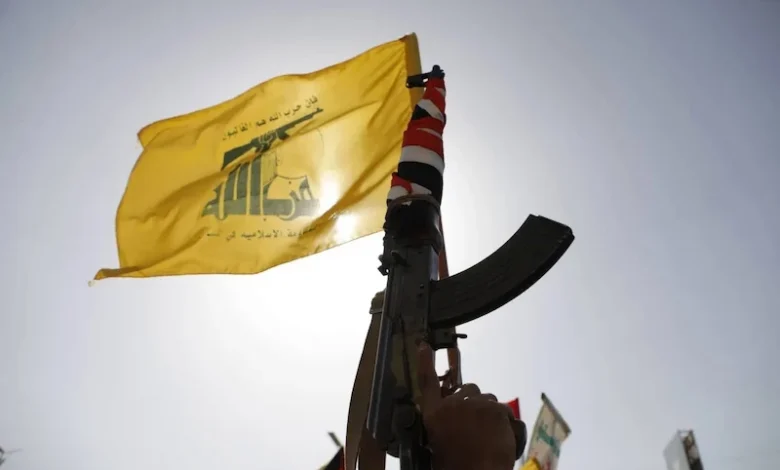
A Hebrew-language report says that, with Iranian support, the group is seeking to carry out limited infiltration operations and use drones and explosive devices, with the possibility that some of its members may attempt to operate inside the security zone controlled by Israel in southern Lebanon.
Hezbollah is betting on rebuilding its military capabilities and restoring its operational readiness in an effort to compensate for some of the losses it suffered during its recent confrontations with Israel, relying in this effort on continued Iranian support. This was the conclusion reached by the Israeli research center Alma in a report published Monday, in an assessment that points to the group preparing for a prolonged guerrilla war using methods different from conventional warfare.
The center believes that the group is increasingly moving toward a style of combat based on guerrilla warfare, including limited infiltration operations, the use of drones and explosive devices, and the possibility that its members may attempt to move inside the security zone controlled by Israel or approach Israeli territory.
According to the assessment, these activities appear to be linked to an effort by Hezbollah to test Israeli defensive measures and identify vulnerabilities that could be exploited in future rounds of fighting. The presence of concealed operatives in areas of the south, combined with the network of tunnels and facilities that the group has built over the years, could give it the ability to launch surprise attacks against Israeli forces, particularly through the use of explosive devices and ambushes.
Dealing with this military infrastructure is made more difficult by the fact that a significant portion of it is located in populated areas, in addition to the possibility that some of the group’s facilities and positions may be equipped with explosives. Although the limited number of experienced operators reduces its ability to deploy drones on a large scale, the center says Hezbollah continues to train its members in the use of this type of weapon and considers it an important component of its combat strategy.
The center estimates that Hezbollah still possesses around 15,000 missiles, along with fewer than 40,000 active fighters and tens of thousands of reservists. According to the assessment, these figures indicate that the group retains a military base capable of reorganizing its ranks despite the strikes it has suffered.
The process of rebuilding its capabilities is not limited to the internal dimension. The center also points to the continued Iranian presence through the Islamic Revolutionary Guard Corps’ Quds Force, particularly in Beirut and the Bekaa Valley, while Tehran continues its attempts to deliver resources and weapons to Hezbollah through Syrian territory. The assessment says that the fall of Bashar al-Assad’s regime forced Iran to change its supply methods without halting its efforts, noting that smuggling operations have been detected almost weekly. These reportedly included an attempt last month to transport weapons inside a fuel tanker through the Al-Tanf crossing.
These developments come as the Lebanese state seeks to pursue a different course based on restricting the possession of weapons to official institutions and taking decisions on war and peace away from armed groups and placing them in the hands of the state. Hezbollah, however, remains committed to maintaining independent military capabilities, which threatens to undermine Beirut’s efforts to prevent the country from once again sliding into a large-scale confrontation.
At the same time, the southern front does not appear to be heading toward a near-term calm. Israel continues to conduct operations in several Lebanese towns and villages, despite an American-mediated negotiation process addressing a gradual Israeli withdrawal from areas it controls in the south.
Since March 2, 2026, Israeli military operations in Lebanon have resulted, according to Lebanese authorities, in more than 4,000 deaths and more than 12,000 injuries, while more than one million people have been displaced.
Lebanon therefore finds itself facing an extremely fragile equation: on one side, an official process seeking to consolidate state authority and contain weapons; on the other, Hezbollah’s efforts to restore its military readiness with Iranian support, alongside continued Israeli military pressure. The continuation of these two dynamics could leave the country vulnerable to further escalation, even with the existence of a framework agreement that is supposed to pave the way toward a gradual settlement.