Harsh Sentence for Two Badr Members Signals Al-Zaidi’s Tougher Approach to Armed Factions
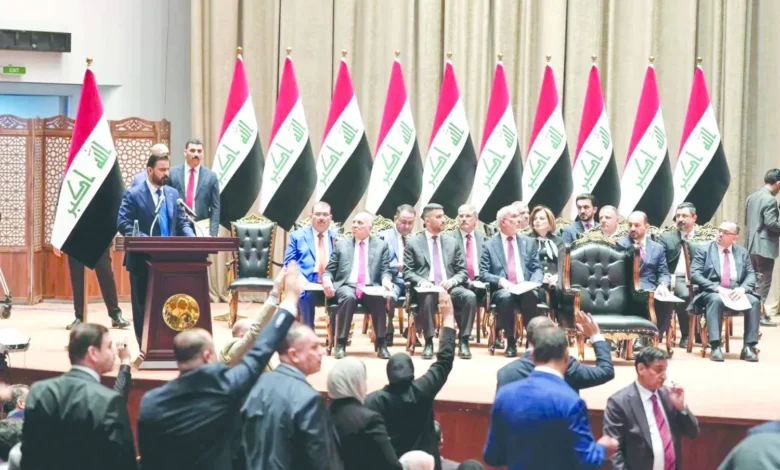
Iraqi court sentences two Badr members affiliated with the Popular Mobilization Forces to 15 years in prison for targeting the US embassy.
The 15-year prison sentence handed down to two members of the Badr Organization, affiliated with formations of the Popular Mobilization Forces, for targeting the US embassy reflects a tougher approach by the Iraqi government toward prosecuting armed groups involved in threats to the country’s security. The move sends a clear message to factions operating outside official state authority and seeking to draw Iraq into regional conflicts.
An Iraqi court sentenced the two defendants over their involvement in rocket attacks targeting Baghdad’s Green Zone, which houses government institutions and diplomatic missions, including the US embassy, according to a report published Tuesday by the Iraqi Kurdish news website Shafaq News, citing a well-informed security source. The ruling was issued under Article 4 of the Anti-Terrorism Law, while the defendants retain the right to appeal before the competent judicial authorities.
The case carries additional political and security significance given the defendants’ affiliation with the Badr Organization, at a time when the authorities are stepping up efforts to hold members of armed factions accountable for attacks targeting facilities and interests inside Iraq.
The timing of the ruling indicates that the government remains committed to the principle of subjecting all armed formations to the law, regardless of their political affiliations or their position within the Popular Mobilization Forces structure. It also reflects an official desire to prevent Iraqi territory from being used as a battleground for regional score-settling or for launching attacks that could expose the country to external pressure and military retaliation.
The move comes amid an intensifying dispute between the government and several forces within the Coordination Framework over the issue of weapons, after Baghdad stressed the need to place military decision-making exclusively in the hands of state institutions. The authorities’ earlier arrest of several Popular Mobilization Forces members, including a senior figure, triggered objections from political actors and armed factions.
Among the most vocal opponents is the Badr Organization, which has recently raised the tone of its rhetoric toward Iraqi Prime Minister Ali Al-Zaidi, warning of the consequences of any attempt to forcibly impose the state’s monopoly over weapons and rejecting what it considers to be the targeting of armed factions.
In this context, the conviction of the two members of the organization can be viewed as a direct message to its leadership, particularly Hadi Al-Amiri, who is close to Tehran, that the government intends to enforce the law even when those involved belong to factions with considerable political and security influence.
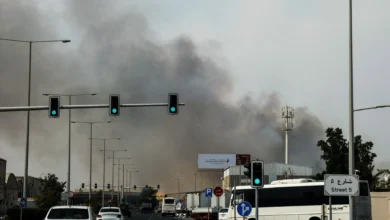
The case dates back to a series of attacks targeting the Green Zone last March. On March 7, four Katyusha rockets were fired toward the US embassy, prompting air-defense systems to operate inside the diplomatic compound. Further rocket and drone attacks subsequently took place.
At the time, the Iraqi Armed Forces Command stated that targeting the embassy constituted an attack on the country’s sovereignty and an act of terrorism, stressing that those responsible would be pursued. These positions place the attacks within a broader framework than the mere targeting of a diplomatic facility, viewing them as a threat to the state’s ability to maintain security and prevent factions from making military decisions independently of its institutions.
The challenge facing the Al-Zaidi government is not limited to the judicial sphere. It is also under political pressure from forces linked to armed factions that wield influence within state institutions. This makes the implementation of the sentences and the pursuit of those involved a real test of Baghdad’s ability to enforce the rule of law.
Through its tougher stance toward those responsible for the attacks, the government seeks to prevent Iraq from being drawn into a broader confrontation as a result of operations carried out by armed groups on its territory, particularly amid continuing regional tensions.
The latest ruling therefore goes beyond the case itself, serving as an indication of a broader struggle being waged by Baghdad to recalibrate the relationship between the state and armed factions and to reinforce the principle that decisions concerning war and peace, as well as the use of force, must remain exclusively in the hands of official state institutions.