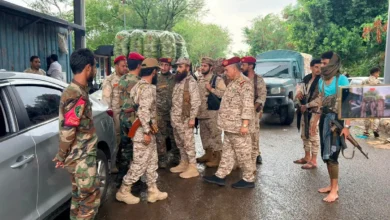
Yemeni forces regroup to retake the western coastline
Warplanes carried out three strikes against Houthi positions and military barracks at al-Tabba al-Sawda and Mount al-Mun’am, on the al-Dhabab front in Taiz.
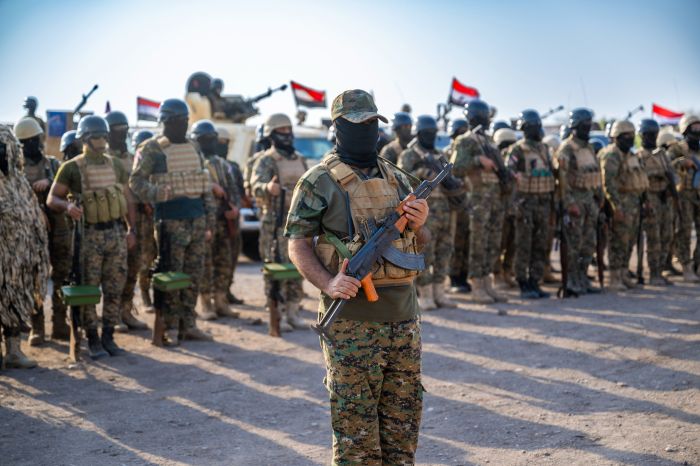
Yemeni forces are regrouping, affirming that the recapture of the capital, Sanaa, remains their “ultimate objective,” while forces that withdrew from the western coastline will return to the battlefield. The redeployment comes as warplanes target Houthi positions, fighters and vehicles in the “Kill Box” area around Mokha and Dhu Bab along the western coastline.
Sultan al-Arada, a member of Yemen’s Presidential Leadership Council and governor of Marib, said on Sunday in an interview with the state-run Saba News Agency that the current developments “require dealing with a new reality based on restoring the state and ending the control of terrorist militias.”
The Yemeni armed forces announced on Sunday that warplanes had carried out three strikes against positions and military barracks belonging to the Houthi militia at al-Tabba al-Sawda and Mount al-Mun’am, on the al-Dhabab front in Taiz. The Yemeni armed forces also released new footage showing airstrikes targeting Houthi fighters, vehicles and positions in the “Kill Box” area along the western coastline.
Al-Arada explained that “the Presidential Leadership Council and the government have made considerable efforts over the past years to achieve peace and prevent further bloodshed. They also made major concessions to end the war. However, the Houthi movement brought the peace process to a deadlock and once again imposed the option of war on the Yemeni people.”
The armed forces launched the “Kill Box” operation on Friday and called on civilians to avoid using several roads in the area. The Yemeni armed forces also announced that they had targeted Houthi militia positions in more than 20 airstrikes.
According to the Yemeni armed forces, the strikes targeted gatherings of fighters, vehicles, missile-launch platforms and a communications system belonging to the militia in the districts of al-Zahir, Dhi Na’im, al-Sawadiya and Mukayras in al-Bayda governorate. They said the strikes inflicted heavy losses in Houthi personnel and equipment.
Meanwhile, Djibouti’s ambassador to Saudi Arabia, Diaa al-Din Bamakhrema, said on Sunday in a post on X that around 1,400 Yemenis had arrived in his country over the previous 24 hours as a result of the escalation in areas along Yemen’s western coastline.
He explained that this was “not the first wave of displacement,” noting that Djibouti had remained “a safe haven for people from neighboring countries in times of hardship and crises.” He added that the growing influx of displaced people was placing “security, economic and humanitarian burdens and pressures” on his country.
Regarding the latest developments along the western coastline, al-Arada described what had happened as “painful and regrettable,” but said that these developments “will not divert the compass from the main objective.” He noted that “the forces that withdrew from the western coastline are regrouping and will return to the battlefield in one form or another.” As for the situation on the other fronts, al-Arada said that the armed forces continued to carry out their duties.
The statements come after extensive changes on the ground altered the map of control in Yemen over the past few days, amid escalating clashes between government forces and the Houthis since the beginning of July 2026.
In recent days, the Houthi movement announced that it had seized control of several districts in the governorates of Hudaydah and Taiz along the western coastline, as well as islands in the Red Sea. Among these islands is Mayyun Island, located in the Bab el-Mandeb Strait, which, according to these developments, would give the Houthis de facto control over the strait, one of the world’s most important maritime corridors.
The Yemeni Cabinet, chaired by Shaia al-Zindani, discussed the repercussions of the Houthi escalation. Al-Zindani said the escalation was broad and dangerous, extending beyond the Yemeni arena and linked to an Iranian agenda that uses Yemen and its strategic location to threaten regional security and international navigation.
He stressed that the difficult developments on the ground should not be interpreted as the end of the confrontation or as a definitive resolution of its course.
The United Nations reported that at least 76,000 people had been displaced in Yemen since July, noting that the pace of displacement had accelerated as fighting between the Houthis and government forces intensified.
The International Organization for Migration warned that the displacement crisis in Yemen was rapidly worsening and evolving by the hour. It added that a quarter of those displaced had been forced to flee during the previous week as the Houthis launched their offensive.
Djiboutian authorities also announced that around 1,400 people had fled Yemen for Djibouti over the previous 24 hours amid the escalation by the Houthi militia.
According to matching media and Houthi sources, the districts the movement said it had taken control of included Hays and al-Khokha in Hudaydah governorate, as well as al-Wazi’iyah, Mawza, Mokha and Dhu Bab, along with the remaining part of Maqbanah district in Taiz governorate.
In contrast, Yemen’s government forces announced that they had made advances in al-Jawf governorate, which borders Saudi Arabia, and had moved closer to the city of al-Hazm, the governorate capital, parts of which are controlled by the Houthi movement.
Clashes between government forces and the Houthis have intensified since the beginning of July 2026, following several years of relative calm.