Qeredaxi’s Remarks Highlight the Use of the October 7 Attacks in Muslim Brotherhood Political Rhetoric
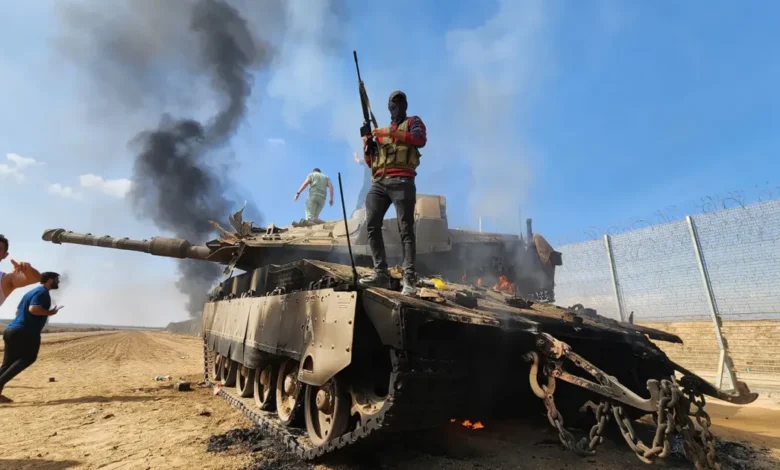
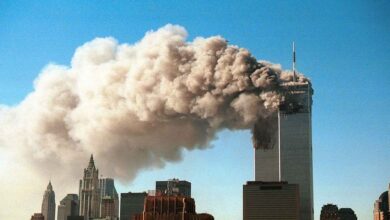
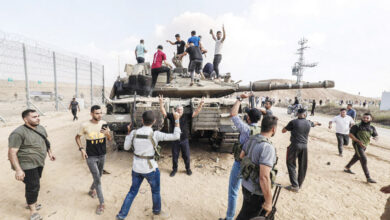
A statement attributed to Ali Qeredaxi, chairman of the International Union of Muslim Scholars, has reignited debate over the relationship between political Islamist rhetoric and the changes taking place in Western societies, after he linked the October 7, 2023 attack to the rise of Muslim political figures in the United States during a conference held in Turkey in August 2026.
According to a report published by the New York Post on September 5, 2026, Qeredaxi said that what is happening in Europe and the United States would not have occurred in the same way without “Operation Al-Aqsa Flood,” citing Zohran Mamdani’s accession to the office of mayor of New York and Abdulrahman Mohamed El-Sayed’s victory in the Democratic primary for the U.S. Senate in Michigan.
The remarks quickly became a subject of debate surrounding the Muslim Brotherhood, particularly because media sources have described Qeredaxi and the International Union of Muslim Scholars as being linked to the Muslim Brotherhood.
However, accurate journalistic treatment of the issue requires distinguishing between three different levels: what Qeredaxi said, what sources report about his institutional and organizational background, and what can actually be established regarding the existence of a relationship between the terrorist attacks and political gains.
The first level is the clearest. A statement attributed to Qeredaxi appeared in video material and was translated by media sources. It links the October 7 attack to political changes in the West. Qeredaxi regarded the rise of Mamdani and El-Sayed as among the positive consequences of what he called “Al-Aqsa Flood.”
The second level concerns the International Union of Muslim Scholars. The organization’s official website identifies Ali Qeredaxi as its chairman and presents his background as that of an Islamic jurist, university professor, and specialist in Islamic jurisprudence and economics.
The New York Post states that the union is linked to the Muslim Brotherhood and notes that the institution was founded by Yusuf al-Qaradawi, whom the newspaper describes as having been widely regarded for decades as a spiritual authority of the Muslim Brotherhood. The report also states that Arab countries have previously accused the organization of facilitating terrorist activities, while noting that the institution denied those allegations.
These points can be presented as facts attributed to their respective sources, but they do not mean that every statement made by Qeredaxi necessarily represents the official position of the Muslim Brotherhood as a global organization. Nor do they, by themselves, establish the existence of an operational relationship between any particular organization and the October 7 attack.
The question of the “international organization of the Muslim Brotherhood” itself requires a precise definition. Does it refer to an ideological network, historical relationships, organizational membership, institutions sharing an ideological orientation, or a common operational leadership? The answer differs fundamentally depending on the definition.
For this reason, caution is required when referring to the “thinking of the international organization.” The ideas expressed in the speech itself can be analyzed, such as the view of a violent event as a political tool or turning point. However, attributing such an idea to an entire organization requires documents or multiple statements establishing that it forms part of an official doctrine or strategy.
Another issue concerns the two political figures whom Qeredaxi cited as examples.
Zohran Mamdani became mayor of New York on January 1, 2026, after pursuing a political career within the state and the city. The official website of the New York City mayor’s office describes him as the city’s 112th mayor.
As for Abdulrahman Mohamed El-Sayed, he won the Democratic nomination for the Michigan Senate seat in August 2026 following a competitive primary election. Reports indicate that his campaign addressed issues including healthcare, the cost of living, and money in politics, as well as his position on the war in Gaza and the relationship between the United States and Israel.
The rise of the two men therefore cannot be reduced to a single factor. American elections are inherently multivariable processes, and it cannot be established that the October 7 attack alone produced these outcomes simply because a political or religious figure made such a claim.
At the same time, it would also be inaccurate to claim that the events in Gaza had no influence whatsoever on American politics. The war has become a significant political issue, particularly within the Democratic Party, and it has featured in electoral campaigns and debates over foreign policy.
This is where the distinction between “political influence” and “political gain resulting from terrorism” becomes important. The former can be measured through opinion polls, elections, and political positions. The latter involves making a causal and moral judgment about the relationship between an armed attack and a subsequent political outcome.
The statement attributed to Qeredaxi clearly adopts, or comes close to, the second interpretation when it presents political advancement as one of the “blessings” of the attack.
This is precisely what makes the rhetoric significant from a media perspective. There is a major difference between saying that the October 7 attack changed the global political debate and saying that its positive political consequences included the election of particular political figures.
The distinction is not merely linguistic; it concerns how the relationship between violence and politics is understood. If political outcomes are treated as a measure of the success of an armed attack, this can assign violence a political function extending beyond its immediate consequences.
In this context, discourse analysis becomes important even without making judgments about an entire group or political current.
Likewise, the fact that Mamdani and El-Sayed were mentioned in this debate does not mean that they should be held responsible for Qeredaxi’s remarks. The sources that have covered the issue do not present evidence that either man endorsed his statements or regarded their political rise as a result of the October 7 attack.
This distinction is essential to prevent a report analyzing rhetoric from turning into a political accusation.
A politician who criticizes the Israeli government or calls for an end to military assistance to Israel may be the subject of intense political disagreement, but such positions alone do not constitute evidence of membership in the Muslim Brotherhood or support for a terrorist attack.
Similarly, Qeredaxi’s background or institutional relationships do not mean that every person he mentions in a speech, or every political current that criticizes Israel, is part of the same network.
This distinction is not merely a linguistic precaution; it is an essential requirement for journalism seeking to examine a complex political phenomenon.
If the objective is to study how violence is used in political rhetoric, the most appropriate approach is to analyze the text itself: What violent event was glorified or portrayed positively? What outcomes did the speaker link to that event? What evidence did the speaker provide to establish the relationship? And are there independent sources supporting the existence of a causal connection?
In Qeredaxi’s case, there is a statement documented in media reports and video material to which a translation has been attributed. There are also actual electoral results in the United States. However, moving from these facts to the conclusion that there is an organizational strategy on the part of the Muslim Brotherhood requires additional evidence.
Accordingly, the central issue is not to establish a predetermined narrative, but to determine what can actually be demonstrated.
Qeredaxi’s remarks, as reported by the sources, link a violent event to political outcomes that he regards as positive. That is a factual claim that can be discussed and analyzed.
However, treating this connection as evidence of a broader strategy by the international Muslim Brotherhood constitutes a different claim, one that requires independent documentation.
Between these two levels lies a broad field of analysis: the role of religious rhetoric in politics, the impact of the war on Western elections, the rise of Muslim politicians, the relationship between political Islam and partisan politics, and the ways in which violent events can be reinterpreted after the fact as victories or gains.
This is the area that deserves further examination, because it makes it possible to understand the phenomenon without falling into the trap of generalization or turning political disagreement into a collective accusation.