New Israeli Inquiry Reveals Previously Unknown Vulnerability in October 7 Attack
An Israeli military investigation into the October 7 attack has identified a previously unknown weakness in the defenses along the Gaza border that reportedly cleared the way for Hamas fighters.
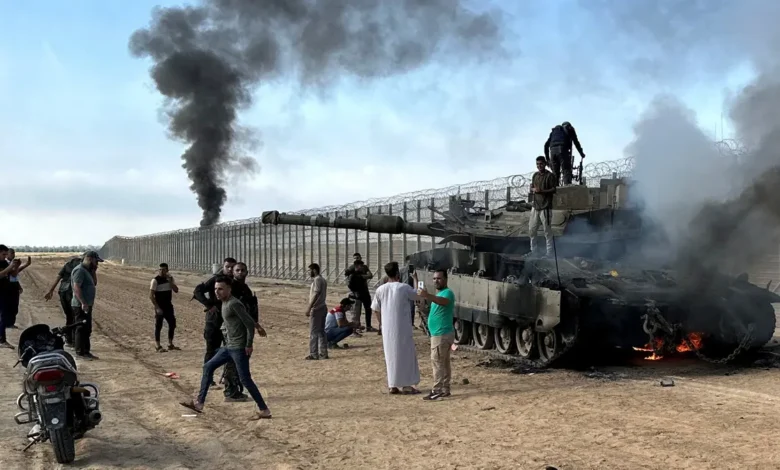
According to the inquiry, between 60 and 80 Hamas gunmen stormed the Baga military post west of Kibbutz Be’eri on the Gaza border on the morning of October 7, 2023. Dozens of soldiers were stationed there at the time.
Eighteen soldiers and commanders were killed and 22 others were wounded at Baga and a nearby tank position. The bodies of two soldiers were also taken.
Approximately 40 to 50 troops were stationed across the two sites when the attack occurred.
At the time, the Baga post housed a company from the Golani Brigade’s 13th Battalion. A tank platoon from the 7th Armored Brigade was deployed at a nearby position.
A tracker was also present. His body was taken and later recovered under a prisoner exchange agreement.
How Did the Assault Unfold?
At 6:29 a.m., as Hamas launched an initial barrage of rockets toward southern Israel, the attackers breached the border fence and advanced toward the Baga military post.
The soldiers moved into fortified areas, while troops at the nearby tank position headed toward the fence in an attempt to stop the gunmen.
Meanwhile, the soldiers began searching for the tracker but were unable to locate him.
Between 6:41 and 6:45 a.m., the tanks engaged fighters crossing the border. One tank was struck by a missile fired from a Hamas drone.
Another tank managed to fire on approximately 10 attackers crossing the border on foot or in vehicles.
A Warning That Arrived Too Late
At approximately 6:49 a.m., the attackers began firing at the military post.
A soldier stationed at a guard position near the camp’s entrance saw the assault and ran to warn those inside because he did not have a radio.
However, the information did not reach the 13th Battalion’s mortar team, which was preparing to open fire.
By 6:52 a.m., commanders had received a warning that attackers were approaching the post in vehicles. The soldiers were ordered to reinforce their defensive positions.
At 6:55 a.m., an initial group of nine attackers entered the post. They divided into several teams and launched assaults from different directions.
Golani soldiers managed to kill approximately four of them, but several Israeli troops were killed or wounded in the battle, including the commander of the mortar unit.
As more gunmen arrived, two wounded soldiers who had been moved to locations considered safer were killed.
Other troops continued fighting while sheltering beneath armored vehicles.
Ammunition Begins to Run Out
By 7 a.m., the forces were reinforcing the post’s defenses and requesting urgent support while evacuating the wounded.
Approximately 13 minutes later, commanders reported that some soldiers lacked equipment and that ammunition was beginning to run out.
At 7:43 a.m., an Israeli drone struck the northern section of the post in an attempt to stop the attackers.
The investigation concluded that the strike had only limited effectiveness because of insufficient intelligence and poor communication with the troops on the ground.
An Evacuation Attempt Turns Into an Ambush
The situation deteriorated as the hours passed. Several commanders had been killed, including the officer commanding the post, whose death significantly affected the management of the battle and decision-making, according to the inquiry.
The company commander was unable to reach the site because the fighting had blocked the roads and intersections leading to it.
At approximately 9:30 a.m., the troops began preparing to evacuate the remaining wounded.
The attempt failed after an attacker attached an explosive device to the rear of an armored personnel carrier. The blast forced the soldiers to retreat and move the wounded back inside.
As noon approached, defending the site became increasingly difficult, and the remaining troops were ordered to regroup.
The Final Stronghold: The Dining Hall
At 11:50 a.m., a group of six soldiers left the post under heavy fire.
Approximately 10 minutes later, they reached an armored personnel carrier positioned in orchards to the east.
The soldiers who remained inside the post barricaded themselves in the fortified dining hall and continued fighting to prevent the attackers from entering.
At 1 p.m., the gunmen started fires on both sides of the dining hall using mattresses and diesel fuel. They then channeled smoke into the room through an air-conditioning vent.
The soldiers began to suffocate, and some partially lost consciousness.
Minutes later, one soldier left the dining hall and killed two attackers.
At 1:13 p.m., five soldiers attempted to leave the building and engage the gunmen. All five were killed when the attackers opened fire from outside.
Rescue forces and reinforcements arrived between 4:20 and 4:50 p.m. to evacuate the wounded.
None of the attackers remained inside the post when the rescue forces arrived.
However, the fall of the position did not mark the end of the fighting. A rescue team returned later that evening to recover the bodies of the dead.
The convoy was struck by an anti-tank missile, killing one soldier and wounding another.
The Inquiry’s Findings
According to findings published by Yedioth Ahronoth, the investigation reached the following conclusions:
The post was inadequately prepared in terms of both combat equipment and defensive infrastructure.
The military failed in its defensive mission and did not prevent the area from falling into the hands of Hamas gunmen.
Before the attack, the forces stationed at Baga had focused primarily on riots and clashes along the border fence.
According to the investigators, this affected their training and readiness, which were not suited to the scenario of a surprise, simultaneous attack across the entire region.
Why Were the Findings Delayed?
Yedioth Ahronoth said the findings were the latest in a series of detailed investigations into approximately 40 battles that occurred during the Hamas attack on October 7.
On that day, around 5,600 attackers reportedly crossed the border, killed approximately 1,200 people and took 251 hostages into Gaza.
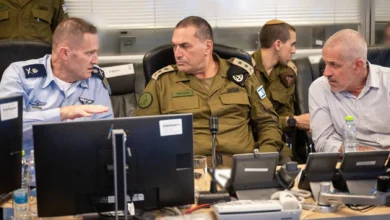
The inquiry was conducted by Colonel Uri Ron, Israel’s military attaché in Brazil, and approved by former military chief of staff Herzi Halevi.
The findings stated that investigators visited the site and reviewed all available sources of information.
It remains unclear why the findings were withheld from the public for several months.