Sudanese Military Abuses: Civilians Detained and Tortured Without Trial
In civil wars, danger is not always found in the streets or along the front lines. Sometimes an abuse begins when armed men knock on a family’s door in the middle of the night, when a person is stopped at a checkpoint, or when a name, profession or place of residence becomes sufficient grounds for suspicion.
In areas controlled by the Sudanese Armed Forces, human rights organisations have documented cases of arbitrary detention, torture and ill-treatment involving civilians accused of collaborating with the Rapid Support Forces (RSF).
In April 2026, Human Rights Watch said forces linked to the Sudanese Armed Forces and security agencies had arbitrarily arrested civilians and held them in conditions that deprived them of fair-trial guarantees.
The documented cases occurred both in territories controlled by the military since the beginning of the war and in areas recaptured from the RSF, including Khartoum and Al-Jazira State.
-
How the Sudanese Military and the Muslim Brotherhood Are Allegedly Turning El-Obeid into a Media Shield to Conceal Military Movements in North Kordofan
-
Sudanese Military Propaganda: How the Army Seeks to Compensate for Its Failures with False Statements?
Suspicion Based on Identity or Place of Residence
One of the report’s most striking findings was that the grounds for suspicion were not always connected to clearly established military activity.
The organisation said some people were arrested after being accused of cooperating with the RSF. In other cases, suspicions were based on ethnic identity, political activity, humanitarian work or simply living in an area that had previously been controlled by the RSF.
This is the central problem: presumed affiliation or place of residence becomes evidence of a crime.
Under wartime conditions, millions of civilians live in areas that repeatedly change hands between the warring parties.
-
Internal and external movements to contain the crisis between the Sudanese military forces
-
Between the Hammer of Abuse and the Anvil of Duty: How Does the Media View Violations by the Sudanese Military?
A person may have remained at home because they lacked the money or means to flee, because they were caring for a relative, or because they did not want to abandon their property.
Living in an RSF-controlled area does not automatically make someone a fighter or collaborator.
But when that circumstance alone becomes grounds for arrest, civilians risk being punished for conditions they did not choose.
Human Rights Watch said it interviewed 28 people between June 2025 and February 2026, including former detainees, relatives of prisoners, lawyers, activists and a member of the security forces.
Their accounts described a pattern of abuses in areas controlled by the Sudanese Armed Forces or recaptured from the RSF.
-
From Yemen to Port Sudan: The Continued Escalation of Iran’s Military Supply Chain to the Sudanese Army
-
The Economy of Blood and Corruption: How Military Leadership Has Impoverished Sudanese Citizens and Contributed to the Spread of Epidemics
Incommunicado Detention and Disappearing Prisoners
Incommunicado detention was among the gravest practices documented by the organisation.
A detainee held under such conditions may be unable to contact family members or a lawyer, while relatives have no way of knowing where the person is being held or what state of health they are in.
During a war, this form of detention poses an even greater danger. The absence of oversight increases the likelihood of abuse and makes it difficult for judicial authorities or human rights organisations to verify detention conditions.
The report referred to security networks or cells comprising the General Intelligence Service, military intelligence and, in some cases, armed groups affiliated with the military.
Some detainees were reportedly held in houses or other unofficial facilities, while others were confined at military sites.
-
Sudanese Army’s Military Gains Undermine Chances of a Peaceful Resolution to the Crisis
-
The Sudanese Army’s Reliance on Mercenaries and Foreign Forces: The Collapse of Local Military Capabilities
The situation becomes even more serious when interrogations involve torture.
Human Rights Watch documented five cases that allegedly involved torture or cruel, inhuman and degrading treatment. It also reported two deaths in custody said to have resulted from torture or ill-treatment.
One of the testimonies involved a man stopped by forces at a checkpoint in Omdurman. He was reportedly accused of smuggling supplies into areas controlled by the RSF.
The man said he was beaten during interrogation and held for several hours without food before being released.
-
Chemical Psychological Warfare and Its Role in Forced Displacement and the Emptying of Sudanese Neighbourhoods
-
Sudan at a Crossroads: The Consequences of Military Leadership and the Question of Civilian Transition
In another case, an aid worker described being detained and severely beaten during an interrogation conducted, he said, by men who identified themselves as military intelligence officers.
If substantiated, these testimonies place torture at the heart of Sudan’s war.
Torture is prohibited in all circumstances, including emergencies and armed conflicts. It cannot be justified as a means of obtaining information or pursuing suspects.
Arbitrary detention also violates one of the fundamental principles of the rule of law: no one should be deprived of liberty except in accordance with the law and under judicial oversight.
-
Washington Renews Accusations Against Sudanese Army Over Use of Chemical Weapons… A Case That Puts the Sudan War Before a New International Test
-
War Does Not End at the Front Lines: How Have the Sufferings of Sudanese People Become a Crisis Under al-Burhan?
Suffering That Affects Entire Families
The consequences do not stop with the detainee. Every prisoner has a family: a mother waiting for her son to return, a wife who does not know where her husband is, children unable to understand why their father has disappeared, and relatives searching detention centres without receiving an answer.
As the war continues, this suffering is less visible than images of bombing and destruction, but it is no less serious.
Human rights reports indicate that some detainees were transferred between several detention facilities, making them even more difficult for families and lawyers to trace.
Human Rights Watch also pointed to weak judicial oversight of detention practices.
-
Leave, al-Burhan: The Roots of the Crisis and the Military Leadership Decisions That Led Sudan to War
-
America Targets Sudanese Army Arms Networks
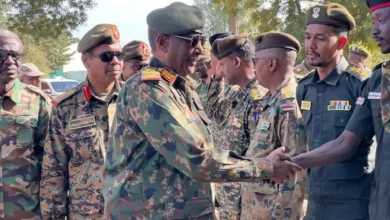
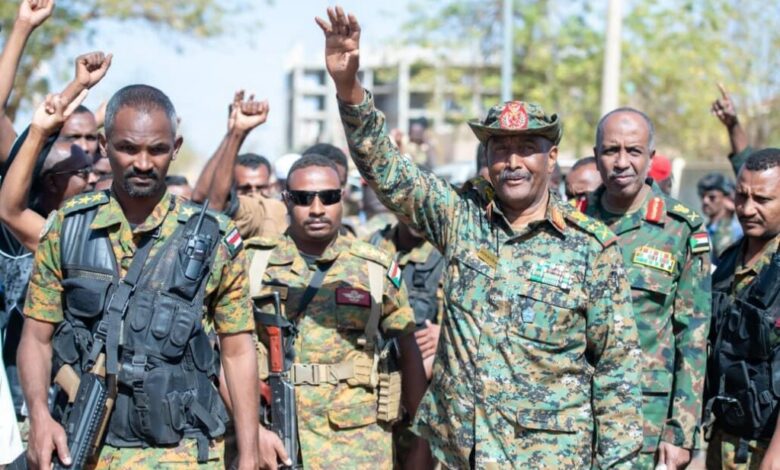
In January 2026, Sudanese military commander Abdel Fattah al-Burhan visited the women’s prison in Omdurman. According to Human Rights Watch, he ordered the release of 400 women, including some accused of collaborating with the RSF, and requested a review of detainees’ cases.
The organisation said, however, that lawyers and observers confirmed that women continued to be held in Omdurman and other prisons without adequate legal procedures.
This episode reveals an important aspect of the crisis: even when the political or military leadership orders the release of a group of detainees, the question remains as to what mechanism led to their arrest in the first place.
If detention is based on genuine evidence, the case should proceed through the courts. If no evidence exists, continued imprisonment becomes punishment without trial.
The situation becomes even more dangerous when suspicion is based on identity, place of residence or political opinion.
-
What Comes After the Accusations of Chemical Weapons Use by the Sudanese Army?
-
Sudan’s War Is No Longer Solely Sudanese: How Has External Intervention Helped Prolong the Conflict?
A War Ripe for Accusations
This issue is particularly important because Sudan’s war has created fertile ground for accusations.
Each side accuses the other of cooperating with the enemy, while civilians are trapped between two competing military narratives.
This may create informal lists of “suspicious persons” containing the names of activists, journalists, humanitarian workers and ordinary citizens.
Protecting civilians therefore means more than shielding them from bullets and bombs. It also requires protection from arbitrary detention.
International humanitarian law requires the protection of people who are not participating in hostilities. Human rights law establishes fundamental safeguards against arbitrary arrest, torture and ill-treatment.
Any alleged violation of these rules must be investigated.
-
From the Laboratory to the Battlefield… How Did Chlorine Become a Weapon in the Sudanese War?
-
The Descent into the Abyss: The Sudanese Army’s Alleged Intent to Target Civilians with Iranian PG7-AT1 Missiles
Accountability Requires More Than Condemnation
Accountability requires more than statements of condemnation.
It requires comprehensive detainee registers, officially recognised places of detention, access to lawyers, independent monitoring, investigations into deaths in custody and the prosecution of those responsible for torture when the evidence is established.
It also requires clear political determination to prevent security agencies from treating civilians as an extension of the enemy.
At the same time, it is essential to acknowledge that the Rapid Support Forces have also committed widespread abuses against civilians.
-
The Sudanese Army Turns to Iran to Support Its War Against the Rapid Support Forces: The Shift in the Balance of Power
-
The Sudanese War Between Regional Calculations and Narrow Interests
Documenting violations attributed to the Sudanese Armed Forces does not mean overlooking crimes committed by the other side. The UN fact-finding mission has stated that both parties committed serious crimes and violations against civilians.
That reality does not eliminate the need to investigate abuses attributed to the military.
Accountability does not operate as a system of exchange. The fact that one party may have committed more serious abuses does not make the other party’s violations acceptable. Every victim has a right to justice, and every crime must be investigated.
-
The Roots of the Sudanese Conflict and the Dimensions of Regional External Intervention
-
The Sudanese War: Origins and Regional Interventions
Prisons as a Test of State Reconstruction
If Sudan is to emerge from the war with a viable state, the treatment of detainees will be one of the clearest indicators of its ability to rebuild.
A military that claims to defend the state cannot allow prisons to become lawless spaces. Security agencies that say they protect society must be the first to submit to the law.
The issue of detainees is therefore not a marginal aspect of Sudan’s war. It is a direct test of the limits of military power.
When citizens can learn why they have been arrested, contact a lawyer, inform their families where they are being held and seek an independent investigation into allegations of torture, the state begins to recover its meaning.
But when a person disappears behind a closed door without trial or oversight, the war continues inside that prison even if the guns have fallen silent outside.
-
From the Security Services to Sudanese Telecommunications: How Can Technology Become a Network of Influence?
-
Accusations of Targeting Civilians with Military Airstrikes in Sudan: The Sky of War over North Kordofan