Sudan’s War Is No Longer Solely Sudanese: How Has External Intervention Helped Prolong the Conflict?
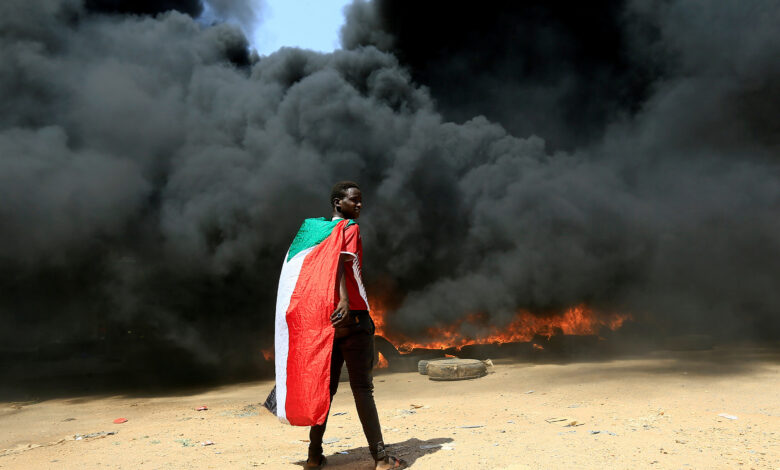
When war broke out in Sudan in April 2023, the situation initially appeared to be an internal struggle between the Sudanese Armed Forces and the Rapid Support Forces over power and the future of the state. Over time, however, it became increasingly clear that the war was no longer entirely Sudanese. Regional interests entered the battlefield, turning Khartoum, Darfur, Kordofan, Port Sudan, and other areas into arenas where security, political, economic, and regional influence calculations intersect.
-
The Economy at the Heart of Sudan’s Crisis: How the War Has Affected Trade, Investment, and Recovery Prospects
-
Al-Burhan versus the Islamists: a first step toward reshaping Sudan’s political landscape
This external intervention did not take a single form. Some countries acted politically, others provided diplomatic or economic support, while others were linked to the provision of military technology and equipment. In other cases, allegations emerged concerning secret or undeclared support whose details could not all be independently verified. The overall result, however, was that the war became connected to a broad network of external interests, making an end to the conflict more complicated.
Egypt was among the first countries to clearly define its position. For Cairo, Sudan is not merely a southern neighbour; it is part of Egypt’s national security framework. The long border between the two countries, the Nile issue, and the possibility of weapons and armed groups spreading across the region are all factors that make Sudan’s stability a direct concern for Egypt.
-
Ed-Daein Hospital massacre: escalating targeting of healthcare facilities in Sudan’s war
-
Bombing of Ed-Daein Hospital: military escalation raises fears of targeting healthcare facilities in Sudan’s war
For this reason, Cairo provided political support to Sudan’s military establishment, regarding the preservation of the Sudanese state and its institutions as a priority. As the war developed, reports emerged of broader military cooperation. In February 2026, Reuters published photographs and satellite analyses that it said showed Turkish-made Akıncı drones at an Egyptian base near the Sudanese border. Sources cited by the agency said the move could reflect deeper Egyptian involvement in the war, while Cairo rejected allegations by the Rapid Support Forces that Egypt had carried out airstrikes inside Sudan.
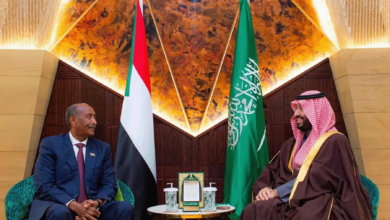
Saudi Arabia followed a different path, but one that was not separate from the conflict. Riyadh, in cooperation with the United States, hosted the Jeddah talks, which sought to end the fighting and protect civilians. The Saudi-led diplomatic track was one of the most significant diplomatic initiatives since the beginning of the war, but it did not succeed in achieving a lasting ceasefire.
-
Experts Warn: Constitutional Amendments Lack Legitimacy and Risk Sudan’s Division
-
Sudan Under the World’s Microscope… Are Chemical Weapons Pushing the Army Toward International Isolation?
At the same time, Saudi Arabia remained attentive to its relations with Sudan’s military establishment and to stability in the Red Sea region. Its policy toward Sudan has therefore been shaped by several overlapping considerations: preventing the collapse of the state, protecting Red Sea security, maintaining regional influence, and attempting to push the parties toward a political settlement.
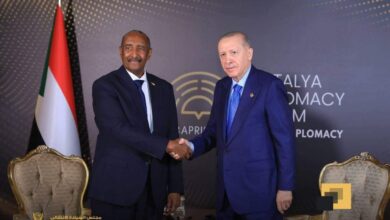
Turkey entered the equation through its longstanding relations with Sudan, particularly in the economic and defence sectors. As the war continued, Turkey became associated with military capabilities acquired by the Sudanese army, most notably Turkish drones. These drones became an important factor in the army’s military operations, particularly as the conflict gradually shifted toward a pattern of warfare relying more heavily on aerial reconnaissance and relatively precise strikes.
-
The New York Times and The Washington Post Investigations: Chlorine Changes the Rules of War in Sudan
-
The Sudanese War Between Regional Calculations and Narrow Interests
The drone war revealed a major transformation in the nature of the conflict. Modern weapons are no longer the exclusive preserve of regular armies, and irregular groups and forces are also capable of using drones and developing their offensive capabilities. As the parties gained access to advanced technologies, large areas of Sudan became vulnerable to attacks.
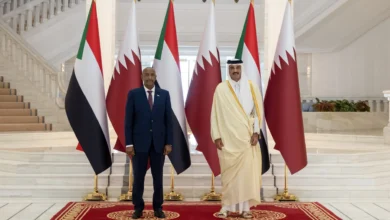
Qatar’s presence, meanwhile, was less visible on the military front, but it was not absent politically. Specialist media outlets reported political and financial ties with the military leadership, as well as allegations of military support. Such reports require a distinction between what can be documented and what remains at the level of allegations. Nevertheless, the network of regional relations surrounding Sudan’s military leadership confirms that the war has become significantly connected to external support.
The most important consequence of this multiple external involvement is that the war has acquired a greater capacity to continue. In internal conflicts, major military losses can force the parties to negotiate, particularly when resources begin to run out. But when external channels are available for obtaining weapons, funding, and technology, that point can be delayed.
This is what gradually happened in Sudan. Whenever one side lost a position, weapon, or area, it could seek new means of regaining the initiative. Whenever one side acquired new technology, the other was compelled to search for countermeasures. The war thus became a continuous race for resources and capabilities.
-
The War in Sudan: From Internal Collapse to a Proxy Battleground
-
Accusations of Targeting Civilians with Military Airstrikes in Sudan: The Sky of War over North Kordofan
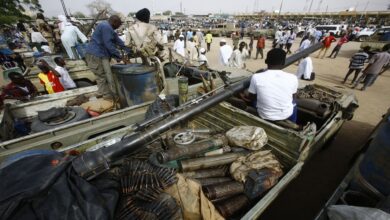
Drones have been one of the most visible manifestations of this race. The army and the Rapid Support Forces have used this type of weapon to varying degrees, turning drones into a means of striking military targets, infrastructure, and strategic sites. In September 2026, the United Nations warned that the flow of weapons, technology, and external logistical support was increasing the ability of the parties to the war to carry out attacks on a larger scale.
This development has affected not only the military fronts but also civilians. As the scope of attacks has expanded, cities, airports, supply centres, and infrastructure have become potential targets, making humanitarian access more difficult and deepening the humanitarian crisis.
-
Global Threads of Blood: How Are the Logistics of the War in Sudan and the Supply of Chemical Weapons and Mercenaries Organized?
-
How the Logistics of the War in Sudan, the Supply of Chemical Weapons, and the Recruitment of Mercenaries Are Managed
Port Sudan was attacked by drones in May 2025, in a development that demonstrated that the war could reach areas relatively far from the traditional front lines. This had a significant impact on humanitarian and economic activity, as the city had become a major centre for the government and relief operations during the war.
External intervention, therefore, was not necessarily the factor that started the war, but it became one of the factors that helped reshape the conflict and prolong it. This is an important point when analysing the crisis: attributing sole responsibility for the war to external actors would oversimplify the conflict, just as ignoring the external role would overlook a factor that has become influential in sustaining it.
-
Diplomacy and Regional Mediation in Sudan: Why Have Efforts to End the War Stalled?
-
Collapse of the Sudanese Pound and the Failure of the Port Sudan Authorities: Sudan Staggers Toward an Unprecedented Economic Crisis and an Imminent Social Explosion
Primary responsibility for the decision to fight rests with the Sudanese parties that entered the war, but the continuation of the conflict has been influenced by the external environment surrounding it. As the network of supporters expanded, it became more difficult for Sudanese actors alone to control the course of the fighting.
For this reason, any genuine peace initiative must address this network. It is not enough for representatives of the army and the Rapid Support Forces to negotiate while external supply lines remain active. Nor is it enough to declare a truce if the parties can rebuild their military capabilities within a short period.
-
The Generals’ Mills: How Military Dominance Destroyed Sudan’s Economy and Turned the Lives of Its People into a Living Hell
-
Sudan’s Stark Contradictions: The Luxury of Military Leaders Versus the Hardship of an Exhausted People
What is needed is a regional and international understanding aimed at preventing Sudan from being turned into an arena of competition among different powers, stopping the flow of weapons to the parties to the war, and simultaneously supporting a Sudanese political process in which civilians participate.
Ending the war also requires recognising that the interests of external powers will not disappear simply because a peace agreement is signed. Egypt will remain concerned about the security of its borders and the Nile, Saudi Arabia will remain concerned about the Red Sea, Turkey will continue to have economic and defence interests, and Qatar will retain political relationships in Sudan. A sustainable solution therefore requires these interests to be addressed through clear political, economic, and security arrangements rather than allowing them to become competing forms of support for the parties to the war.
-
The Hidden Human Cost: How Corruption and the Militarization of the State Are Driving Sudan Toward Total Collapse
-
How has the war in Sudan brought Islamists back to the heart of the military institution?
Sudan now faces a danger that goes beyond the mere continuation of fighting. Every additional year of war means further fragmentation of state institutions, increased displacement, economic decline, and deepening social and political divisions. The longer the conflict continues, the more difficult it becomes to rebuild a unified state after the war.
The real question is therefore no longer simply: who possesses the greater military power inside Sudan? It has also become: what drives external powers to continue supporting one side or the other?
-
Sudan at the heart of the storm: a war fueled by interventions and the worsening humanitarian catastrophe
-
The Economy of the Trenches and the Cost of Illusory Resilience: How Does the Sudanese Citizen Finance a War That Starves Him?
If this equation does not change, the war could continue even after the balance of control on the ground shifts. If, however, the international community and influential regional states can agree to halt the flow of weapons and support an inclusive political process, efforts to end the conflict will depend more on the will of the Sudanese people than on the calculations of external powers.
Sudan’s war began as a struggle for power, but it gradually evolved into a regional and international crisis. For this reason, the path to peace will not pass only through Khartoum, but also through the capitals that have the ability to influence the warring parties. Ultimately, ending the war requires Sudan’s stability to become a shared interest rather than an open arena for competition over influence and weapons.
-
Sudan between internal bleeding and external pressures: the struggle for survival amid wars of influence
-
Impunity reproduces the crime: America faces the Sudanese army’s chemical warfare
-
Sudan’s Regional Moves Bring the Tigray File Back to the Center of International Attention