Accusations of Targeting Civilians with Military Airstrikes in Sudan: The Sky of War over North Kordofan
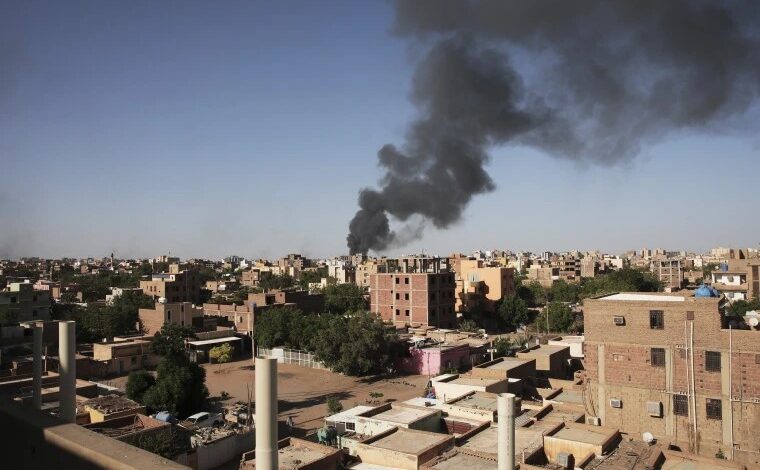
The war in Sudan can no longer be measured solely by the battles and military operations taking place on the ground. The country’s skies have themselves become part of the battlefield.
-
Airstrikes in North Kordofan: Local Testimonies Raise Concerns
-
Explosive Barrel Bombs and International Law: Documented Violations in the Skies of Kordofan
As the war between the Sudanese Armed Forces and the Rapid Support Forces continues, reports of drone attacks and airstrikes in populated areas are increasing, while human rights and humanitarian organizations warn that civilians are paying an ever-heavier price for the conflict.
In North Kordofan, one of the main theaters of fighting in recent months, reports of civilian casualties caused by airstrikes have continued to emerge, at a time when towns, villages, commercial roads and civilian facilities are located close to front lines or within contested areas.
Human rights groups and local sources say that some strikes have been attributed to the Sudanese Armed Forces, while the circumstances surrounding several incidents and the identity of those responsible remain in need of independent investigation. Meanwhile, the Sudanese military continues to conduct operations against the Rapid Support Forces and maintains that its air and ground operations target positions and fighters belonging to the opposing force.
-
The Noise Around El-Obeid: A Smokescreen for Military Buildup in Northern Sudan
-
Al-Khuwai Massacre: Investigation Uncovers Horrific Ethnic Cleansing Crimes in Kordofan by Islamic Movement Militias and Al-Baraa Ibn Malik Group
North Kordofan: An Expanding Front
The Kordofan region experienced a marked escalation in fighting during 2026. The area has become a strategic axis of the war because of its geographical position linking central and western Sudan, as well as the presence of major roads and areas of military and economic importance.
The Sudanese army had made military advances in North Kordofan, including the recapture of Bara at one stage of the fighting, while clashes and reciprocal attacks continued in other parts of the state.
As control lines have shifted, civilians have been living in an extremely dangerous environment. Villages, markets and roads used by local residents may lie close to military operations, while deteriorating transportation, communications and essential services make it increasingly difficult for civilians to identify safe areas or leave their homes.
-
Kordofan Bleeds in Silence: Investigation into Ethnic Cleansing Crimes in Al-Khuwai and Al-Hammadi
-
Rapid Support achieves consecutive victories in reaching North Darfur
Human rights organizations have documented a series of attacks that caused civilian casualties in North Kordofan during 2026. The African Centre for Justice and Peace Studies said that the security situation in the state had deteriorated significantly and that drone attacks and other military operations had caused civilian casualties and damage to civilian infrastructure.
Airstrikes and the Question of Targets
The central issue raised by these developments concerns not merely the presence of air power on the battlefield, but also the nature of the targets being struck and the extent to which adequate precautions are being taken to protect civilians.
In armed conflicts, military installations may constitute legitimate targets under certain circumstances. However, the presence of fighters or military facilities near a civilian area does not remove the obligation to protect the civilian population. Every incident resulting in civilian casualties therefore requires verification of the nature of the target, the circumstances surrounding the strike, its proportionality and the precautions taken beforehand.
-
Al-Burhan’s frustration with Minnawi’s forces: when support turns into a burden
-
The Sudanese Army Bombards Civilians with Barrel Bombs: An Investigation into a Pattern of Indiscriminate Strikes
Independent verification is particularly difficult in Sudan because of restrictions on access to conflict zones, communications blackouts in some areas and large-scale population displacement.
As a result, figures released by the various parties are often contradictory, while determining responsibility for certain attacks requires independent investigations based on multiple sources.
Deadly Incidents in North Kordofan
In June 2026, the Emergency Lawyers group said that drone strikes in the Hamrat al-Sheikh locality of North Kordofan had killed at least 13 civilians and wounded dozens more. The group reported that one of the strikes hit a market in the Abu Zaima area, killing 11 civilians according to an initial toll.
-
The Sudanese Army Draws a New Political Map: Armed Movements Excluded from the Next Phase
-
The Dark Face of the Sudanese Crisis: Between Regional Agendas and Scandals Surrounding Alleged Humanitarianism
The incident illustrates the scale of the danger faced by civilians when air operations reach places on which communities depend for their daily lives.
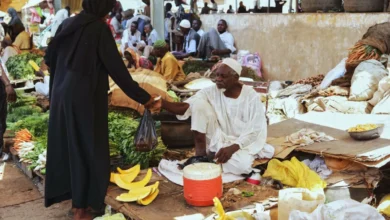
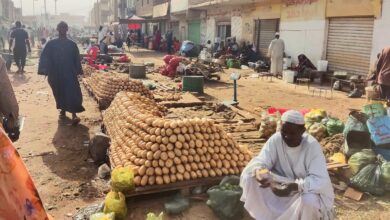
A market, for example, is not merely a commercial space. It is a place where vendors, shoppers, workers and vehicle drivers gather. For residents of rural areas, it may also be one of the main locations where they obtain food, medicine and basic necessities.
When such places become targets of bombardment, the consequences extend far beyond the immediate victims. They affect local economies, food supplies and the movement of civilians.
-
Escalating Accusations of Chemical Weapons Use in Sudan Amid UN Warnings of an Unprecedented Humanitarian Catastrophe
-
The Specter of the Darfur Scenario Looms Over El-Obeid
Have Civilians Become Part of the Cost of War?
Since the Sudanese war erupted in April 2023, civilians have been subjected to widespread abuses by different parties, according to reports by the United Nations and human rights organizations.
Human Rights Watch has stated that both sides of the war have committed serious violations, noting that the Sudanese Armed Forces have also carried out airstrikes in various regions that reportedly resulted in civilian casualties. The organization has likewise documented attacks by the Rapid Support Forces that caused large numbers of civilian deaths.
This reality is essential to understanding the nature of the current war. It is not simply a confrontation between two military forces taking place away from civilian populations; rather, it is a conflict in which military front lines overlap with cities, villages, markets, roads and civilian infrastructure.
-
El-Obeid: An Open-Air Prison and Sudanese Civilians Used as Human Shields Under the Guise of Humanitarianism
-
How Regional Zero-Sum Approaches Turned Sudan into an Endless Proxy War
For this reason, civilian casualties should not become a propaganda tool in favor of one side against another. Instead, they should serve as a basis for demanding investigations, accountability and civilian protection.
Sudanese Army: Military Targets or Civilian Harm?
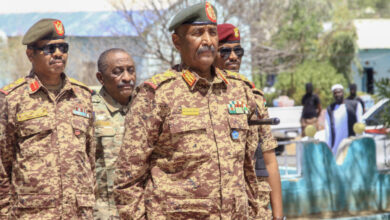
The Sudanese army says that its military operations target the Rapid Support Forces and their positions, and that air power is one of the means it uses to confront the opposing force.
This account is consistent with the nature of the fighting in Kordofan, where the Rapid Support Forces control or influence certain areas and where the army is attempting to retake strategic roads and positions.
-
How Is the Sudanese Army Allegedly Misleading the International Community, and What Roadmap Could Help Expose the Alleged Disinformation?
-
Documenting the Alleged Crime of the Sudanese Army: The Siege of El-Obeid and the Use of Civilians as Human Shields
However, the existence of a potential military target does not, by itself, answer the question of civilian casualties.
In every incident, it is necessary to determine whether the target was genuinely military, whether the presence of civilians was taken into account and whether an alternative means or timing could have been chosen to reduce the risk to civilians.
These details cannot always be established through military statements or the accounts provided by the warring parties. They require independent investigations drawing, where available, on testimonies from residents, photographs, videos and geospatial data.
-
The fire line stretching from Cairo to Khartoum: visual evidence of supply flows and airstrikes
-
Ethnic Cleansing in Al-Khuwai and Al-Hammadi: A Horrifying Escalation in Sudan’s Militia Warfare
Drones Are Changing the Nature of the War
One of the most significant developments in Sudan’s war during 2026 has been the expanding use of drones.
Drones have become an essential component of military operations for the parties to the conflict, allowing attacks to reach areas far beyond traditional front lines.
In June, reports emerged of civilian casualties in drone attacks in North Kordofan. In July, reports continued to emerge of airstrikes targeting civilian areas, vehicles and service infrastructure across the state.
-
Islamic Militias in Sudan Carry Out Horrific Ethnic Cleansing in Al-Khuwai and Al-Hammadi
-
Sudanese Army’s Military Gains Undermine Chances of a Peaceful Resolution to the Crisis
This development has serious implications for civilians, as they may now be exposed to danger even in areas where no direct ground fighting is taking place.
The danger is no longer necessarily associated with military forces entering a village or city. It can come from the sky within minutes.
Umm Qorfa and Other Areas: The Need for Verification
Umm Qorfa, in North Kordofan, is among the areas for which reports of airstrikes have emerged. In July, footage said to show the aftermath of an airstrike in the area was circulated. However, such visual material alone is insufficient to establish responsibility, identify the nature of the target or determine the number of casualties unless it is supported by independent, verifiable information.
-
Recurrent “slaughtering” incidents… Sudan on the brink of abyss
-
Military formations affiliated with the Muslim Brotherhood fight alongside the Sudanese army
This is where the importance of independent journalism in covering the war becomes evident.
Rather than simply stating that “the army bombed civilians,” a series of questions should be asked: Where did the strike occur? When did it happen? What was it targeting? Were military forces present in the area? How many civilians were there? Where did the munition come from? And what evidence links a specific party to the attack?
These questions may appear slow compared with the speed at which information spreads on social media, but they are essential when dealing with allegations that, if the circumstances are established, could amount to serious violations of international humanitarian law.
-
Mohamed Bashir Mansour: Secretary-General of Doctrine and Call… Who is he?
-
Continuous Clashes in Sudan… Have Jeddah Negotiations Failed?
Civilians Between Airstrikes and Displacement
The greatest danger lies not only in the number of people killed in each strike, but also in the cumulative impact of the war.
When markets, roads, water sources and health facilities come under threat, civilians become less able to remain in their communities. This leads to new waves of displacement, while displaced people find themselves in need of food, water, medical care and shelter.
Around the city of El Obeid and surrounding areas, the United Nations and humanitarian agencies have warned of deteriorating humanitarian conditions and rising needs as the fighting continues.
-
Deaths in renewed clashes in Sudan… Rapid Support Forces shoot down army aircraft
-
Why is the Sudanese Army focusing on destroying the Capital?
An airstrike therefore becomes an event whose consequences extend far beyond the moment of the explosion. It can mean the closure of a market, the disruption of a road, the loss of a water source or the flight of entire families from their villages.
A Protracted War and a Growing Civilian Toll
More than three years after the outbreak of the war, Sudanese civilians continue to appear to bear the greatest share of the conflict’s cost.
Reports from human rights organizations indicate that violations have not been limited to one side and that civilians have been subjected to killings, bombardment, displacement and deprivation of essential services in different parts of Sudan.
-
Sudanese Support Forces Control Um Ruwaba as Fighting Intensifies in Khartoum
-
Rapid Support Forces tighten the noose around Sudanese Army headquarters
This does not mean, however, that documentation of violations attributed to the Sudanese army should stop. Nor does it mean that violations attributed to the Rapid Support Forces can be ignored.
The fundamental principle is that civilian protection must take precedence over military and political considerations.
What Is Needed Now?
Amid conflicting accounts, there is an urgent need for independent and transparent investigations into attacks that have caused civilian casualties in North Kordofan and elsewhere in Sudan.
-
The United Nations warns of a comprehensive civil war in Sudan
-
Reports of recruitment of South Sudanese fighters amid rising losses
Such investigations should establish the identity of those responsible for the strikes, the nature of the targets, the type of weapons used, the circumstances preceding the attacks and the scale of human and material losses.
Protecting civilians also requires all parties to comply with international humanitarian law and take every feasible measure to minimize harm to civilian populations and infrastructure.
The war may be between the army and the Rapid Support Forces, but its consequences do not stop with the combatants.
-
Money for the rifle: the behind-the-scenes recruitment of foreign fighters in the Sudanese war
-
The Sudanese army between attrition and restructuring: an in-depth reading of the strategy of naturalization in exchange for fighting
In North Kordofan, as in other parts of Sudan, civilians are living through a brutal equation: roads that have become dangerous zones, markets threatened by airstrikes, villages caught between lines of fire, and a sky that no longer represents safety.
The most pressing question remains: How long can civilians endure a war in which the distance between the front line and the home grows shorter, while the prospect of returning to normal life grows more distant with each passing day?
-
Naturalization in exchange for fighting: how the Sudanese army is filling its manpower gap with fighters from South Sudan
-
The shadows of drones over Darfur: human stories from a Sudanese crisis prolonged by regional interference