Chemical Weapons Allegations Put Sudan’s Army to the Test of International Law
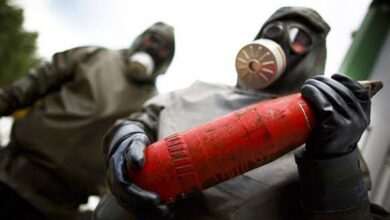
Allegations that the Sudanese army used chemical weapons have renewed legal questions about Sudan’s international obligations and the scope of responsibility for using toxic substances during armed conflicts. These questions have become particularly pressing since the Washington Post and the New York Times published investigations detailing an alleged programme to develop chlorine-containing munitions.
-
Chemical Weapons Allegations Increase International Pressure on al-Burhan
-
Scorched-Earth Warfare and Chemical Weapons Allegations: Is the Sudanese Army Facing Its Most Serious Accountability Test Since the War Began?
In 2025, the United States announced that it had determined the Sudanese government had used chemical weapons and imposed punitive measures on that basis. New documents emerged in September 2026 that the newspapers said supported the earlier allegations. Sudan is a party to the Chemical Weapons Convention, which prohibits the development, production, stockpiling and use of such weapons and imposes obligations concerning the prevention of their proliferation and their elimination under established rules. These commitments are important because the prohibition depends not only on the nature of the substance used, but also on the purpose of its use and the operational context.
Chlorine has legitimate civilian applications, but it must not be used to inflict toxic effects on people during military operations. If chlorine-filled munitions were shown to have been developed and used as weapons, this would raise the issue of a breach of international obligations and could lead to further diplomatic and legal measures. Establishing whether a particular incident constitutes a specific violation, however, requires examining the evidence and determining the nature and circumstances of the use. A general description of the chemical or incomplete information about the incident is insufficient.
-
From Dakar to International Forums: Sudan’s Chemical Weapons Allegations Open a New Human Rights Front Against Army Leaders
-
Sudan’s Chemical Weapons Inquiry Commission: Why Does the Call for an Independent Investigation Persist?
The legal issue also concerns the responsibility of individuals who may have participated in issuing orders, conducting operations or overseeing the alleged programme. Such responsibility does not arise automatically from holding a senior military position or being named in published correspondence.
Instead, the relevant facts must be established, the evidence authenticated and the connection between the individual concerned and the act under investigation demonstrated in accordance with applicable legal standards. At the same time, an armed conflict does not give any party the freedom to employ prohibited means of warfare. Nor does a claim that the munitions targeted military positions remove the prohibition on chemical weapons.
-
Chemical Weapons Allegations in Sudan: New Documents Put the Army Under International Pressure
-
Sudanese Army and Chemical Weapons Allegations: New Evidence and Mounting International Pressure
The Organisation for the Prohibition of Chemical Weapons and other competent international bodies therefore have an important role in verifying the allegations and assessing samples and technical evidence, provided the necessary conditions are in place. Witnesses and affected individuals must also be protected so that cooperating with an independent investigation does not expose them to danger.
The Sudanese army maintains its rejection of the allegations, but neither denial nor accusation alone can resolve the issue. Evidence must be made available and professionally examined. The case could test the international community’s ability to apply chemical weapons prohibitions consistently, free from political calculations. Ultimately, establishing the truth and holding those responsible accountable, if violations are proven, are essential to protecting civilians, strengthening respect for international law and preventing further use of prohibited weapons in Sudan or other conflict zones.
-
Chemical Weapons Put Sudan’s Military Establishment Under Scrutiny: Internal Breaches, Cover-Up Allegations and Questions over Foreign Ties
-
The Hidden Dimensions of Sudan’s Conflict: From Chemical Weapons Scandals to Battles over Money and Influence in Port Sudan
-
Behind Closed Doors in Sudan: Leaked Chemical Weapons Documents and a Plan to Remove Armed Movements from Power
-
Sudan’s Converging Unconventional Agendas: From Chemical Weapons Revelations to the Marginalisation of Allies in Port Sudan
-
From Washington’s sanctions to calls from Geneva: the chemical weapons issue intensifies international pressure on Sudan
-
Chemical Weapons in Sudan: When the Air Itself Becomes Part of the War
-
New Evidence of Sudan’s Chemical Weapons Program… What Do the Documents and Images Reveal?