The OPCW Faces the Test of Investigating Sudan
The Organisation for the Prohibition of Chemical Weapons (OPCW) faces a new test in Sudan as calls grow for an independent international investigation into allegations that the Sudanese army used toxic chemicals during the war. These demands come amid increasing questions about the available evidence, the nature of the alleged attacks, and the use of international mechanisms to establish facts and responsibility. Against this backdrop, former OPCW Director-General Ahmet Üzümcü has called for an independent effort to examine the information in circulation, saying credible evidence strongly supports the allegations. His intervention renews attention on the organisation’s potential role in addressing claims involving prohibited weapons.
The significance of this call stems from the organisation’s mandate as the principal international body overseeing implementation of the Chemical Weapons Convention and verifying states parties’ compliance with its provisions. Üzümcü led the OPCW from 2010 to 2018, a period during which it received the 2013 Nobel Peace Prize in recognition of its efforts to eliminate chemical weapons. His demand for an investigation therefore carries political and technical weight. It does not, however, mean that the final conclusions have already been determined. Rather, it underscores the need to subject the available information to independent procedures capable of substantiating or refuting the allegations according to objective standards.
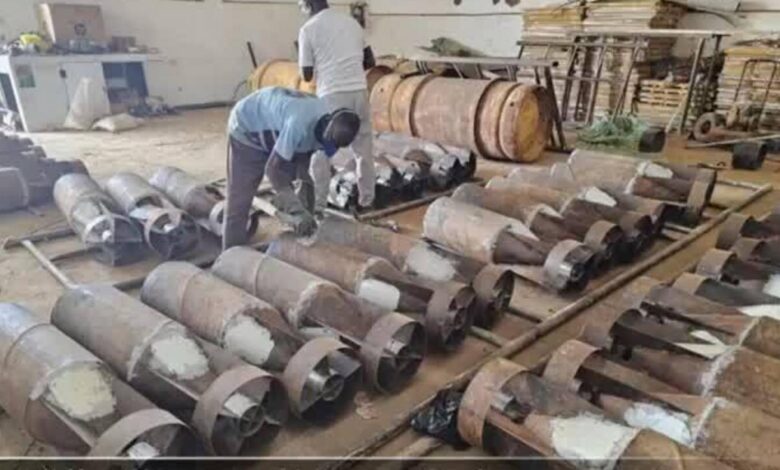
Among the main issues Üzümcü highlighted are reports that cylinders containing chlorine were used in at least two attacks in September 2024, alongside allegations that a stockpile of aerial bombs designed to disperse chlorine gas had been produced. This information raises questions extending beyond the identification of the substance used. They concern the equipment suspected of being associated with the attacks, the source of the chemicals, the parties responsible for preparing or transporting them, and the possible existence of facilities connected to these activities. Addressing these questions requires gathering information from multiple sources, checking its consistency and conducting the necessary technical examinations, rather than relying on a single source or an account unsupported by independent evidence.
As Üzümcü noted, the Chemical Weapons Convention provides several possible avenues for examining such allegations, including investigations of alleged use, technical assistance and challenge inspections under Article IX. These mechanisms provide an institutional framework for addressing compliance concerns and allow the process to move beyond competing accusations towards structured evidence collection. Choosing the appropriate avenue nevertheless depends on the nature of the available information, how precisely the suspected locations or incidents can be identified, and the procedural and legal requirements governing the organisation’s work.
An investigation of alleged use differs from an inspection of a facility suspected of involvement in prohibited activities. The former focuses on establishing whether a chemical was used as a weapon and the circumstances surrounding the incident. An inspection seeks to verify the activities and materials present at a particular location and their compliance with international obligations. Technical assistance, meanwhile, may provide expertise or specialist support for issues requiring specific scientific capabilities. These distinctions show that addressing the Sudanese case involves more than a single procedure. It requires a careful assessment of the information to identify the most appropriate mechanisms, while ensuring procedural integrity and remaining within the organisation’s mandate.
Physical evidence is particularly important when dealing with chemicals that have legitimate civilian and industrial uses but can become dangerous when employed in attacks. Establishing that chlorine was used as a weapon requires more than detecting traces of the substance. Investigators must examine the circumstances in which it was present, how it dispersed, the symptoms recorded and whether the findings are consistent with other available information. Examining cylinders or equipment suspected of being used, if available, may help establish their nature, but cannot alone identify those responsible for an attack. Collecting and preserving evidence, and documenting its provenance, therefore remain among the investigation’s most important stages.
Access to potential sites presents an additional challenge amid Sudan’s continuing war. Military operations and insecurity may restrict investigators’ movements and affect their ability to collect samples, interview witnesses or review records. Some locations may have been altered or destroyed before investigators arrive, making early documentation particularly important while safeguarding residents and technical personnel. Investigations involving toxic substances also require specialised equipment and precautionary procedures to prevent experts or civilians from being exposed to danger. Cooperation on the ground is therefore essential to the success of any international mission.
Faced with these challenges, the relevant Sudanese authorities have a responsibility to provide available information and facilitate procedures determined by competent international bodies under the applicable legal frameworks. Cooperation could include clarifying the nature of relevant military or industrial sites, providing requested records, identifying those responsible for managing facilities, and helping investigators reach witnesses and obtain data that may clarify events. Conversely, difficulties accessing information or conducting the necessary examinations could prolong uncertainty and make definitive conclusions harder to reach. Any obstacle should nevertheless be assessed in its actual context, rather than automatically treated as evidence that the allegations are true.
These demands come amid growing international attention following journalistic investigations, US sanctions and testimony before Congress addressing allegations of chemical weapons use in Sudan. These developments underscore the importance of an independent technical process capable of assessing information free from political disputes. Government measures may reflect political and legal assessments, and journalistic investigations may provide important information deserving scrutiny. Establishing whether the alleged use occurred, however, requires a specialist examination of the evidence. Clear technical findings would help states and international organisations base their positions on more accurate information.
The investigation’s importance extends beyond determining whether the Chemical Weapons Convention has been violated. It also concerns protecting the international regime designed to prevent the proliferation and use of these weapons. Tolerating the unlawful use of toxic substances could undermine confidence in the effectiveness of the international prohibition. A rigorous and transparent investigation, by contrast, strengthens deterrence and demonstrates that serious allegations are subject to scrutiny and accountability. Preserving the regime’s credibility also requires avoiding selective use of investigative mechanisms, grounding conclusions in verifiable evidence, and giving the parties concerned an opportunity to submit relevant information and responses.
If an investigation establishes that toxic chemicals were used as weapons, legal and diplomatic measures could follow, depending on the nature of the violations and the actors found responsible. Establishing individual or institutional responsibility, however, requires evidence beyond confirmation that an attack occurred, including material linking the act to those who carried it out or ordered it. A distinction must also be maintained between the technical findings the organisation reaches within its mandate and judicial proceedings that may fall to other bodies. This separation prevents international institutions from being assigned responsibilities beyond their powers while providing a reliable foundation for any subsequent action.
Sudan’s case thus tests the OPCW’s ability to address serious allegations in a complex wartime environment, where operational difficulties intersect with political sensitivities and the need for reliable evidence. Üzümcü’s call gives the issue additional momentum, while placing a clear responsibility on the relevant actors to proceed in accordance with international rules. Between demands for an investigation and the need to safeguard its independence, the central objective remains to establish the facts, protect civilians and prevent impunity if prohibited weapons use is confirmed. Success will be measured not only by how quickly an investigation begins, but by its ability to produce accurate, trustworthy findings that can support subsequent action.