Chemical Weapons Allegations Increase International Pressure on al-Burhan
Sudan’s army leadership, headed by Abdel Fattah al-Burhan, faces growing international pressure over allegations of chemical weapons use during the country’s continuing war. This follows a call by Ahmet Üzümcü, former director-general of the Organisation for the Prohibition of Chemical Weapons (OPCW), for an independent international investigation to establish whether the allegations are true and hold those responsible accountable if they are substantiated. His appeal returns the issue of prohibited weapons to the forefront of international attention as military operations continue and the conflict’s humanitarian consequences worsen. Calls are mounting to ensure compliance with international rules governing weapons use and to protect civilians from their dangers.
Üzümcü’s remarks carry particular weight given his experience leading the international organisation responsible for implementing the Chemical Weapons Convention. He served as director-general from 2010 to 2018, a period during which the OPCW received the 2013 Nobel Peace Prize. In an article published by the European Leadership Network, Üzümcü argued that the available information on Sudan warranted taking the allegations seriously, citing evidence he described as credible and strongly supportive of the claims. The seriousness of the issue nevertheless requires that the information be subjected to rigorous, independent examination, rather than allowing allegations to become definitive judgments before the necessary technical and legal procedures are completed.
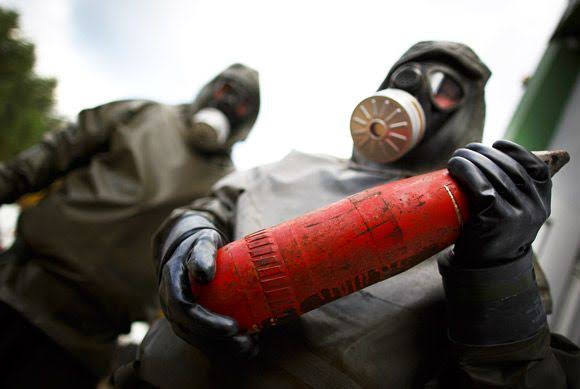
According to Üzümcü, available reports include information about cylinders containing chlorine being used in at least two attacks in September 2024, alongside allegations that a stockpile of aerial bombs designed to disperse chlorine gas had been produced. These reports raise questions about the substances allegedly used, the circumstances of the attacks and their possible connection to military operations in conflict areas. They also prompt further questions about how the substances were acquired, prepared and deployed, and who may have been responsible for the decisions involved. These details require verification through evidence collection, sample analysis, examination of relevant records, witness interviews and identification of sites potentially connected to the incidents.
The allegations are particularly sensitive because chlorine, despite its legitimate industrial and civilian uses, can pose a severe danger when employed as a toxic substance in attacks. Exposure to high concentrations can cause serious respiratory and eye injuries and may be fatal, depending on the level of exposure and surrounding circumstances. Investigating the case therefore involves more than identifying the weapon used. It also requires establishing the nature of the population’s exposure, the potential extent of the harm and the circumstances surrounding the alleged attacks. This means going beyond initial accounts, images and media reports, and assessing the available evidence against recognised scientific standards for investigations involving toxic chemicals.
In this context, Üzümcü believes the OPCW has several options for addressing the Sudan allegations, including an investigation of alleged use, a technical assistance mission or challenge inspections at sites suspected of being connected to chemical weapons, under the mechanisms provided for in Article IX of the Convention. These options offer, in principle, a way to move from circulating allegations to systematically collecting and examining evidence, helping establish whether actual violations of the Convention have occurred. Technical work could also clarify the nature of the substances allegedly used and identify indications of their storage or the manufacture of dispersal devices, while respecting the organisation’s mandate and applicable legal procedures.
This process tests the Sudanese army leadership’s willingness to address the allegations through the relevant international channels. Cooperation with the OPCW and assistance in verifying relevant sites and records could help establish the facts, provide an evidence-based official response, and reduce continuing doubts about the military activities under examination. Conversely, any obstruction of the investigation, if established, could make the issue harder to contain and prompt international actors to seek further explanations and measures. Refusing or delaying a particular procedure would not automatically substantiate the allegations, but it could affect international confidence in the authorities’ ability to provide sufficient information to dispel suspicion.
These developments coincide with growing international attention following journalistic investigations, US sanctions and testimony before Congress addressing allegations of chemical weapons use during Sudan’s conflict. They show that the issue has moved beyond media debate to attract the attention of political actors, oversight bodies and diplomatic institutions. Nevertheless, the differing nature of these actions requires a distinction between information uncovered by journalists, assessments underlying government decisions, and findings that independent technical investigations can establish. Each process has its own standards and objectives. Sanctions and political statements cannot replace a scientific investigation identifying the substances used and those responsible for their use.
This distinction is particularly important in Sudan’s complex war, where military, political and humanitarian considerations overlap. Verifying information is essential to prevent the issue from being exploited in competing propaganda campaigns. Chemical weapons allegations are exceptionally serious and can have far-reaching diplomatic and legal consequences. Final conclusions must therefore rest on evidence that can be examined and verified, rather than predetermined judgments. At the same time, the need for verification must not become an excuse to ignore the allegations or postpone their examination indefinitely, particularly when they concern internationally prohibited weapons and possible civilian exposure to toxic substances.
Legally, the Chemical Weapons Convention prohibits the development, production, acquisition, stockpiling, and use of chemical weapons. It also establishes a framework for international cooperation in verifying compliance. If an investigation establishes that toxic chemicals were used as weapons, this could give rise to international responsibility requiring appropriate action under the relevant law and mechanisms. Establishing responsibility, however, requires more than proving exposure to a hazardous substance. Investigators must verify the substance’s nature, how it was used, the circumstances of the incident, who carried out or ordered the attack, and whether sufficient evidence exists to attribute responsibility to specific individuals or institutions.
If violations are established, accountability should extend beyond statements of condemnation. It must involve clear measures to preserve evidence, determine responsibility, and prevent recurrence. Such efforts may include cooperation with the relevant international institutions, providing investigators with necessary information, protecting witnesses, and documenting harm suffered by the population. This is particularly important in Sudan, where domestic institutions face immense wartime challenges, and those affected need to know what happened and receive appropriate protection and assistance.
Ultimately, Üzümcü’s call for an international investigation places chemical weapons allegations at the centre of growing pressure on Sudan’s army leadership and raises questions about the authorities’ willingness to provide information and facilitate verification. Given both the seriousness of the allegations and the need to substantiate them, an independent investigation remains the most effective means of establishing facts and responsibility without prejudgment. Transparency and cooperation could resolve a significant portion of the existing uncertainty, while continued opacity would leave greater scope for political and diplomatic escalation. In all circumstances, the central issue is not a media confrontation between the parties, but respect for the international prohibition on chemical weapons, the protection of civilians, and accountability for anyone proven responsible for a violation.