Sudan’s Investigation Under International Scrutiny: Is the National Committee Enough to Resolve the Chemical Weapons Allegations?
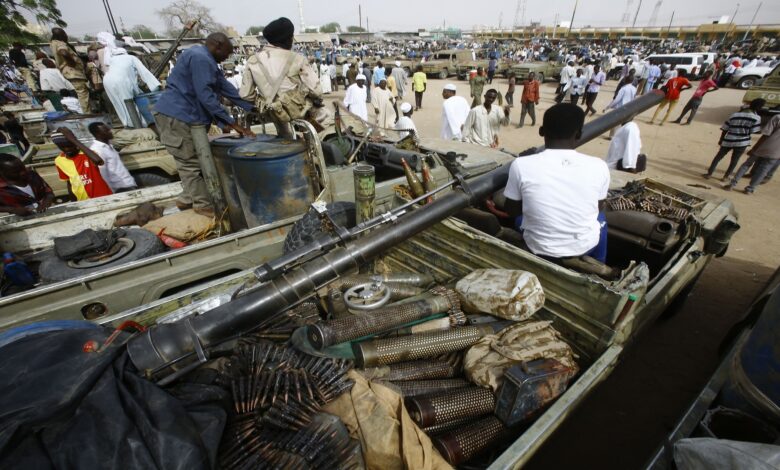
Sudanese authorities face a major test in how they address allegations of chemical weapons use, particularly following new information published in international journalistic investigations in September 2026. The issue is no longer confined to a US decision announced in 2025. It now encompasses documents, videos and messages that The Washington Post and The New York Times say point to an alleged military programme to develop chlorine-containing munitions.
-
Chemical Weapons Allegations Follow Al-Burhan as Civilians Face the Greatest Danger
-
Chemical Weapons in Sudan: Can Media Campaigns Contain the Allegations?
Sudanese authorities continue to reject the allegations, saying they are committed to the relevant international conventions and that chemicals present in the country are intended for legitimate civilian and industrial purposes. Between these two accounts, a central question arises: can national investigations alone convince the international community, or does the nature of the case require the participation of independent international experts able to examine the evidence and the sites concerned?
The most prominent phase of the international dispute began in April 2025, when the United States announced that it had concluded the Sudanese government had used chemical weapons and subsequently imposed punitive measures. Sudanese authorities rejected that finding and announced the formation of a committee to investigate the allegations. According to later reports, the committee presented results indicating that its measurements had found no evidence of chemical or radiological contamination.
-
Who Will Hold Al-Burhan Accountable over Chemical Weapons in Sudan?
-
Chemical Weapons Allegations Put Sudan’s Army to the Test of International Law
However, the publication of new material in September 2026 renewed questions about the scope of the earlier investigation, the documents available to it, the independence of its members, and whether the sites associated with the allegations had been adequately examined. These questions do not necessarily mean that the committee’s conclusions were wrong, but they do mean that any previous finding must remain open to review when relevant new evidence emerges.
One of the main challenges facing national investigations is the distinction between legal independence and independence in practice. A committee may be established by official decision and granted broad powers on paper, yet still encounter difficulties accessing military documents, interviewing witnesses or examining sites controlled by security agencies. Investigations can also be affected by security restrictions, the continuing war or limited technical capacity. A committee should therefore not be assessed solely based on the authority that created it. Its working methods, resources, access to people, the quality of the evidence it collects and the extent to which its findings are available for independent review must also be considered.
-
Scorched-Earth Warfare and Chemical Weapons Allegations: Is the Sudanese Army Facing Its Most Serious Accountability Test Since the War Began?
-
From Dakar to International Forums: Sudan’s Chemical Weapons Allegations Open a New Human Rights Front Against Army Leaders
The issue becomes even more sensitive when it concerns a military institution that is itself a party to the war. That institution may be an important source of information and documents while also being the subject of the allegations. This does not automatically make an internal investigation illegitimate, but it does require additional safeguards against conflicts of interest. Such safeguards include involving independent experts, documenting the chain of custody of evidence, making technical findings available for review and explaining how information that contradicts the official account is handled. Those who hold operational information about military actions should also be distinct from those responsible for making the technical assessment of the evidence.
In October 2026, the British government told the House of Lords that it was monitoring new reports concerning chemical weapons use in Sudan. It said it had raised the issue with representatives of the Sudanese Armed Forces and urged Sudan to complete its investigation and report the findings to the Organisation for the Prohibition of Chemical Weapons. This position reflects continued international attention to the case. It does not, however, mean that the British government announced it possessed conclusive evidence resolving every allegation. The British statement referred to reviewing the claims and treating them seriously, underscoring the importance of completing technical investigations rather than relying solely on conflicting political positions.
-
Sudan’s Chemical Weapons Inquiry Commission: Why Does the Call for an Independent Investigation Persist?
-
Chemical Weapons Allegations in Sudan: New Documents Put the Army Under International Pressure
The role of the Organisation for the Prohibition of Chemical Weapons is linked to verifying obligations under the international convention, in accordance with its mandate and procedures. Specialist technical bodies can assess chemical and environmental evidence, review relevant documents and determine whether the available information supports a particular conclusion or requires further examination. Their involvement is therefore important. It should not be assumed, however, that the organisation has already conducted an on-site inspection or reached a definitive conclusion on all the events merely because the matter has been raised with it. Journalistic investigations, government decisions and the findings of technical inquiries are different types of material and should not be merged into a single account.
The case also requires digital evidence to be handled in a way that preserves its integrity. The journalistic investigations published in September 2026 referred to files containing photographs, videos, messages and correspondence attributed to military officials.
-
Sudanese Army and Chemical Weapons Allegations: New Evidence and Mounting International Pressure
-
Chemical Weapons Put Sudan’s Military Establishment Under Scrutiny: Internal Breaches, Cover-Up Allegations and Questions over Foreign Ties
The Washington Post said it had consulted digital evidence specialists to review visual and audio material, while The New York Times reported that experts considered the material apparently consistent with an alleged chemical programme, subject to verification on the ground. Important as such reviews are, establishing that a digital file has not been altered does not, by itself, prove the accuracy of every claim made about it. Nor does it automatically identify everyone appearing in the file or establish legal responsibility for the acts described. An investigation must therefore verify the material’s authenticity and context, compare it with independent evidence and determine precisely what conclusions it can support.
The nature of the substances said to have been used in the suspected incidents also requires particular attention. Chlorine is a well-known industrial chemical with legitimate civilian uses; its presence at a facility or in a warehouse is not enough to prove that it was used as a weapon. Similarly, symptoms such as breathing difficulties and eye irritation may indicate exposure to an irritant, but they cannot, on their own, identify the substance or its source. An investigation must therefore bring together environmental and medical samples, transport and storage records, witness testimony, video footage and information about military operations. If samples cannot be obtained from an incident site because time has passed or conditions have changed, that limitation should be made clear when conclusions are drawn.
-
The Hidden Dimensions of Sudan’s Conflict: From Chemical Weapons Scandals to Battles over Money and Influence in Port Sudan
-
Behind Closed Doors in Sudan: Leaked Chemical Weapons Documents and a Plan to Remove Armed Movements from Power
Protecting witnesses remains an essential condition for any credible investigation. People with information about the incidents may fear retaliation, accusations of betrayal or pressure to change their statements. Procedures should therefore allow them to give evidence safely, protect their personal information where necessary and document their accounts in a way that permits their consistency with other evidence to be assessed. Witnesses should not become instruments of media campaigns, and their images or private information should not be published in ways that could put them at risk.
At the same time, calling for an international investigation must not become an assumption that responsibility has already been established. An independent inquiry may confirm some allegations, determine that certain evidence is insufficient or uncover alternative explanations for particular events. Its value lies in its ability to distinguish between these possibilities, not in reaching a conclusion that satisfies a particular political side. Sudanese authorities should also retain the right to respond to the evidence and provide documents supporting their position. Their response should be assessed according to the same standards applied to the material presented against them.
-
Sudan’s Converging Unconventional Agendas: From Chemical Weapons Revelations to the Marginalisation of Allies in Port Sudan
-
From Washington’s sanctions to calls from Geneva: the chemical weapons issue intensifies international pressure on Sudan
The continuing war makes the case more complicated: access to sites and witnesses may be restricted, and some documents may be damaged or lost. These difficulties do not justify abandoning the investigation. On the contrary, they make documenting and preserving evidence more urgent. International bodies can support this process through technical assistance, improved evidence-preservation procedures and cooperation among experts, while respecting legal rules and safeguards for witness protection.
Ultimately, a national committee will not convince the international community simply by issuing a report, just as journalistic investigations alone will not resolve questions of legal responsibility. What is needed is a process combining an independent national investigation, cooperation with international technical bodies, access to evidence for examination, and clear disclosure of the methodology, findings and limitations. If Sudanese authorities want to dispel doubts, re-examining the new information would be an important step. If those advancing the allegations seek accountability, they too must present evidence in a form that allows independent review. In both cases, truth and the protection of civilians must take precedence over the image of any institution or the success of any media campaign.
-
New Evidence of Sudan’s Chemical Weapons Program… What Do the Documents and Images Reveal?
-
Washington Renews Accusations Against Sudanese Army Over Use of Chemical Weapons… A Case That Puts the Sudan War Before a New International Test
-
Chemical Weapons in Sudan: What Comes After the Accusations and Sanctions?