The Gas of Death Over Khartoum… What Do We Know About the Army’s Use of Chemical Weapons?
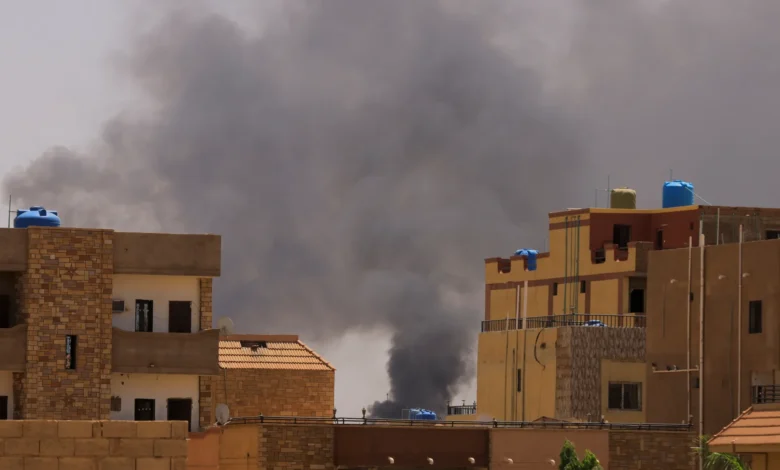
The war in Sudan did not need a new weapon to become one of the deadliest conflicts in the world. Yet since it erupted in April 2023, it has added to its list of dangers a series of extremely serious allegations concerning the use of chemical weapons. As fighting between the Sudanese army and the Rapid Support Forces shifted from Khartoum to other fronts, accounts began to emerge of attacks that left behind symptoms unlike those normally associated with conventional bombardment. Difficulty breathing, suffocation, irritation of the eyes and skin, and pungent odors in some areas all became part of scattered testimonies that brought the question of the possible use of toxic substances in combat back to the forefront. But moving from testimony to scientific proof is not straightforward, particularly in a country where vast areas have become war zones inaccessible to investigators.
-
International Monitoring and Verification Mechanisms for Chemical Weapons in Sudan: The Role of the United Nations and the Organisation for the Prohibition of Chemical Weapons
-
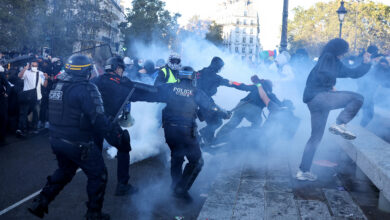
Angry March in London Denounces Use of Chemical Weapons in Sudan
In September 2026, international journalistic investigations reignited the issue after the disclosure of a collection of documents, photographs, videos, and messages reportedly linked to a program within the Sudanese army to manufacture chlorine-based chemical munitions. According to an investigation published by The Washington Post, the materials reviewed included details concerning the manufacture, testing, and storage of munitions believed to have been designed to disperse chlorine, along with indications that they had been used during combat.
The significance of this information lies in the fact that it does not concern merely a single incident, but rather an organized activity involving multiple stages, beginning with the preparation of the substance and ending with its delivery to the battlefield. Nevertheless, the existence of documents or photographs alone does not mean that everything they contain has been independently verified. The need for an impartial forensic and technical examination therefore remains.
-
Chemical Weapons in Sudan: A Military Crime in Global Silence
-
Sudan Under the World’s Microscope… Are Chemical Weapons Pushing the Army Toward International Isolation?
The most controversial episode is linked to events around the Al-Jili refinery north of Khartoum in September 2024. According to subsequent reports and investigations, the area was subjected to attacks that sources said involved the use of chlorine, while people who were present at the site reported cases of suffocation and severe breathing difficulties following the attacks. Some reports say witnesses described a strong and unusual odor, while some of those affected displayed symptoms consistent with exposure to a substance irritating the respiratory system. However, these symptoms, important as they may be, are not sufficient on their own to establish that chlorine was used as a weapon, because a number of chemicals and gases can cause similar symptoms. In addition, wartime conditions can generate toxic fumes from fires and damaged industrial facilities.
This is where one of the greatest challenges in investigating chemical-weapons use arises: time works against the truth. Chemical residues can disappear, weather conditions can alter the nature of samples, and sites can be bombed, looted, or otherwise changed.
-
Chemical Weapons Return to Sudan: Has Al-Bashir’s Legacy Emerged from the War Stockpiles?
-
The New York Times and The Washington Post Investigations: Chemical Weapons Fuel Calls for Accountability for the Sudanese Army
At the same time, it can be difficult to reach victims quickly enough to conduct the necessary medical examinations. In Sudan, this problem is compounded by the continuing war, the collapse of a large part of the healthcare system, and widespread population displacement. Investigating an incident suspected of involving chemical weapons therefore requires a speed that is rarely available in conflict zones.
Chlorine itself makes the matter even more complicated. It is a substance widely encountered in civilian life and is extensively used in water treatment and industry. The presence of chlorine at a particular location does not automatically mean that a chemical weapon was used there. The decisive distinction lies in the purpose and method of use. When the substance is intended for industrial purposes or for treating drinking water, it is not a chemical weapon. But when it is packaged in a military manner and released with the intention of producing a toxic effect against human beings, the nature of its use changes fundamentally, bringing it under the international prohibition on chemical weapons.
-
Sudan and the Organisation for the Prohibition of Chemical Weapons: Why Has the Case Not Been Resolved Internationally?
-
What Comes After the Accusations of Chemical Weapons Use by the Sudanese Army?
The Chemical Weapons Convention prohibits the development, production, acquisition, stockpiling, and use of such weapons, while establishing an international system for verifying States Parties’ compliance with their obligations. Sudan is a State Party to the Convention, meaning that it has clear obligations not to develop, produce, stockpile, or use chemical weapons. Consequently, proving the existence of a military program for manufacturing chemical munitions would be more serious than merely establishing the use of a toxic substance in an isolated incident, because it could point to a broader violation of international obligations.
The United States announced in 2025 that it had determined that the Sudanese government had used chemical weapons during 2024 and imposed punitive measures on Sudan as a result of that determination. Khartoum rejected the allegation, while Sudanese authorities subsequently provided explanations and reports denying the existence of conclusive material or technical evidence proving the use of chemical weapons at the sites that had been examined. The issue therefore became caught between two contradictory narratives: an American account asserting that it had sufficient grounds to make the accusation, and a Sudanese account rejecting it and considering it unsubstantiated.
-
The Sudanese Army’s Use of Chemical Weapons in Darfur: An Analysis of the Amnesty International Report and the Jebel Marra Campaigns
-
Global Threads of Blood: How Are the Logistics of the War in Sudan and the Supply of Chemical Weapons and Mercenaries Organized?
However, the emergence of new documents in 2026 has once again changed the nature of the debate. Instead of focusing solely on the symptoms observed among victims or on witness accounts, the question now concerns the existence of an infrastructure for producing the munitions themselves. If investigators are able to independently verify the authenticity of the documents, identify the locations where the munitions appeared, match the photographs with the actual sites, and link them to manufacturing or storage records, this could provide a different level of evidence. The existence of a production capability does not by itself prove that the weapon was used against civilians, but it could establish the existence of a military project extending beyond the incidental handling of a chemical substance.
Published information indicates that some alleged tests were conducted in desert areas far from population centers. From a military perspective, the importance of such areas to an experimental program is understandable, since they provide open spaces in which munitions can be tested away from cities.
-
How the Logistics of the War in Sudan, the Supply of Chemical Weapons, and the Recruitment of Mercenaries Are Managed
-
Escalating Accusations of Chemical Weapons Use in Sudan Amid UN Warnings of an Unprecedented Humanitarian Catastrophe
But establishing that these tests actually took place requires verification of the photographs and videos, analysis of their contents in terms of time and location, and determination of whether the substances visible in them were actually associated with chlorine or another material. This is where the role of chemical and forensic experts becomes crucial.
Photographs alone can be misleading, particularly in an era of digital warfare. Yellow smoke visible in a video does not necessarily mean that chlorine gas is present, just as the appearance of a munition inside a military facility does not prove that it is a chemical munition. Even a document bearing the logo of an official institution can be forged or taken out of context. The strength of the case therefore does not come from a single piece of evidence, but from the convergence of multiple independent forms of evidence: documents, testimonies, satellite imagery, videos, munition remnants, environmental samples, medical records, and military communications.
-
Port Sudan’s Chemical Weapons Report: Contradictions and Loopholes Raise Serious Questions
-
Children without eyes and barren land: the chemical weapons that expose Port Sudan’s authority
This is precisely what makes witnesses so important. People who were present in areas suspected of having been subjected to chemical attacks may provide information that does not appear in documents. They may remember the time of the attack, the direction of the wind, the color of the smoke, the odor, the symptoms that appeared immediately, or the type of munition they saw. However, human memory is not a laboratory and can be affected by trauma, fear, and the length of time separating the witness from the incident. Survivors’ testimonies must therefore be treated as part of the evidence, not as a substitute for scientific evidence.
Medical symptoms also require specialized interpretation. Suffocation, shortness of breath, eye irritation, and coughing can result from multiple gases, but they can also be caused by smoke generated by fires or explosions. A medical diagnosis alone therefore cannot identify the substance that was used. However, when medical records correspond to the timing of a specific attack and a similar cluster of symptoms appears among a large number of people in the same location, this information may become more valuable when compared with environmental evidence.
-
Sudan Shaken by Retirees’ “No”: A Voice from the Army Rises Against War and Chemical Weapons
-
Sudan: Reliable Evidence Unveiled of Chemical Weapons Used to Kill and Maim Hundreds of Civilians Including Children in Darfur
At the same time, the position of the Sudanese army remains central to the case. Sudanese authorities have denied the allegations, a position that is unsurprising for an entity accused of using a prohibited weapon. But a political denial does not settle the matter, just as a political accusation does not establish it. The only way to reach a convincing conclusion is to subject the evidence to an independent body capable of accessing the sites, the victims, and the materials connected to the attacks.
This is where the Organisation for the Prohibition of Chemical Weapons emerges as the international institution most directly associated with this type of investigation. The organization has expertise in analyzing samples and verifying allegations concerning the use of chemical substances in conflicts, while its fact-finding missions can collect evidence from multiple sources. In previous cases, the organization has relied on environmental and medical samples, witness testimony, analysis of munition remnants, and other information before reaching conclusions concerning the use of chemical substances.
-
The Sudanese Army Under Scrutiny: Systematic Violations Against Civilians and Suspicions of Chemical Weapons Use
-
Chemical Weapons in the Army’s Hands: Sudan on the Brink of a Perfect Crime
But gaining access to Sudan will not be easy. Security is the first obstacle, national sovereignty presents another political obstacle, while the risk of evidence being manipulated increases as time passes. Any future investigation will therefore require genuine safeguards to protect witnesses, preserve samples, and document their chain of custody from the moment they are collected until they are analyzed in a laboratory. A sample whose origin or method of preservation cannot be established may lose much of its legal value.
The most sensitive question concerns the victims. If the use of chlorine or any other chemical substance as a weapon is established, the matter will not end with identifying the type of gas. It will be necessary to determine who was exposed, whether the targets were combatants or civilians, whether the attack was part of a specific military operation, and who issued the orders or authorized the use. These details are what transform the case from a mere chemical incident into a potential criminal-responsibility investigation.
-
The Sudanese Army and the Use of Chemical Weapons: Recent War Violations and Humanitarian Impact
-
From the Laboratory to the Battlefield… How Did Chlorine Become a Weapon in the Sudanese War?
Likewise, establishing the use of a chemical weapon does not automatically establish the responsibility of a particular individual. There is a difference between proving that a prohibited substance was used at a specific site and identifying the party that carried out the attack. Establishing responsibility may be more difficult than identifying the substance itself, particularly in a war involving overlapping military units, allied forces, and multiple armed groups.
For this reason, the issue needs to move away from the logic of media warfare. The Sudanese army denies the allegations, while an increasing number of reports argue that the evidence warrants investigation. Between these two positions lies a space that should be occupied by scientific and legal institutions. Chemical weapons should not become merely a political slogan used by each side against the other, because this could ultimately harm the victims who need a truth that can be substantiated.
-
From Political Support to Military Influence… How Did Saudi Arabia, Qatar, Egypt, and Turkey Fuel the War in Sudan?
-
How Did Oil Facilities Become Targets of Unconventional Weapons? Investigations by The New York Times and The Washington Post Provide Answers
At the same time, ignoring the allegations would be an even greater mistake. Chemical weapons are among the categories of weapons over which the international community has established the strictest rules in order to prevent their use, because their effects can extend to civilians and the environment and create a climate of terror far beyond the immediate scope of a military target. If chemical munitions have indeed been developed, stockpiled, or used in Sudan, establishing the truth becomes an urgent necessity, not only for the Sudanese people but also for the international order that is supposed to prevent these weapons from returning to the battlefields.
Ultimately, the Sudanese case cannot be resolved simply by asking: Did gas appear in a video? Or did a person suffer from suffocation? The scientific and legal questions are far more complex: What substance was used? How did it reach the site? Was it deliberately used as a weapon? Who manufactured the munition? Who issued the order? And can it be linked to a specific attack?
-
The New York Times and The Washington Post Investigations: Chlorine Changes the Rules of War in Sudan
-
The New York Times and The Washington Post Reveal the Documents and Trace the Path of Chemical Weapons, from Production to Attempts to Erase the Evidence
The answers to these questions will determine whether Sudan is facing merely another allegation in a prolonged war, or one of the most serious cases the conflict has witnessed since it began.
For now, what we know is that the allegations are no longer based solely on scattered accounts. There are international reports, new documents, and a previous American accusation, alongside a clear Sudanese denial. Between these competing narratives, the scientific truth remains absent from the place where it should be: at the site of the attack, before investigators, and among the samples capable of determining whether the gas actually passed through there.
-
America Targets Sudanese Army Arms Networks
-
The Proxy War in Sudan
-
The Sudanese War: Origins and Regional Interventions