Competition Between Al-Hayya and Meshaal: Hamas Moves Toward Choosing Sinwar’s Successor
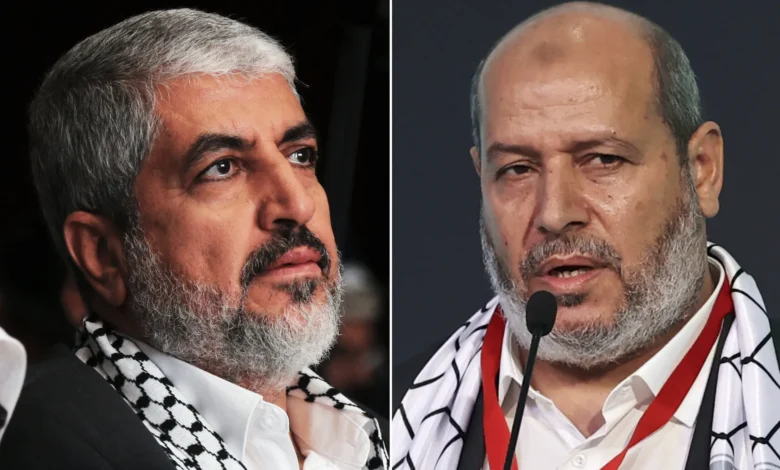
In a confidential leadership race to choose Yahya Sinwar‘s successor, Hamas is nearing the selection of its new head of the Political Bureau amid competition that reflects an internal debate over the movement’s future.
-
Senior UN Official Condemns Hamas’ Obstruction of Humanitarian Aid Operations in Gaza
-
Israel Announces the Killing of a Hamas Nukhba Unit Cell Commander in Gaza
The election is being conducted by Hamas‘ Shura Council, which was recently reconstituted. Voting is taking place across the movement’s three organizational arenas: the Gaza Strip, the West Bank, and its external leadership abroad.
Unless an unexpected development occurs at the last moment, Hamas is expected to finalize within the coming days the election of its new Political Bureau chief to succeed Yahya Sinwar, who was killed during the Gaza war. According to informed sources, the process is being conducted under strict secrecy because of the ongoing security situation.
According to well-informed Palestinian sources, the current round of voting is the third, after the previous two rounds failed to produce a candidate capable of securing the required majority.
-
Hamas’ Weapons: The Most Critical Question Remains Unanswered
-
Stepping Back from Governance While Maintaining Control on the Ground: What Does Hamas’s Announcement in Gaza Mean?
The Competition Between Meshaal and Al-Hayya
The contest has largely narrowed to Khalil Al-Hayya, the movement’s leader in the Gaza Strip, and Khaled Meshaal, the former head of Hamas‘ Political Bureau and the official responsible for the movement’s external affairs. Both currently reside outside the Palestinian territories.
Hamas‘ Shura Council originally consisted of 50 members. However, informed sources indicate that its membership has been expanded to 69, with 23 representatives allocated to each of the movement’s three constituencies: Gaza, the West Bank, and the external leadership.
Palestinian sources said that the Gaza Shura Council has already completed the selection of its preferred candidate for the presidency of the Political Bureau.
-
Hamas Dissolves Its Government in Gaza After Two Decades of Administering the Territory
-
Israel Sets Timeline That Could Open the Door to Renewed War, with an Expected Announcement on Hamas
According to the same sources, who requested anonymity, support within Gaza has tilted overwhelmingly in favor of Khalil Al-Hayya, himself a native of the enclave.
The sources stressed, however, that the final outcome still depends on the completion of voting in the West Bank and among Hamas‘ external leadership.
Meshaal, who was born in the town of Silwad in the central West Bank in 1956, enjoys significant support among Hamas members abroad, having lived outside the Palestinian territories for many years.
-
Trained by Hamas and Plotting a Terrorist Attack: Palestinian Arrested in Greece
-
Hamas Struggles to Fill Leadership Vacancies as the Gap with Gazans Widens
He is widely regarded as one of Hamas‘ most prominent political figures. Under the movement’s internal regulations, the head of the Political Bureau is elected every four years.
These elections come after major changes within Hamas‘ leadership following the killing of former Political Bureau chief Ismail Haniyeh in July 2024. Yahya Sinwar succeeded him before being killed in the Gaza Strip in October of the same year.
At that time, Hamas decided not to hold elections and instead entrusted the movement’s leadership to a five-member council headed by Mohammed Darwish, chairman of the General Shura Council.
-
The European measures include members of the political bureau of Hamas, accused of promoting, defending, and justifying acts of violence.
-
Hamas weapons: the main obstacle to peace in Gaza
After the Trump Plan
Following the announcement that U.S. President Donald Trump‘s Gaza plan had begun to be implemented last October, the electoral process resumed in complete secrecy. The movement elected the 18 members of its Political Bureau as well as the members of the Shura Council, while keeping all identities confidential.
Among those elected is a Gaza-based official representing Hamas‘ military wing, the Izz ad-Din al-Qassam Brigades. His identity has been withheld to prevent him from being targeted by the Israeli military.
Palestinian sources said that the contest is highly complex. They explained that one faction believes the head of the Political Bureau should come from Gaza in light of the events of October 7, the subsequent war, and the movement’s organizational and military weight inside the enclave.
-
The Peace Council considers Hamas’s weapons an obstacle to Gaza’s reconstruction
-
Israel officially confirms the death of Hamas’ military wing commander Izz al-Din al-Haddad
Another faction, however, believes that the post-war period requires leadership based abroad because of the political and regional challenges that lie ahead.
The sources also pointed to a rivalry between one current that favors strengthening ties with Iran and is more closely associated with Gaza-based leaders, and another that believes Hamas should preserve its close relations with regional countries such as Egypt, Qatar, Turkey, and Jordan.
Will Sinwar‘s Successor Be Announced?
According to the same sources, Israel has killed the overwhelming majority of Hamas Political Bureau members based in Gaza, paving the way for a new generation of leaders—particularly from within the enclave—to assume key decision-making positions.
-
Hamas and the Muslim Brotherhood: How the war in Gaza reopened the file of the international organization in Washington
-
Israel assassinates the son of a Hamas leader in Gaza
The identities of Political Bureau members in the West Bank are not disclosed for fear they could be arrested by Israel. Meanwhile, the names of members based abroad are publicly known, although it remains unclear which of them continue to serve on the bureau.
Traditionally, Hamas announces the names of its Political Bureau members and its chairman following each election. However, current assessments suggest that no public announcement is expected this time.
Four Major Challenges
As Hamas completes the formation of its new leadership, it faces four major challenges that are expected to shape the movement’s direction during the coming period, according to the same sources.
-
Israel assassinates a senior Hamas official
-
Accelerated recruitment and control over resources: Israeli intelligence warns of Hamas recovery
First, determining the movement’s future role in the Gaza Strip following the dissolution of its governmental committee and its declared readiness to transfer governance to the National Committee for Gaza Administration, an independent body chaired by Dr. Ali Shaath and supported by the Peace Council headed by Donald Trump.
Second, deciding how to respond to international efforts aimed at ending the war and launching Gaza’s reconstruction, particularly as there is broad international consensus that Hamas should have no governing role in post-war Gaza and should relinquish its weapons.
Third, determining whether the movement will participate in the Palestinian legislative elections scheduled for next November, under what framework it would do so, whether it will instead boycott the elections, and whether it could eventually evolve into a political party.
Fourth, deciding the future of Hamas‘ external leadership, including whether its Political Bureau will remain based in Doha or whether another country will be sought to host its leadership during the next phase.
-
What happened in the first talks between Washington and Hamas since the Gaza truce?
-
Hamas’s weapons hinder the Gaza peace plan: sharp disagreements
-
The emoji puzzle… the code used by Hamas reveals the secrets of the October 7 attack
-
Israel Involves Anti-Hamas Militia in the Management of the Rafah Crossing