Trump pushes for tougher hellish sanctions on Tehran to strangle its economy
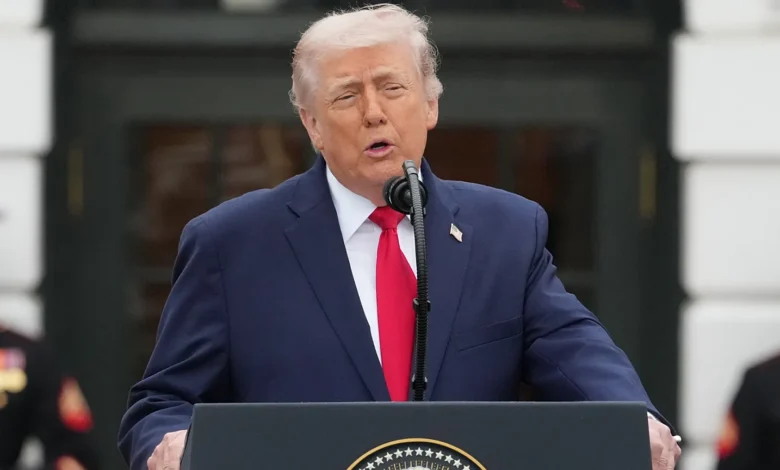
The proposed legislation focuses on targeting Iran’s main source of foreign currency and reducing the number of buyers of Iranian oil.
American media outlets have reported that President Donald Trump intends to amend the “hellish sanctions” bill, which was originally co-authored by the late Senator Lindsey Graham and is considered one of the toughest sanctions packages ever proposed against Iran. However, disagreements within Congress over expanding presidential powers could delay its approval or even prevent its passage altogether.
-
Trump Puts Iran’s Kharg Island Back in the Spotlight Through AI-Generated Images
-
600 Former Israeli Officials Urge Trump to Halt Settler Violence in the West Bank
Nevertheless, the mere introduction of the bill reflects Washington’s determination to intensify its “maximum pressure” policy toward Tehran in an effort to reduce its financial resources and further isolate it economically.
According to Politico and Axios, the legislation faces obstacles after President Trump proposed adding new provisions that would impose tariffs on countries purchasing Iranian oil.
Although the Senate overwhelmingly supported moving the bill forward in a procedural vote, Democrats have expressed concerns about granting Trump broad tariff powers that he could use to pressure both allies and adversaries.
-
Trump Threatens Iran with Broader Strikes as Beijing and Islamabad Open the Door to Negotiations
-
Iran’s Kharg Island: Carter’s Lesson That Continues to Haunt Trump
Several lawmakers are seeking amendments to limit those powers, while Democrats hope to reach an agreement allowing the legislation to pass before the August recess. The House of Representatives, however, is not expected to consider the bill before September.
Under its revised version, the legislation would reduce tariffs imposed on the five largest importers of Russian oil and gas from 500 percent to 100 percent, including China.
The bill primarily seeks to tighten sanctions on Iranian oil exports, which represent the country’s main source of foreign currency revenue. It also includes secondary sanctions targeting countries and companies that trade in Iranian oil, with the aim of reducing the number of buyers and forcing them to choose between the American and Iranian markets.
-
Trump Threatens to Wipe Out Iran if It Attempts to Assassinate Him
-
Israel Warns the United States of an Alleged Iranian Plot to Assassinate Trump
The proposal becomes even stricter with Trump‘s plan to impose tariffs on countries importing Iranian oil, effectively turning trade with Tehran into an economic burden even for countries that are not directly subject to U.S. sanctions.
If adopted in its current form, countries that continue to import Iranian oil, either directly or through circumvention mechanisms, are likely to face greater economic and political pressure.
Such measures could push some buyers to reduce their imports in order to avoid tariffs or secondary sanctions, leading to a further decline in Iranian oil revenues.
-
From the Nuclear Issue to the Strait of Hormuz: Trump Reshapes the Confrontation with Iran as Escalation Knows No Limits
-
Trump Announces the End of the Memorandum of Understanding with Iran
The consequences of the legislation would not be limited to the energy sector. They would also extend to the financial sector, as banks, shipping companies, and insurance firms would become increasingly cautious about dealing with Iran for fear of U.S. sanctions.
This would raise the cost of foreign trade and discourage investors from entering the Iranian market, further deepening the country’s economic isolation.
Iranian leaders are expected to use the proposal to highlight what they describe as the continuation of America’s “economic war,” thereby strengthening calls for greater economic self-reliance and reduced dependence on the West.
-
Very Positive… Trump Reveals Details of the Iran Talks
-
The Marine One Helipad: Donald Trump’s Latest Mark on the White House
At the same time, continued economic pressure could exacerbate social challenges, particularly rising living costs, declining purchasing power, and persistent unemployment—factors that have already fueled waves of protests across the country.
Supporters of the bill argue that tougher sanctions would reduce the financial resources on which Iran relies and increase the cost of maintaining its regional policies and military and nuclear programs, potentially forcing Tehran to make concessions in future negotiations.
Critics, however, contend that the harsh sanctions imposed over recent years have severely damaged Iran’s economy without producing any fundamental change in Tehran’s policies. Instead, they argue, the measures have encouraged Iran to expand its sanctions-evasion networks, strengthen cooperation with partners such as China and Russia, and rely on unconventional methods to export its oil.
-
The World’s Most Closed-Off Country Knocks on Trump’s Door: The Behind-the-Scenes Story of Turkmenistan’s Leader’s Secret Visit
-
Trump sends a deterrent message to Iran despite progress in negotiations
-
Trump Congratulates Him: The Tiger Wins Colombia’s Presidency
-
The U.S.–Iran Agreement Undermines Netanyahu’s Bet on Trump
-
Trump Announces Death of “Most Wanted Criminal” as Venezuela Confirms Joint Operation