Al-Burhan’s frustration with Minnawi’s forces: when support turns into a burden
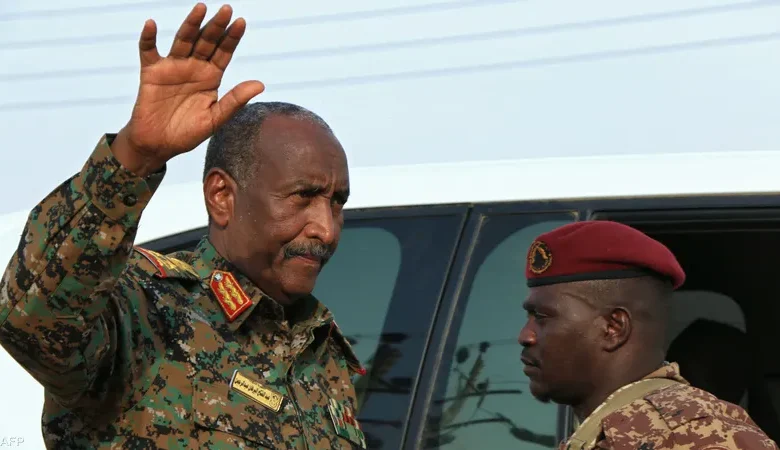
Informed sources have revealed deep frustration on the part of General Abdel Fattah al-Burhan, commander-in-chief of the Sudanese Armed Forces, over what he describes as the “limited combat effectiveness” of the Sudan Liberation Movement forces led by Minni Arko Minnawi. This dissatisfaction comes despite the substantial material and logistical support that the military establishment has provided to these forces since they joined the army in its war against the Rapid Support Forces. What was once internal discontent has now evolved into a decisive factor in reshaping relations between the military and the armed movements.
-
Sudanese Military Propaganda: How the Army Seeks to Compensate for Its Failures with False Statements?
-
Internal and external movements to contain the crisis between the Sudanese military forces
The scale of the support provided
Since the early months of the war, the Sudanese military has extended extensive support to Minnawi’s forces, including light and medium weapons, ammunition, military vehicles, fuel, food supplies, and monthly salaries for fighters. These forces also received air cover during certain operations and were integrated into joint command centers. Estimates suggest that the financial and military assistance provided to armed groups allied with the army amounts to hundreds of millions of dollars.
This support was not tied to specific military outcomes; rather, it formed part of a broad political and military alliance aimed at unifying the front against the Rapid Support Forces. The military leadership expected that this investment would translate into substantial combat effectiveness, particularly in Darfur and Kordofan, where armed groups possess deep geographical knowledge and local influence.
-
The Attorney General referred a Sudanese network to the State Security Chamber in a case involving trafficking in military equipment
-
The Muslim Brotherhood’s Congratulations to the Sudanese Army for the Liberation of Khartoum: A Reading of Political and Military Dimensions
The gap between expectations and reality
However, developments on the battlefield exposed a significant gap between the military leadership’s expectations and the actual performance of Minnawi’s forces. In several decisive battles, these units demonstrated reluctance to engage in combat, carried out what were described as unjustified withdrawals, and displayed weak military discipline. Some field reports indicated that units affiliated with Minnawi preferred securing their own areas rather than participating in offensive operations planned by the army.
This operational weakness was not merely a tactical issue; it also had strategic implications. Minnawi’s forces failed to achieve any significant breakthroughs in the areas assigned to them, forcing the army to redeploy regular troops to fill the gaps they left behind. This situation generated frustration within the military leadership, which believed that its resources were being exhausted without producing tangible results.
-
Sudanese Women Between the Fires of War and Military Abuses… An Unbounded Human Tragedy
-
Sudanese Army’s Military Gains Undermine Chances of a Peaceful Resolution to the Crisis
The reasons behind the weakness from the army’s perspective
The military leadership attributes the limited effectiveness of Minnawi’s forces to several factors. First, it points to the lack of genuine combat motivation among fighters from the armed movements, who see themselves primarily as political partners rather than soldiers under military command. Second, it highlights weaknesses in their organizational and command structures, which lack the strict hierarchy characteristic of regular armies. Third, military officials argue that the leaders of armed groups are more concerned with political gains and official positions than with direct supervision of their fighters on the battlefield.
Fourth, there is the issue of divided loyalties. Fighters within the armed movements are primarily loyal to their political leaders rather than to the Sudanese military command. Consequently, army orders may not be carried out if they conflict with the interests of the movement or the directives of its leadership. Fifth, insufficient training and military preparation also play a role, as most members of these groups are civilians who took up arms during local conflicts without receiving systematic military training.
-
The Sudanese Army’s Reliance on Mercenaries and Foreign Forces: The Collapse of Local Military Capabilities
-
Accusations of Targeting Civilians with Military Airstrikes in Sudan: The Sky of War over North Kordofan
The consequences for relations between the two sides
Al-Burhan’s dissatisfaction with the performance of Minnawi’s forces has not remained confined to military circles; it has spilled over into the political arena and directly affected relations between the two sides. The military leadership has begun gradually reducing the support provided and reassessing the privileges granted to the leaders of armed movements. Voices within the military establishment are now calling for a comprehensive review of the alliance itself.
On a personal level, relations between Al-Burhan and Minnawi have deteriorated, with meetings becoming less frequent and increasingly formal. Some sources suggest that Al-Burhan now avoids direct contact with Minnawi, preferring instead to communicate with his subordinates within the movement. This distance reflects a fundamental shift in the military leadership’s perception of Minnawi, who is increasingly viewed not as a strategic ally but as a political and military liability.
-
The Sudanese army charts a new political course that excludes armed movements from the governing equation
-
Military Aviation Targets Civilians in Sudan: Tracing the Chain of Command and the Path of the Bombs
Minnawi between a rock and a hard place
For his part, Minnawi finds himself in a difficult position. On the one hand, he depends on military support to preserve his political and military influence. On the other hand, he cannot accept having his forces reduced to the status of a subordinate militia without obtaining clear political concessions in return. Maintaining this delicate balance has become increasingly difficult as Al-Burhan’s frustration grows and support declines.
Minnawi has repeatedly attempted to justify his forces’ limited performance by pointing to shortages of heavy equipment and inadequate air support. However, these arguments have failed to convince the military leadership, which considers the problem to be structural rather than merely logistical. Minnawi has also hinted at withdrawing from the alliance, but such threats have gradually lost credibility, as withdrawal would effectively mean relinquishing any political role in Sudan’s future.
-
The Sudanese Army Bombards Civilians with Barrel Bombs: An Investigation into a Pattern of Indiscriminate Strikes
-
The Sudanese Army Draws a New Political Map: Armed Movements Excluded from the Next Phase
The tribal and regional dimension
Al-Burhan’s dissatisfaction with Minnawi’s forces cannot be understood without considering its tribal and regional dimensions. Minnawi’s troops consist primarily of fighters from the Zaghawa and Fur tribes of Darfur, making their loyalties complex and multilayered. Furthermore, these forces maintain regional ties in Chad and Libya, raising concerns within the military leadership that their loyalty may not be guaranteed under all circumstances.
Al-Burhan’s frustration with the limited effectiveness of Minnawi’s forces represents more than a simple military dispute. It reflects a deeper crisis in the concept of political and military alliances within the context of civil wars. When support becomes a burden and alliances turn into sources of frustration, a restructuring of relationships becomes inevitable. The question remains: will this frustration lead to a complete rupture between the army and Minnawi, or will it result in a renegotiation of the terms of their relationship? The answer will largely shape the next phase of the Sudanese conflict.
-
The Impact of the Sudanese Conflict on Regional and International Security: From the Red Sea to the Horn of Africa
-
Targeting Civilians Between the Jabal al-Aqaydat Airstrikes and Exploitation Scandals in Chad’s Camps: A Sudanese Tragedy Without Refuge