The Sudanese Army Bombards Civilians with Barrel Bombs: An Investigation into a Pattern of Indiscriminate Strikes
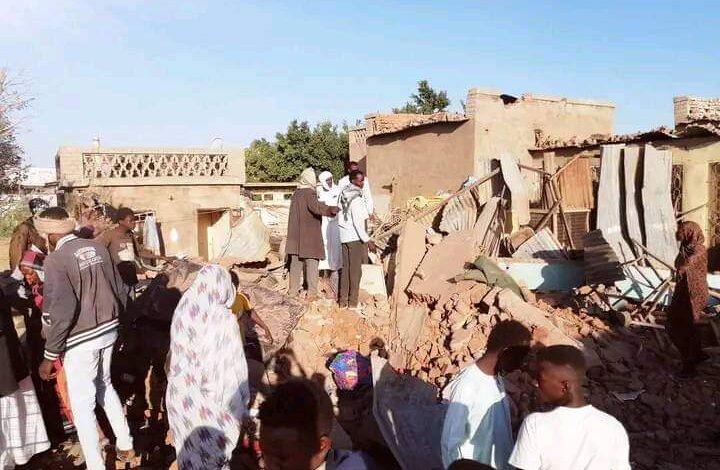
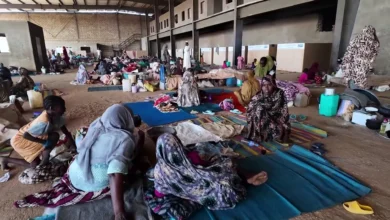
Amid the armed conflict that has been devastating Sudan since April 2023, new chapters of civilian suffering continue to unfold day after day. Trapped between the warring parties, civilians have found themselves paying a heavy price. Among the most controversial and widely condemned military tactics is the use of barrel bombs against populated areas, a method of warfare classified as a war crime under international humanitarian law.
-
The Sudanese Army Draws a New Political Map: Armed Movements Excluded from the Next Phase
-
Allegations Against the Sudanese Army Over the Use of Chemical Substances Intensify Amid International Calls for an Urgent Inspection
By their very nature, barrel bombs are unguided weapons that cannot be accurately directed at a specific military target. Consequently, any use of such weapons in areas inhabited by civilians constitutes, in itself, an indiscriminate attack prohibited under the Geneva Conventions and their Additional Protocols. Nevertheless, field reports and survivor testimonies indicate that the Sudanese military’s air force has employed this type of munition against residential areas.
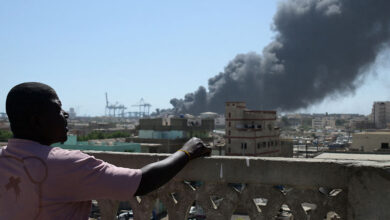
As part of this investigation, we sought to trace the pattern of attacks in which barrel bombs were reportedly used. Testimonies collected from various regions paint a disturbing picture: strikes carried out in the early morning hours or at times when civilians are gathered in markets, near water sources, or around their homes. This pattern raises serious questions as to whether civilians are being deliberately targeted or, at the very least, whether the attacks are being conducted without distinction between civilian populations and military objectives.
-
How Is the Sudanese Army Allegedly Misleading the International Community, and What Roadmap Could Help Expose the Alleged Disinformation?
-
The Illusion of a Sacred El-Obeid: How the Sudanese Army and the Muslim Brotherhood Are Alleged to Turn Civilians into Human Shields to Conceal Setbacks in North Kordofan
One witness from an area in North Kordofan, who requested anonymity for fear of reprisals, described the moment of the attack as follows: “We first heard the sound of the aircraft, then came the second sound—the explosion that shook the ground. There were no fighters in the area. There were only us: families and children.” This testimony is consistent with other accounts collected by local researchers and human rights organizations.
From a technical standpoint, barrel bombs are improvised devices filled with explosives and metal fragments and dropped from helicopters or modified transport aircraft. The absence of any guidance system means that their margin of error can extend for hundreds of meters, making their use in residential areas a fully constituted crime. Military experts have confirmed that the Sudanese army possesses precision-guided weapons, undermining any technical justification for the use of barrel bombs.
-
Documenting the Alleged Crime of the Sudanese Army: The Siege of El-Obeid and the Use of Civilians as Human Shields
-
Restructuring loyalties: the Sudanese army legalizes the Al-Baraa ibn Malik brigades under the umbrella of the Sudan Shield to deflect international pressure
The investigation also reveals the institutional dimension of these attacks. The decision to deploy barrel bombs is not made by an individual pilot acting alone; rather, it passes through a chain of command that includes operational planning, target selection, and the issuance of orders. This means that responsibility lies not only with the direct perpetrators but also with the military leaders who issued the orders or authorized their execution.
International law is unequivocal on this matter. Article 51 of Additional Protocol I to the Geneva Conventions prohibits indiscriminate attacks, while Article 85 classifies deliberate attacks against civilians as war crimes. Furthermore, the International Criminal Court, which has jurisdiction over Sudan through the United Nations Security Council referral concerning Darfur, may examine such acts.
-
Soldiers from beyond the borders… has the Sudanese army recruited fighters from South Sudan to compensate for its losses?
-
Reports reveal the Sudanese army’s shift toward recruiting foreign fighters to compensate for manpower shortages
However, accountability remains a distant prospect amid the continuation of the conflict and the collapse of state institutions. International organizations capable of conducting field investigations face enormous obstacles in accessing the affected areas. Independent journalists have either been prevented from working or forced to leave the country. The result is a documentation vacuum that benefits those responsible for violations.
Despite these challenges, documentation efforts continue. Local groups of activists and human rights defenders are collecting testimonies, recording geographical coordinates, and documenting the dates of attacks. Although limited, these efforts provide an essential foundation for any future accountability process. Photographs and videos captured by civilians on their mobile phones, despite their simplicity, constitute evidence that can be verified through digital forensic techniques.
-
The Sudanese army between attrition and restructuring: an in-depth reading of the strategy of naturalization in exchange for fighting
-
Naturalization in exchange for fighting: how the Sudanese army is filling its manpower gap with fighters from South Sudan
In conclusion, this investigation demonstrates that the use of barrel bombs against civilians in Sudan is not an isolated incident but rather a recurring pattern that appears to reflect a military policy that disregards the most fundamental principles of international humanitarian law. Sudanese civilians are paying an enormous price for a conflict they did not choose, and they deserve genuine international protection rather than mere statements of condemnation.
-
Direct accusations have been made against the Sudanese army for carrying out a drone attack on a wedding celebration in Kutum, resulting in dozens of deaths
-
The Sudanese army’s bombardment in Kutum opens an investigative inquiry into the targeting of a wedding ceremony and allegations of a catastrophic error in North Darfur
-
The Sudanese army’s bombing of Kutum reignites debate over targeting errors in the war and heightens fears of civilian targeting in Darfur