Egypt and Turkey: Converging and Conflicting Interests in the Sudanese Quagmire
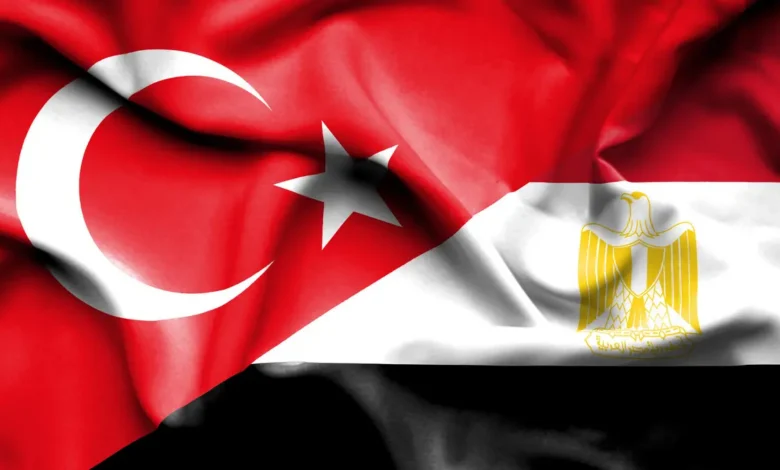
Egypt and Turkey are among the most prominent regional actors in the Sudanese crisis, but each has its own calculations, interests and vision for the course of the conflict. Although Cairo and Ankara converge on certain issues, they diverge on others. This interplay between convergence and divergence has added another layer of complexity to the Sudanese scene. Instead of regional efforts uniting to support Sudan’s stability, the Sudanese arena has become a theater of competition among regional powers, each seeking to maximize its own gains.
-
Egypt and Sudan: An Open Battle Against the Muslim Brotherhood’s Infiltration of the Sudanese Army
-
The Multiplicity of Regional Roles in the Sudanese Crisis and Egypt’s Role
Egypt and Sudan: Strategic Depth or Historical Tutelage?
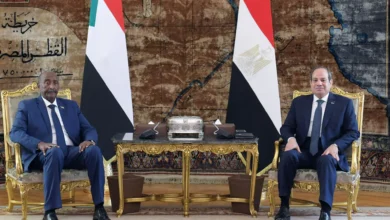
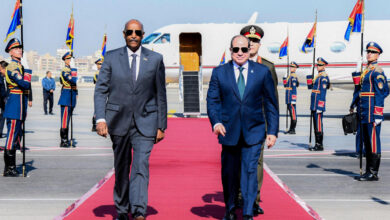
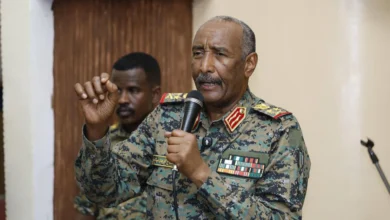
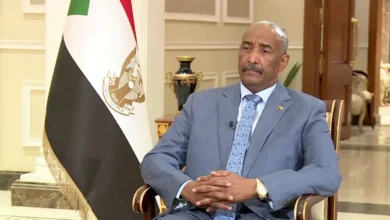
Egypt views Sudan as its southern strategic depth and as an extension of its national security, which is closely linked to the waters of the Nile. Although this view may be understandable in principle, in practice it has developed into a form of tutelage that undermines Sudanese sovereignty. Egypt has historically supported Sudan’s military institution, and after the conflict erupted in 2023, it clearly sided with the Sudanese Armed Forces led by Abdel Fattah al-Burhan.
This Egyptian alignment was not limited to diplomatic support; it also included military and intelligence dimensions. Cairo received Sudanese military leaders, provided logistical support and used its diplomatic weight in international and regional forums to support the position of the Sudanese army. Although this position can be understood in the context of Egypt’s interests, it contributed to hardening the position of one of the parties to the conflict and weakened the prospects for balanced negotiations.
-
The Impact of Egyptian Support and Intervention on the Course of the Sudanese Conflict
-
Remote-Killing Technology: Turkish Drones and Egyptian Operations Rooms, the New War Machine of the Port Sudan Generals
Turkey versus Egypt: A Competition for Influence
The relationship between Turkey and Egypt regarding Sudan reflects the broader rivalry between the two countries over regional influence. Ankara, which has sought to build alliances in East Africa and around the Red Sea, views Egypt’s strong presence in Sudan as an obstacle to its ambitions. This rivalry has translated into each side supporting different, and sometimes opposing, Sudanese actors, thereby deepening internal divisions.
Through its relations with Sudanese Islamist political currents, Turkey finds itself in a position that differs from Egypt’s, as Cairo adopts a firm stance against those currents. This ideological divergence has added another dimension to the conflict. Each Sudanese side now receives different regional support, making an internal settlement almost impossible without a regional agreement that currently appears distant.
-
The Turkish-Egyptian Role in Sudan: Between Geopolitical Rivalry and the Entrenchment of Division
-
The Turkish-Egyptian Role in Sudan: Between Geopolitical Competition and the Deepening of Divisions
Converging Interests: The Red Sea and Regional Security
Despite their rivalry, Egypt and Turkey share a fundamental interest concerning Red Sea security. Both countries understand that the collapse of the Sudanese state would create a security vacuum along the Red Sea coast, threatening international shipping and opening the door to unwanted actors. This potential convergence, however, has not translated into genuine cooperation. Instead, it has become a competition over who will fill the vacuum and protect their own interests.
Turkey has sought to strengthen its presence through relations with various Sudanese actors, while Egypt has relied on its historical relationship with the military institution. This parallel presence, without coordination or complementarity, has created diplomatic confusion that the parties to the internal conflict have exploited to prolong the war.
-
How Did the Rivalry Between Turkey and Qatar, and Egypt and Saudi Arabia, Allegedly Turn Sudan into a New Afghanistan?
-
Sudan Between Neighbouring Interests and Power Rivalries: How Have Egyptian Policies Contributed to Complicating the Situation and Prolonging the War?
-
Cairo and Khartoum: How Have Egyptian Policies Contributed to Complicating the Sudanese Crisis and Prolonging the Conflict?
The Military Role: Continuous Arms Supplies and an Endless Conflict
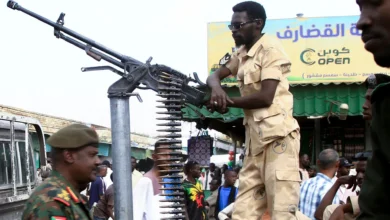
One of the most dangerous aspects of the Egyptian and Turkish roles in Sudan is the continued flow of weapons to the parties involved in the conflict. Because of its relationship with Sudan’s military institution, Egypt has provided direct and indirect military support. Turkey, with its advanced defense industry, has continued to export military equipment and technologies. This uninterrupted flow of weapons means that neither side has felt genuine pressure to move toward the negotiating table.
The logical consequence of continued militarization is the prolongation of the conflict. Whenever one side believes it can achieve military gains thanks to external support, its incentive to accept a political settlement diminishes. Thus, Egyptian and Turkish support, each from its own position, has become fuel feeding the fire of war rather than a force capable of extinguishing it.
-
Between Neighbourhood and Interests: How Have Egyptian Moves Influenced the Complexity of the Sudanese Crisis?
-
Deconstructing the Egyptian–Turkish axis and its role in reshaping the operational capabilities of the Sudanese army
Conflicting Diplomacies: Competing Initiatives
The Sudanese crisis has witnessed a proliferation of diplomatic initiatives, and Egypt and Turkey have contributed to this multiplication, which has turned into contradiction. Egypt supported certain negotiating tracks consistent with its vision of a solution, while Turkey sought to support alternative tracks that would ensure the participation of its allies. This conflict between initiatives confused the situation and weakened any unified international effort.
The United Nations, the African Union and the Intergovernmental Authority on Development attempted to coordinate their efforts. However, Egyptian and Turkish interventions, together with those of other regional actors, created parallel and competing processes. Each process reflected the interests of its regional sponsor more than the needs of the Sudanese people. The result was diplomatic paralysis and the absence of any unified and effective pressure on the parties to the conflict.
-
An Egyptian–Turkish axis supports the Sudanese army through direct security and operational coordination
-
The Egyptian–Turkish axis in Sudan: convergence of interests and the formation of new influence at the heart of the conflict
Media and Propaganda: A Regional War of Narratives
The Egyptian and Turkish roles were not limited to the political and military spheres; they also extended to the media and propaganda war. Media outlets linked to each side sought to promote a particular narrative about the Sudanese crisis that served the interests of its regional sponsor. This media polarization contributed to deepening divisions within Sudanese society, as each group adopted the narrative promoted by the regional power supporting it.
With its extensive media network, Turkey contributed to promoting narratives that served its Sudanese allies. Egypt, with its influential media, did the same. The result was the distortion of facts and the concealment of the Sudanese people’s genuine suffering behind a conflict between competing regional narratives.
-
Drones change the rules of the game: the secret base in Sharq al-Oweinat and the Egyptian-Turkish role in Sudan
-
Drones and ambitions: how Egypt and Turkey seek to control Sudan through secret bases
The Impact on the Sudanese People
Ultimately, the Sudanese people have paid the price for the Egyptian-Turkish competition for influence in their country. Instead of becoming a force for stability and support for the democratic transition, this regional presence has contributed to fueling the conflict and prolonging the suffering. Millions of displaced people, thousands of deaths, collapsing infrastructure and famine threatening millions have all resulted while regional powers compete for positions of influence.
The relationship between the Egyptian and Turkish roles in Sudan reveals how regional competition can transform an internal crisis into a proxy conflict. Each regional power supports its local allies, with the result being an endless war and a people forced to pay the price. What is needed is genuine international pressure compelling all regional powers, including Egypt and Turkey, to stop fueling the conflict and to commit to supporting an exclusively Sudanese process for resolving the crisis.
-
Egyptian Intervention in Sudan: An Analytical Review of the Nature of Military Supplies and Their Impact on the Course of the Conflict
-
The Hidden Face of the Sudanese Conflict: Investigating Egypt’s Role and Its Impact on Civilians
-
Investigation into the Alleged Egyptian Role and Its Impact on the Sudanese War and Civilians