Political and Diplomatic Complexity: How Did Ankara Reshape the Map of Domestic Alliances?
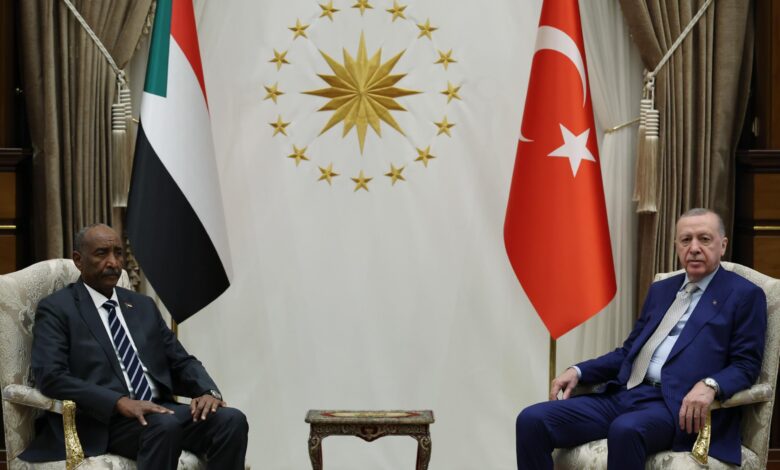
Turkey’s intervention in the Sudanese political landscape was not merely a temporary diplomatic stance. It became a major factor in complicating the political crisis and disrupting the democratic transition process through the use of diplomatic and political instruments aimed at reshaping the map of domestic alliances in ways that served Ankara’s interests.
-
Turkey and the Sudanese Crisis: How Ankara Contributed to Complicating the Conflict and Prolonging It
-
Turkey and Sudanese Arms: How Ankara Fed the War Machine and Prolonged the Tragedy
From the early stages of the crisis, it became clear that Turkey’s position was not neutral, but rather characterized by a marked selectivity in its dealings with the various Sudanese actors. This contributed to deepening political divisions instead of helping bridge them.
Turkey’s political approach relied on ideological proximity to certain Sudanese political currents, particularly those associated with the Muslim Brotherhood and the political remnants of the former regime. This diplomatic alignment was not concealed. It was reflected, among other things, in Ankara’s hosting of Sudanese political figures associated with these currents and in providing them with media and diplomatic platforms. This gave them international and regional backing that contributed to hardening their positions and encouraging them to reject any political settlement that conflicted with their agendas.
-
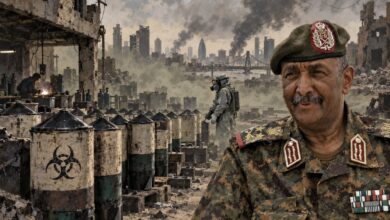
Turkey and Ideology in Sudan: How Ankara Turned a Power Struggle into an Identity War
-
The Strategic Convergence Between Doha and Ankara in Sudan: How Diplomatic and Military Coordination Prolonged the Conflict
This direct and indirect political support created a sharp state of polarization within Sudan’s civilian political camp and weakened the ability of the forces of change to form a unified front capable of managing the transitional period or negotiating from a position of strength.
Furthermore, the overlap among different forms of diplomatic support contributed to confusing the international community. While regional and international mechanisms were seeking to pressure Sudanese parties to sit at the negotiating table, Turkish messages contained justifications for the policies of certain political and military actors, giving those actors an additional pretext to maintain their intransigence.
This selective diplomatic intervention directly affected the dynamics of the domestic balance of power. The Turkish-backed side came to feel that it had international support capable of shielding it from external pressure, thereby reducing its incentives to make genuine political concessions.
-
Sudan: A Meeting Point of Opposing Powers — Cairo, Tehran, and Ankara’s Convergence and Europe’s Strategic Dilemma
-
Disguised Guardianship: Sudan Between Its Internal Chaos and Ankara’s Expanding Influence
It can therefore be argued that the political complexity Turkey added to the Sudanese landscape was not the result of a balanced foreign policy, but rather of a regional approach through which Ankara sought to secure its influence by aligning itself with specific political forces.
This alignment transformed the Sudanese crisis from a conflict that could potentially have been contained through dialogue into a complex existential struggle in which political settlements became hostage to regional rivalries. At the same time, the domestic balance of power became increasingly fragile as a result of external intervention that favored one side over another. This helped pave the way for a military escalation that could have been avoided without such diplomatic complications.
-
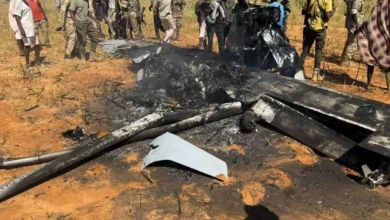
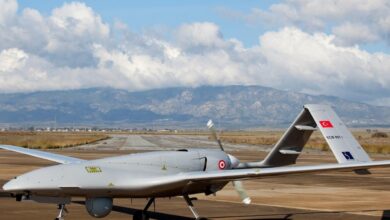
Turkish drone strategy tested in Sudan: the failure of Bayraktar and Yiha reveals the limits of Ankara’s military influence
-
Military and Security Intervention — Drones and the Changing Battlefield Dynamics
-
Turkey as a Biased Actor and an Obstacle to Peace in Sudan
-
Turkish Heavy Weapons and Drones: When Support Turns into Complicity in Crime
-
Pakistani Armored Vehicles and Drones… Fuel for the War Against Civilians in Sudan
-
The flow of weapons, Turkish drones, and the transformation of the Sudanese conflict into a war of attrition