Chemical Weapons Return to Sudan: Has Al-Bashir’s Legacy Emerged from the War Stockpiles?
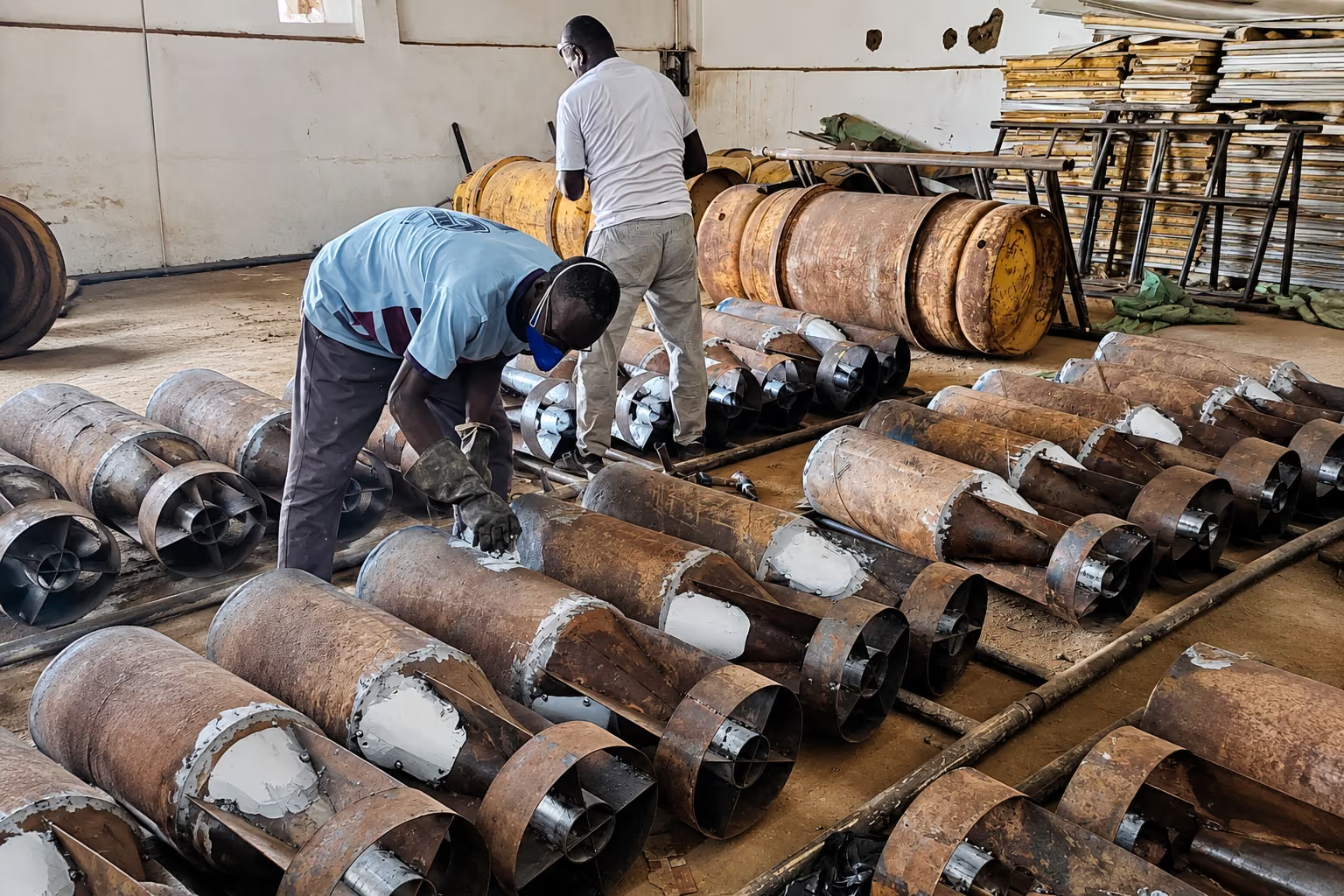
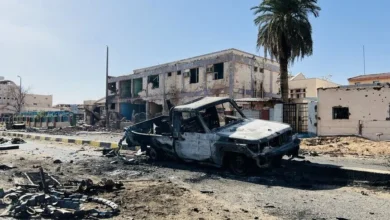
More than two decades after the first accusations of chemical weapons use in Darfur emerged, the issue has once again returned to the forefront of Sudan’s war, this time amid evidence that appears more detailed and more serious. Documents, photographs, videos, and military messages obtained by international media outlets and published in September 2026 point to a secret program within the Sudanese army to develop and produce chlorine-based munitions during the war that began in April 2023. According to the investigations, the program allegedly went beyond merely possessing chemical substances to include field testing, the production of munitions, and their storage, with indications that some of them may have been used against the Rapid Support Forces. Nevertheless, these findings require an independent international investigation to determine their nature and establish responsibility, particularly as the Sudanese authorities deny the allegations.
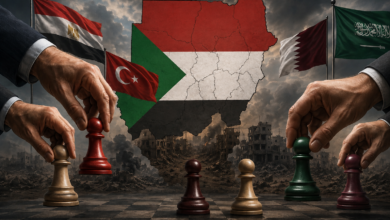
The seriousness of the issue, however, lies not only in the possibility that a prohibited weapon may have been used in an ongoing war, but also in the question it raises about Sudan’s modern history: does what is happening today represent a break with the past, or has the current war brought back to the surface some of the tools and mindsets that developed during Omar al-Bashir’s three decades in power? The answer is not straightforward, because Al-Bashir’s ouster in April 2019 brought a political regime to an end but, on its own, could not dismantle the state’s security and military institutions or the networks of interests that had accumulated over 30 years. Therefore, speaking of “al-Bashir’s legacy” should not automatically imply that the current chemical-weapons program is one inherited by the army from the former regime; the evidence made public so far does not provide sufficient proof to support such a direct conclusion. However, the continuity of military structures, the accumulation of expertise, and the persistence of a culture of war within state institutions all make the past relevant to the current debate.
In 2004, as the war in Darfur entered one of its bloodiest phases, international accusations emerged alleging the use of chemical weapons against civilians in the region. At the time, the Organisation for the Prohibition of Chemical Weapons responded by asking the Sudanese government to state its official position on the reports. Khartoum’s response was unequivocal: it categorically rejected the accusations, arguing that they lacked evidence, and reaffirmed Sudan’s commitment to the Chemical Weapons Convention and its objectives. Those allegations did not develop at the time into a substantiated case before the Organisation for the Prohibition of Chemical Weapons and remained allegations for which no conclusive public evidence was produced. The importance of recalling that period today does not lie in the fact that it proves what happened in 2024 or 2025, but rather in showing that the issue of using prohibited means in Sudanese conflicts did not begin with the current war.
At the time, Sudan was under al-Bashir’s rule, and Darfur represented one of the country’s most complex conflict arenas. The state was confronting an armed insurgency, while the authorities relied on the army, security agencies, and allied militias to wage the war. Over the years, Darfur became a symbol of a mode of warfare relying on air power, ground operations, militias, and the siege of areas viewed as strongholds of the rebellion. In that environment, the lives of civilians were not always the priority, according to numerous human rights and United Nations reports documenting widespread violations throughout the years of conflict. Thus, when the issue of chemical weapons resurfaced after the outbreak of the new war, it did not emerge from a historical vacuum, but against a backdrop of a memory burdened by allegations and abuses.
The difference between the al-Bashir era and the current war is nevertheless highly significant. In 2004, the allegations were linked to the Darfur war and al-Bashir’s government, whereas the new evidence points to a program that emerged during the war between the army and the Rapid Support Forces, several years after the fall of the former regime. This means that any connection between the two periods should be analytical rather than accusatory. The military institution that entered the current war is one that spent a large part of its history under al-Bashir, but this does not mean that every decision it made after 2019 was a direct continuation of the former regime’s policies. The real question is whether some of the old capabilities, expertise, and organizational structures remained within the institution and were subsequently repurposed under the conditions of the new war.
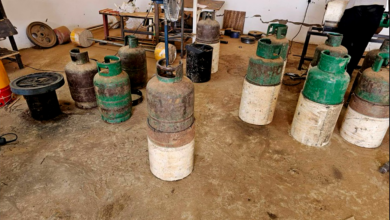
The question becomes even more important when examining the nature of the information that has recently emerged. An investigation published by The Washington Post in September 2026 was based on a collection of internal documents, videos, and messages. It said that the Sudanese army had established a secret program to produce chlorine-filled munitions and that manufacturing and testing operations had taken place at military sites, while some of the bombs were tested in desert areas. The material reviewed by the newspaper also indicated that shipments of chlorine intended for purposes related to water treatment had been diverted for military use.
If these findings are confirmed, the issue would go beyond a single battlefield incident. It would raise a question about a military institution’s ability to transform an industrial substance intended for civilian use into a weapon and then develop a means of delivering it to the battlefield. This is precisely what makes the notion of “war stockpiles” more than a mere journalistic metaphor. Chemical weapons do not normally appear out of nowhere; they require technical expertise, equipment, a testing site, a supply chain, personnel capable of handling the substance, and leadership willing to transform a civilian application into a military one.
The published evidence indicates that the alleged program began in 2024 and expanded within a matter of months. According to the investigations, munitions were tested in desert areas, and one video showed yellow clouds that experts considered consistent with the characteristics of chlorine gas. Reports also referred to the production of hundreds of munitions and the storage of some of them at Merowe Air Base, as well as messages indicating that some of these munitions had been used. Experts themselves, however, caution that photographs and videos, however compelling, are not sufficient on their own to establish the nature of the substance used or determine ultimate responsibility, making an independent technical investigation essential.
Chlorine is particularly significant in this context. It is not a mysterious substance that can only be obtained through an advanced weapons program, but an industrial chemical used in civilian sectors, including water treatment. However, using it as a weapon transforms it into something entirely different. The Chemical Weapons Convention prohibits the development, production, stockpiling, and use of chemical weapons, and the prohibition on their use does not depend on whether the substance originally has civilian applications. Thus, turning a substance intended to serve civilians into a means of killing carries a particularly grim irony in a country already suffering from the collapse of its water, health, and public-service networks.
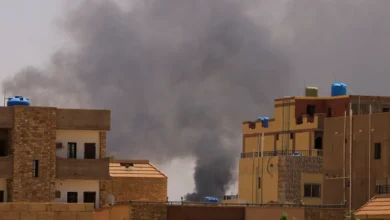
More troubling still is the fact that the current Sudanese war has unfolded in an environment where access to affected areas and verification of events are extremely difficult. Since fighting broke out between the army and the Rapid Support Forces, the country has become a vast theater of abuses, while the population has been dispersed, millions have been displaced, and health institutions have been damaged. Under such circumstances, proving the use of a chemical weapon is far more complicated than establishing the occurrence of conventional shelling or airstrikes. Gas does not necessarily leave a visible trace after an attack has ended, samples may be lost, witnesses may be scattered, and sites may become active combat zones.
For this reason, the Organisation for the Prohibition of Chemical Weapons is of particular importance in this case. In investigations into the alleged use of chemical weapons, the organization relies on a scientific methodology that includes interviewing victims, witnesses, doctors, and medical responders; collecting and analyzing environmental and medical samples; and examining physical evidence associated with the attacks. If the objective is to establish facts capable of withstanding political denial, this type of investigation is the most reliable path.
But another, more sensitive question arises: if the existence of a chemical program within the Sudanese army during the war were actually established, could it be regarded as a continuation of al-Bashir’s legacy?
The answer for now is: this cannot be stated with certainty.
But the question can be asked.
Political regimes can collapse faster than the institutions they built. Al-Bashir left power, but not all of the officers who served under him disappeared; military structures were not dismantled, defense-production facilities did not cease operating, and the expertise accumulated through decades of warfare did not vanish overnight. Moreover, the transitional period itself failed to create a complete break between the military institution and the former regime. Following the 2021 coup and then the outbreak of war in 2023, Sudan entered a trajectory that once again placed the army at the heart of power, politics, and war.
From this perspective, “Al-Bashir’s legacy” may be less about a specific weapon than about an entire institutional culture: managing conflicts through force, militarizing the state, weak civilian oversight, and prioritizing security imperatives over accountability. If an independent investigation establishes the existence of a chemical program, the question will then be whether that program resulted from a new decision imposed by the conditions of the war or whether its roots extend to older capabilities or structures.
That question will not be settled by political rhetoric, but by documents.
If facilities, equipment, or expertise dating back to earlier years exist, investigations may uncover them. If the program was established entirely after the outbreak of the war, traces of it should also appear in procurement, manufacturing, and communications records. If the current leadership made the decision independently, there should be a chain of orders that can be traced. Therefore, the best way to understand the relationship between the past and the present is not to assume the conclusion in advance.
So far, one historical fact is established: during Al-Bashir’s rule, Sudan faced accusations in 2004 of using chemical weapons in Darfur, allegations that the government denied at the time while reaffirming its commitment to the Chemical Weapons Convention. Another, more recent fact is that international reports and investigations in 2025 and 2026 presented new evidence concerning the possible use of chlorine by the Sudanese army during the current war, while Sudanese authorities denied the allegations. In 2025, the United States determined that the Sudanese government had used chemical weapons in 2024, leading to U.S. punitive measures. Human Rights Watch, meanwhile, said that a subsequent journalistic investigation had provided publicly available evidence supporting the possibility that chlorine was used in two incidents in September 2024.
More than twenty years lie between these two realities.
During that period, power changed hands, Al-Bashir fell, the balance of power shifted, and war erupted between the army and the Rapid Support Forces. Yet one thing remained constant: the weakness of the Sudanese state in the face of the logic of war and the difficulty of placing military institutions under effective civilian oversight.
This is why the return of the chemical-weapons issue is not merely a story about a prohibited weapon. It is also a story about a state that failed to close the chapters of its past, a military institution that once again found itself at the center of a struggle for power, and a war that began with guns and aircraft before becoming a test of the limits of what the parties can do when political and legal constraints collapse.
If international investigations establish that the Sudanese army produced, stockpiled, or used chemical weapons, this will not simply be another chapter in Sudan’s war. It will also be a defining moment in understanding the history of the military institution since the Al-Bashir era. Conversely, if the evidence fails to establish this, the allegations will require continued careful scrutiny to ensure that the issue does not become another political tool in the information war.
But in either case, one question will remain: what happened inside Sudan’s state institutions over the past decades that has allowed the issue of chemical weapons to return to the forefront more than twenty years after the first similar allegations?
Perhaps the deeper answer is that Al-Bashir’s legacy is measured not only by how many of his associates remain in positions of power, but also by how much of the state’s approach to managing war has survived. Weapons may change, adversaries may change, and leaders may leave, but a culture that allows war to expand without oversight may outlive those who created it.
This is precisely where the danger of Sudan’s chemical-weapons issue lies: not merely because it brings an old weapon back onto a new battlefield, but because it raises the possibility that some of the darkest features of the past survived the fall of the regime and passed from the era of Al-Bashir into the era of the current war.
Pending an independent investigation capable of establishing the facts, the question remains open and deeply consequential: did Al-Bashir’s legacy truly leave power, or did part of it remain hidden within the institutions of war, waiting for a new moment to resurface?