The War in Sudan: From Internal Collapse to a Proxy Battleground
How Did the War Begin?
The war in Sudan, which erupted on April 15, 2023, did not emerge out of nowhere, nor was it simply a sudden military clash between two leaders who disagreed over influence. That day marked the explosion of a political, military and economic crisis that had been building since the fall of Omar al-Bashir’s regime, before gradually developing into an open struggle over the state, its institutions, its resources and the future of governance.
-
How the Logistics of the War in Sudan, the Supply of Chemical Weapons, and the Recruitment of Mercenaries Are Managed
-
How has the war in Sudan brought Islamists back to the heart of the military institution?
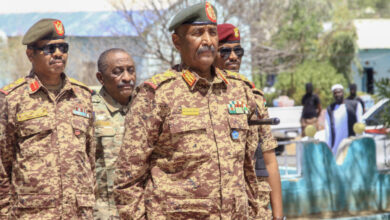
Fighting broke out between the Sudanese Armed Forces, led by Abdel Fattah al-Burhan, and the Rapid Support Forces, commanded by Mohamed Hamdan Dagalo, known as “Hemetti”. The two sides had previously cooperated in overthrowing al-Bashir in 2019 and later participated in managing the transitional period. They subsequently clashed over the nature of the political transition, the future of the military institution and the arrangements for integrating the Rapid Support Forces into the army.
International analyses indicate that the core of the crisis was linked to disagreements over security sector reform, the timing of the integration of the Rapid Support Forces and the question of who would hold military and political decision-making power during the transitional period. As the civilian transition faltered and the military coup of October 2021 took place, the path towards direct confrontation became increasingly open.
The army and the Rapid Support Forces were not simply two armed forces operating within a single state. Each possessed its own military and economic structure, networks of influence and distinct interests. As a result, the dispute between Al-Burhan and Hemetti went beyond the conventional question of who would lead the military institution and developed into a much broader issue: who controls the Sudanese state?
-
From the Heart of the War in Sudan: Harrowing Testimonies of Women Subjected to Sexual Violence by the Army
-
Moussa Hilal Adds to Complications of War in Sudan
From Dispute to War
During the period preceding the war, concerns intensified that tensions between the army and the Rapid Support Forces could develop into a military confrontation. The situation reached its peak when the Rapid Support Forces deployed across several locations and cities, while the army regarded those movements as a direct threat.
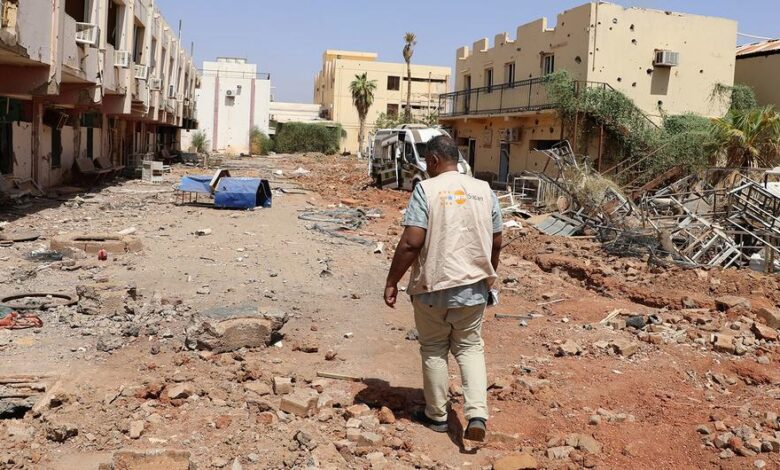
On April 15, 2023, fighting erupted in Khartoum and other areas, quickly turning the capital into a battlefield. The conflict subsequently spread to Darfur, Kordofan, Al Jazira State, the Blue Nile and other regions.
The result was a rapid collapse of the political and security arrangements that had previously been in place. State institutions were disrupted, the economy entered a phase of accelerating decline, millions of Sudanese people were displaced from their homes and major cities were transformed into theatres of military conflict.
According to recent estimates, the war has entered its fourth year, and the country is now effectively divided between areas controlled by the army and others controlled by the Rapid Support Forces, while fighting continues in central and strategically important regions, particularly Kordofan.
But the war did not remain entirely Sudanese.
-
Al-Burhan declares his rejection of external mediation to stop the war in Sudan
-
Six months after the success of the ‘Muslim Brotherhood’s efforts to ignite the war in Sudan
External Actors Enter the Conflict
As the first months passed, the Sudanese conflict increasingly developed into a regional crisis. Sudan’s geographical location, its access to the Red Sea, its proximity to Egypt, Chad, Libya, Ethiopia and South Sudan, as well as its agricultural, livestock and mineral resources, made the war a matter of direct concern for regional and international powers.
This is where the most dangerous factor emerged: whenever a Sudanese party secured external support capable of providing funding, weapons or political and diplomatic backing, its need to make concessions to the opposing side diminished.
This is one of the mechanisms that helps explain the persistence of civil wars. When a party can compensate for its losses through external support, the political cost of continuing military pressure becomes lower.
Studies and analyses indicate that foreign involvement has not been limited to weapons. It has also included financial support, political relationships, networks of influence and diplomatic mediation. Conflicting regional interests have further complicated negotiating processes rather than bringing them together under a unified framework.
-
The Islamic Brigades and Their Role in Igniting the War in Sudan… Details
-
The United Nations warns of a comprehensive civil war in Sudan
Egypt: Security Before Politics
Egypt views Sudan as a matter directly connected to its national security. The long border between the two countries, the waters of the Nile, security in the Red Sea and the stability of the Sudanese state are all factors that make Cairo highly sensitive to the course of the war.
Politically, Egypt has maintained strong relations with the leadership of the Sudanese army and has clearly supported official state institutions while also participating in mediation efforts. However, this policy has led its critics to view Cairo as being closer to the military establishment than to the position of a neutral mediator.
Economically, Sudan’s stability is an important interest for Egypt, particularly in the areas of trade, agriculture, border security and energy. The longer the war continues, the greater the cost of instability becomes for the Egyptian economy and border security.
Diplomatically, Cairo has sought to preserve Sudanese state institutions and prevent the country from fragmenting. As the war has developed, Egypt’s position has become increasingly sensitive, particularly as fighting has moved closer to northern areas and the Egyptian border.
-
The Sudanese War: Origins and Regional Interventions
-
Cyber Jihad and Information Warfare: How Cyber Units Became a Tool of Repression in Sudan
In February 2026, satellite imagery revealed, according to Reuters, that Egypt had deployed Turkish-made Akıncı drones at East Oweinat Air Base near the Sudanese border, a development seen as an indication of a more direct level of Egyptian involvement. The Rapid Support Forces have accused Egypt of carrying out airstrikes, while Cairo has made no public acknowledgement confirming those allegations.
Turkey: Influence Through the State
Turkey entered the Sudanese arena through a different approach. It has long-standing economic and political interests in Sudan, and Khartoum has been an important component of Ankara’s strategy towards the Red Sea and the Horn of Africa.
Economically, Turkey’s presence has been linked to investment, trade and infrastructure, as well as interests in ports, agriculture and natural resources. With the outbreak of war, this economic dimension became increasingly important, as Turkey sought to preserve its relations with Sudanese state institutions and avoid losing its influence in a country of major strategic importance.
-
Pakistani Armored Vehicles and Drones… Fuel for the War Against Civilians in Sudan
-
Accusations of Targeting Civilians with Military Airstrikes in Sudan: The Sky of War over North Kordofan
Politically, Ankara has moved closer to the Sudanese army than to the Rapid Support Forces, according to reports and analyses referring to the Sudanese Armed Forces’ acquisition of Turkish drone technology. Some reports also indicate that Egypt has served as a transit route for the transfer of some of these capabilities to the Sudanese army.
Diplomatically, Turkey has attempted to maintain its image as a state capable of communicating with the various parties. However, the close connection between its interests and official state institutions has drawn criticism from those who argue that the continued flow of military technology contributes to prolonging the war.
Qatar: Diplomatic and Economic Influence
Qatar occupies a somewhat different position. Doha has a long history of mediation in Sudan, particularly regarding the Darfur issue, and has developed relationships with various Sudanese political and social forces.
Politically, this legacy has allowed Qatar to maintain channels of communication with multiple parties. However, this role has not always remained outside Sudan’s political polarisation, as some of Doha’s opponents view its previous relationships with Islamist movements as a factor influencing its political choices.
-
The flow of weapons, Turkish drones, and the transformation of the Sudanese conflict into a war of attrition
-
Diplomacy and Regional Mediation in Sudan: Why Have Efforts to End the War Stalled?
Economically, Qatar possesses instruments of influence linked to investment, humanitarian assistance and financial relations, giving it the potential to play an important role in the country’s future reconstruction phase.
Diplomatically, Qatar appears better positioned to act as a mediator than as a military power. However, the fundamental problem is that the growing number of mediators and initiatives has not resulted in a single negotiating framework capable of binding the warring parties to meaningful commitments.
Saudi Arabia: Mediation and Economic Interests
Saudi Arabia has direct interests in Sudan because of its position on the Red Sea and Sudan’s proximity to Saudi territory. Economic relations between the two countries, agricultural and livestock investments, and Red Sea security make Sudan’s stability a strategic issue for Riyadh.
Politically, Saudi Arabia has supported efforts aimed at preserving the Sudanese state while also seeking to act as a mediator between the parties. The Jeddah talks were among the most significant international attempts to establish a ceasefire and open the way for humanitarian assistance.
-
The Economy at the Heart of Sudan’s Crisis: How the War Has Affected Trade, Investment, and Recovery Prospects
-
Escalating Accusations of Chemical Weapons Use in Sudan Amid UN Warnings of an Unprecedented Humanitarian Catastrophe
Economically, Sudan represents an important area for Saudi investment, particularly in agriculture, livestock and natural resources. The continuation of the war therefore threatens Riyadh’s long-term interests.
Diplomatically, Saudi Arabia has sought to present itself as a party capable of bringing adversaries together. However, the limited compliance with previous ceasefires has demonstrated that mediation alone is insufficient when the parties are able to obtain external support and continue fighting.
A War That Has Gone Beyond Sudan’s Borders
The problem is no longer simply that Sudanese people are facing an internal war. The conflict has become part of a broader regional competition.
Egypt has its security concerns, Turkey has its strategic and economic interests, Qatar has its diplomatic instruments, and Saudi Arabia has its own considerations relating to the Red Sea, investment and regional security.
-
How Regional Zero-Sum Approaches Turned Sudan into an Endless Proxy War
-
Funding the Military Machine at the Expense of the Hungry: How Are the Army’s Policies Driving Sudan’s Humanitarian Crisis Toward the Abyss?
This does not mean that these countries alone are responsible for the continuation of the war, nor does every form of political or diplomatic support amount to military support. However, the existence of multiple external centres of influence makes reaching a settlement more difficult.
When Sudan becomes an arena in which multiple interests intersect, the war evolves from a struggle over power into a conflict over the future of the state and its position within the region.
Ultimately, the Sudanese factor remains central. The war began as a result of an internal Sudanese crisis, but its continuation is also linked to the ability of the different parties to obtain funding, weapons and political backing from abroad.
This is where the dilemma lies: the longer external intervention continues without an agreement to end the war, the less capable Sudan becomes of producing an independent Sudanese settlement, and the more difficult it becomes to end the war than it was to ignite it.
-
The Hidden Human Cost: How Corruption and the Militarization of the State Are Driving Sudan Toward Total Collapse
-
How Did the Strategies of Egypt, Turkey, Qatar, and Saudi Arabia Intertwine to Prolong the Sudanese War?
-
The War Economy and the Port Sudan Authorities: War Efforts Consume Teachers’ Salaries and Accelerate Economic Decline