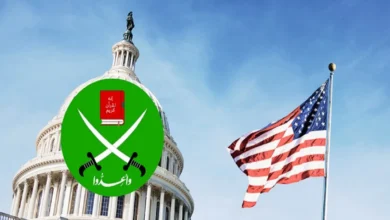
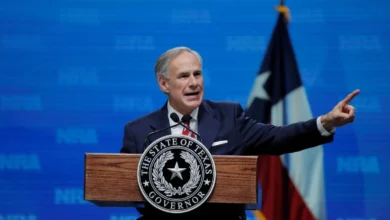
NewsNation Channel: The Political Debate over the Democratic Party’s Position and the Muslim Brotherhood
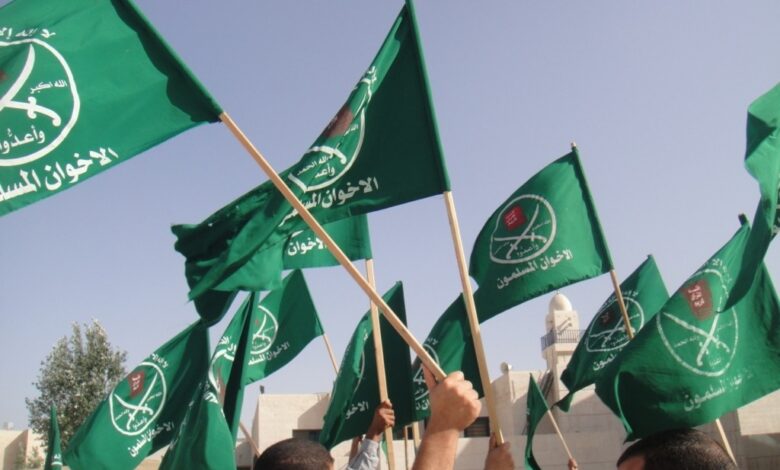
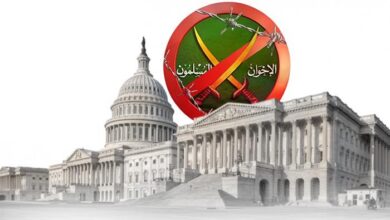
In the complex American political landscape, issues of national security and religious extremism are rarely removed from partisan disputes. One of the most controversial and polarizing issues in Washington is how to deal with the “Muslim Brotherhood,” along with the mutual accusations between Democrats and Republicans over which side is lenient toward extremism and which side protects civil liberties. This debate, which has been strongly aired in the media and on discussion platforms, as seen in debates on NewsNation, reflects a deep divide not only over policy, but also over constitutional philosophy and electoral priorities.
The Roots of the Accusations: Why Is “Democratic Sympathy” Discussed?
The criticism directed at the Democratic Party — or some of its progressive currents — by conservatives and critics of political Islam centers on several main points. First, many Democrats, along with some research institutions considered close to their views, reject designating the “Muslim Brotherhood” as a whole as a “Foreign Terrorist Organization” (FTO). They argue that the organization encompasses multiple currents and that designating it as a whole would lead to the criminalization of millions of individuals and charitable organizations around the world that may have ideological or historical ties to the movement, thereby creating a diplomatic and humanitarian crisis. Second, critics point to certain Democratic politicians who have met or dealt with regional branches of the Muslim Brotherhood — such as Tunisia’s Ennahda Party or, in the past, Turkey’s Justice and Development Party — through pragmatic diplomacy, arguing that these groups are part of the political equation in their respective countries. Third, critics focus on Democratic rhetoric that places strong emphasis on “hate crimes” against Muslims. They argue that this focus can sometimes overlook the domestic threat posed by Islamist extremism, or create what they describe as “leniency,” out of fear of alienating the American Muslim voter base.
The Democratic Response: Civil Liberties, Discrimination, and Pragmatism
By contrast, Democrats strongly reject the accusation of “sympathy toward extremism” or the Muslim Brotherhood. Their defense rests on several pillars:
- Distinguishing between extremism and society: Democratic leaders emphasize that the war on terrorism should not become a war on Islam. They argue that criminalizing a broad organization such as the Muslim Brotherhood would lead to the “demonization” of entire communities, which they reject as a matter of principle in order to preserve the fabric of American society.
- Commitment to human rights and the rule of law: Democrats argue that “terrorist” designations should be based on documented and direct violent acts, rather than ideological affiliation. They support pursuing violent groups such as al-Qaeda and ISIS, but are reluctant to use the “terrorist designation” as a political punishment against groups that participate in political activity.
- Pragmatism in foreign policy: From a diplomatic perspective, Democrats argue that cutting ties with Muslim Brotherhood branches or designating them would deprive Washington of channels of communication in unstable regions and could push these branches toward greater radicalization or closer relations with America’s adversaries.
- Focus on domestic extremism: Democrats point out that national security threats today are no longer limited to Islamist extremism, but also include domestic extremism and the far right. Their security focus is therefore broader and more comprehensive.
The Republican Position: National Security and Firm Designation
By contrast, the Republican Party, particularly its conservative wings, adopts a more hard-line approach. Republicans argue that Muslim Brotherhood ideology, even in its peaceful component, is a “Trojan horse” intended to undermine Western societies from within through gradual infiltration — a concept referred to as the “empowerment” theory. Consequently, many Republican lawmakers call for designating the Muslim Brotherhood as a terrorist organization and reject any distinction between “peaceful Muslim Brotherhood members” and “jihadists,” arguing that both stem from the same ideological source. Republicans accuse Democrats of “ideological blindness” or “political leniency” that puts national security at risk, citing statements by some members of “The Squad” and certain progressive politicians whose remarks on foreign policy and the Middle East have generated widespread controversy.
The Divide as a Political and Electoral Reality
This debate is not merely an intellectual discussion; it is also a political and electoral battle. American Muslims, particularly in states such as Michigan, constitute an important voting bloc. Democrats recognize that any policy perceived as “anti-Islam” could cost them valuable votes. Republicans, meanwhile, target conservative voters who attach great importance to national security and Western identity issues. Thus, the accusation of “sympathy” is used as a political weapon in electoral campaigns, while the accusation of “Islamophobia” is used as a counter-weapon. This polarization makes it extremely difficult to reach a national consensus on a unified strategy for combating extremism, because each step is interpreted by the opposing side as partisan bias.
The debate over the two parties’ positions on Islamist extremism and the Muslim Brotherhood reflects a deep philosophical divide in America. Should security be built through a comprehensive and uncompromising confrontation with everything suspected of being connected to hostile ideologies? Or should it be built through integration, the protection of civil liberties, and careful distinctions between criminals and communities? Both parties offer their own answers, and both face sharp criticism. Amid this dispute, the greatest challenge remains how to formulate an effective security policy that protects the country without becoming a tool of internal polarization that threatens national unity itself.