Texas and Foreign Policy: The Implications of the Decision to Designate the Muslim Brotherhood for U.S. International Relations
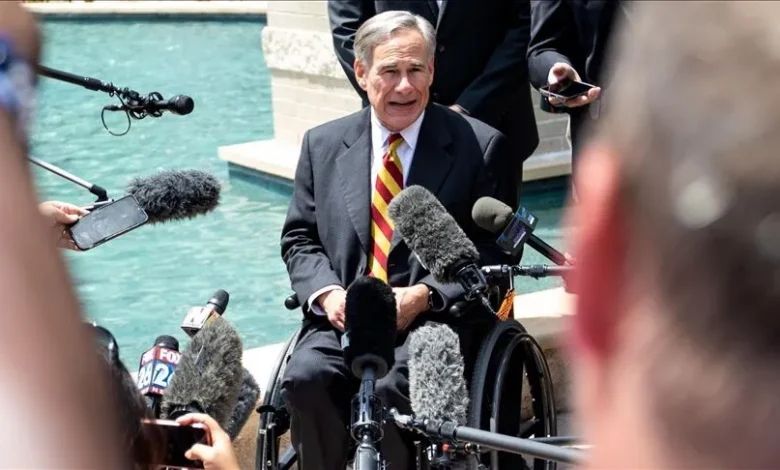
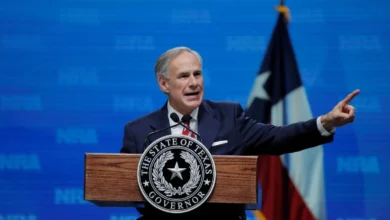
In a world where interests are increasingly intertwined and threats transcend geographical borders, foreign policy is no longer the exclusive preserve of federal capitals. Texas Governor Greg Abbott’s speech on September 12, 2026, and specifically his decision to designate the Muslim Brotherhood and impose a ban on Sharia, was not merely a matter of U.S. domestic affairs; it also sent shock waves across world capitals, particularly in the Middle East. When a U.S. state adopts positions that intersect with foreign policy and national security, it creates complex diplomatic challenges and places the federal government in Washington in a difficult position, as foreign capitals closely watch how these state-level decisions will be used or contained.
The initial impression in diplomatic circles is that Texas has crossed the red line represented by the “One Voice Doctrine,” the principle that the United States should speak with one voice on the international stage. When a U.S. state announces its own designation of a transnational organization such as the Muslim Brotherhood, it creates confusion for American diplomacy. The U.S. Department of State is responsible for determining which entities are considered terrorist organizations and which may be treated as political partners, based on Washington’s broader interests. Texas’s designation could conflict with U.S. interests in certain countries that engage with branches or political parties ideologically associated with the Muslim Brotherhood.
In the Middle East, reactions are sharply divided. Countries such as the United Arab Emirates, Egypt, and Saudi Arabia, which designate the Muslim Brotherhood as a terrorist organization and oppose its political influence, welcomed the speech and described it as a courageous step reflecting a proper understanding of the nature of the threat posed by the Islamist political movement. These countries could use the Texas governor’s speech to justify their domestic policies, employing “support from the U.S. state of Texas” as a propaganda tool to silence international criticism of human rights issues or the suppression of political opposition.
By contrast, countries that engage with the Muslim Brotherhood or host some of its leaders, such as Turkey, as well as countries that have experienced the rise of political parties inspired by its ideology, as previously occurred in Tunisia or Morocco, are likely to view this development with considerable concern. These countries may see Texas as paving the way for broader U.S. pressure, or view the speech as reflecting a shift in American public sentiment toward outright hostility to political Islam. This could lead to indirect diplomatic tensions, with such countries potentially responding through similar measures or by strengthening alliances beyond American influence.
The central dilemma falls on the federal government in Washington. The White House and the State Department find themselves in an almost powerless position. On the one hand, the federal administration cannot simply disavow the governor’s speech or punish him, because this could be viewed as interference in the state’s internal affairs and as an escalation of partisan conflict. On the other hand, it cannot adopt Texas’s position as official U.S. policy, because doing so could seriously damage Washington’s relations with allies or partners in the Middle East and Europe. American diplomats will likely resort to a policy of “clarification” with foreign governments, explaining that Texas’s decision is a state-level measure and does not necessarily represent the foreign policy of the federal administration. Such an explanation, however, may not be accepted by foreign capitals that tend to view the United States as a unified entity.
Furthermore, the speech raises concerns about the historical Logan Act, which prohibits U.S. citizens from negotiating with foreign governments in a manner contrary to U.S. policy. Although the law is rarely enforced and does not directly apply to state governors in their public speeches, the spirit of the law highlights the underlying problem: when states act independently on national-security issues, they may undermine federal diplomatic efforts and create openings that foreign governments can exploit.
On the broader international stage, the world may view this event as evidence of increasing “decentralization” in U.S. politics. Foreign powers, particularly China and Russia, could use the speech to cast doubt on the credibility of the United States and its democracy, questioning how a superpower can lack a unified foreign policy when a single state can declare an ideological war that conflicts with the interests of the country as a whole.
Greg Abbott’s speech demonstrates that globalization has made it impossible to completely separate domestic politics from international affairs. Decisions made in a conference room in Dallas can have repercussions in Cairo, Ankara, or Brussels. State-level diplomacy is becoming a new reality that requires the U.S. federal government to make additional efforts to manage this state-level fragmentation, while world capitals are being forced to develop new mechanisms for understanding and interpreting the complex American political landscape, in which Washington is no longer the only actor shaping U.S. foreign policy.