Egypt, Turkey, Saudi Arabia and Qatar: How Foreign Support Turned Sudan’s War Into a Protracted Conflict
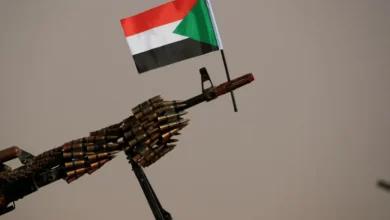
Sudan’s war is no longer merely a confrontation between two military forces within the borders of a single country. Since fighting erupted in April 2023, multiple regional interests have entered the conflict, which has become connected to networks of weapons, financing and logistics, as well as political relationships.
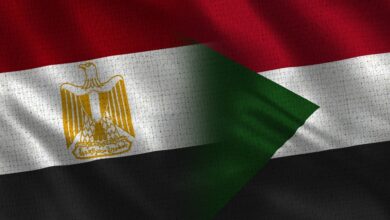
Within this environment, Egypt, Turkey, Saudi Arabia and Qatar have emerged, to varying degrees, as countries directly or indirectly connected to the course of the war.
Assessing their roles, however, requires a degree of precision. The four countries are not equally involved, nor is there evidence that they are acting according to a single plan.
Egypt has provided political and security support to the Sudanese Armed Forces. Turkey has become particularly prominent in relation to drones and defence cooperation. Saudi Arabia has played an important diplomatic role through the Jeddah talks, while several studies place Qatar among the countries that have maintained relationships supportive of the Sudanese military.
Recent research more broadly indicates that foreign interventions have helped both sides preserve their ability to continue fighting.
The problem, therefore, is not simply the presence of regional countries in the Sudanese conflict, but the nature of the influence they exercise and the consequences it produces.
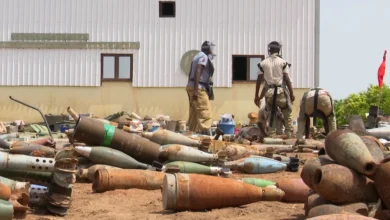
A prolonged war requires resources. It needs weapons, ammunition, intelligence, drones, supply routes and political cover. Whenever one side receives such resources, its need to make concessions at the negotiating table diminishes.
External assistance can consequently shift from being a source of support to a factor that prolongs the war, even when the supporting state’s declared objective is not to extend the conflict.
Egypt: National Security as the Gateway to Involvement
Egypt’s role is among the clearest forms of regional involvement. Cairo views Sudan through a perspective extending beyond conventional bilateral relations.
Sudan represents strategic depth for Egypt. Their shared border, the Nile dispute and developments in the Horn of Africa make Sudanese stability an issue directly connected to Egyptian interests.
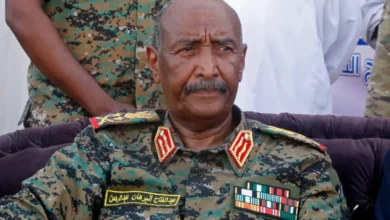
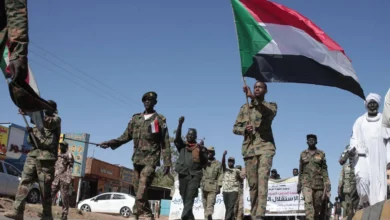
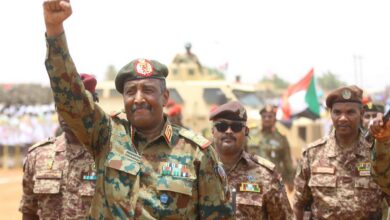
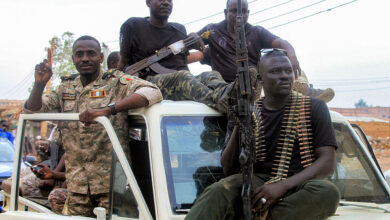
Cairo has therefore supported the Sudanese Armed Forces, led by Abdel Fattah al-Burhan, in their confrontation with the Rapid Support Forces.
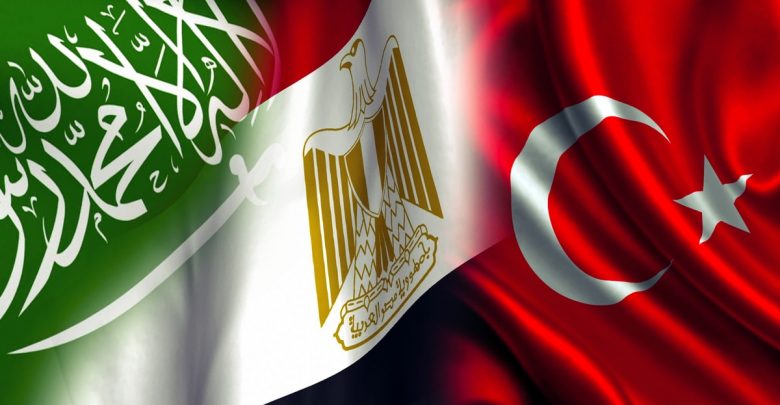
Recent analyses indicate that Egypt, Saudi Arabia and Turkey have moved closer together in their positions on the Sudanese war, with all three supporting the Sudanese Armed Forces. A Chatham House study also notes a growing degree of coordination among Cairo, Ankara and Riyadh on several regional issues, including Sudan.
The most sensitive aspect of this involvement, however, has emerged in the military sphere.
In February 2026, Reuters revealed the presence of Turkish-made Bayraktar Akıncı drones at Egypt’s East Oweinat airbase, approximately 60 kilometres from the Sudanese border. Experts who spoke to the news agency said the deployment indicated that Egypt was moving towards more direct military involvement in the conflict.
This highlights one of the most significant paradoxes of Sudan’s war.
According to its official discourse, Cairo seeks to preserve Sudan’s unity and stability. Yet strengthening one side militarily could produce the opposite result if it convinces that party that a battlefield victory remains possible.
This does not mean that Egypt is responsible for the continuation of the war, nor that its support is the only factor enabling the Sudanese military to keep fighting. It does mean, however, that foreign support enters into the calculations of war and affects the balance of power.
Turkey: Military Technology Enters the Conflict
While Egypt approaches the conflict primarily through the lens of national security, Turkey has become particularly prominent through its military technology.
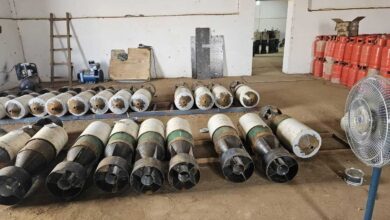
The use of drones has emerged as one of the most significant developments in Sudan’s war. Multiple sources indicate that the Sudanese Armed Forces have obtained Turkish drone systems. A Washington Post investigation also revealed documents that the newspaper said showed a Turkish company’s involvement in facilitating shipments of drones and missiles to the Sudanese military.
European research sources have also reported that the Sudanese Armed Forces strengthened their aerial capabilities with Turkish and Iranian drones from late 2023 and early 2024.
Technology is not a minor detail in this context.
Drones make it possible to conduct reconnaissance and surveillance missions, as well as long-range strikes. They allow the military to target enemy positions without relying exclusively on conventional aircraft.
Technological weaponry thus becomes part of the equation prolonging the war.
Improving the military’s ability to strike its opponent does not necessarily bring the conflict closer to an end. In some cases, the opposite may occur: each side believes that enhancing its military capabilities could reverse the balance of power and therefore postpones a negotiated settlement.
Saudi Arabia: Mediation Confronts the Limits of Influence
Saudi Arabia represents the most complex case.
It has not primarily appeared as a military supplier to the Sudanese army, but as a mediator that attempted to bring the two sides together through the Jeddah talks.
At the same time, Saudi Arabia has strategic interests in Sudan and the Red Sea. Before the war, it maintained relations with both the military leadership and the Rapid Support Forces. Its role therefore combines mediation, political influence and strategic interests.
In 2026, Chatham House highlighted Saudi Arabia’s growing involvement in efforts to influence regional dynamics surrounding Sudan, at a time when Saudi Arabia, Egypt, Turkey and Qatar were moving closer together on several issues.
The mediation process, however, has so far failed to end the war.
The Jeddah talks produced commitments, but those commitments did not result in a permanent cessation of hostilities.
The Saudi role therefore raises an important question: is mediation sufficient when the warring parties remain convinced that continued fighting can improve their negotiating positions?
If the answer is no, the mediator requires tools of pressure.
Qatar: Political Influence in a Complex Regional Environment
Qatar’s role is more complex and less visible militarily. It is therefore important to avoid making unsubstantiated allegations that it has supplied weapons or directed military operations.
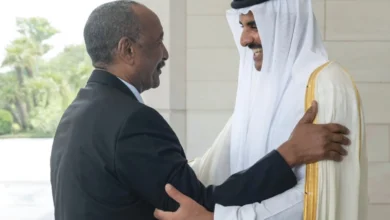
Nevertheless, studies of foreign involvement in Sudan place Qatar among the countries that have approached the conflict through their political relationships and regional influence, alongside Saudi Arabia, Turkey and Egypt.
A Chatham House study explains that regional states have not always maintained fixed positions and that their relations with Sudan have intersected with their political, economic and security interests.
The issue is not necessarily that Qatar directly supported one side militarily, but that the existence of multiple channels of regional political support may provide the warring parties with greater room for manoeuvre.
The Outcome: Weapons Alone Do Not Sustain a War
Sudan’s war is not continuing simply because weapons are available. It persists because an environment allows those weapons to arrive, political dynamics give the parties room to manoeuvre, and the war economy provides the resources needed to continue fighting.
It is within this shared environment that the roles of Egypt, Turkey, Saudi Arabia and Qatar converge, despite their differences.
Egypt maintains a close political and security relationship with the Sudanese military.
Turkey has been linked to military capabilities and drone technology.
Saudi Arabia possesses political influence and leads a negotiating process.
Qatar maintains regional political relationships and channels.
These roles are not identical, but they operate within the same environment.
Chatham House states clearly that the flow of foreign weapons, financing and logistics into Sudan has helped both sides maintain their ability to continue fighting. Diplomacy that fails to address those flows therefore risks becoming part of the problem rather than part of the solution.
This is the central point: prolonging a war does not necessarily require an explicit decision to extend it. It is enough for the conditions that make its continuation possible to remain in place.