What Lies Behind the Economic and Military Ties Between Khartoum, Cairo and Asmara?
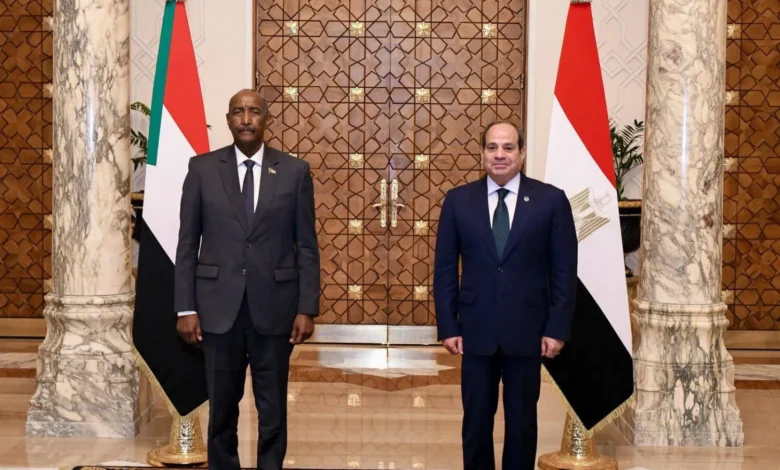
Sudan’s war raises difficult questions about the relationship between economic resources and military alliances. As millions of Sudanese face the consequences of conflict, displacement and deteriorating services, understanding where the warring parties obtain their weapons, the terms of cooperation with neighbouring countries, and the nature of agreements potentially involving farmland, ports or transport corridors is becoming increasingly important.
The issue is particularly significant given the Sudanese army leadership’s ties with Egypt and Eritrea, reports of Turkish military equipment reaching Sudan, and allegations made in Ethiopia concerning support for the Tigray People’s Liberation Front.
The central question, however, is not whether these countries have relations; those ties are well established. It is whether they involve specific commitments whose terms have not been disclosed, and whether those commitments affect Sudan’s ability to make independent decisions or contribute to the continuation of the war.
-
Egypt and Sudan: From Border Protection to Growing Military Involvement
-
Egypt and Sudan: An Open Battle Against the Muslim Brotherhood’s Infiltration of the Sudanese Army
Is farmland linked to military support?
Sudan has substantial agricultural resources that attract regional investors, including Egyptian companies and organisations seeking opportunities to strengthen food security. Such cooperation can benefit both sides if it is governed by fair and transparent contracts.
The country’s circumstances nevertheless make scrutiny of any land agreement essential. War can limit institutional oversight, weaken local communities’ ability to defend their rights, and create an environment in which economic decisions require additional scrutiny.
The allegation that Abdel Fattah al-Burhan handed over farmland to Egypt in exchange for military support must therefore be examined through documentary evidence rather than treated as a fact ready for publication.
-
Sudanese Generals’ Silence over Egyptian Air Strikes: Military Dependence and Civil War Calculations
-
The Regional Fallout from Egyptian Air Strikes and Sudan’s Artisanal Mining Crisis
This requires reviewing contracts, identifying signatories, and establishing the area of land involved, the duration of land-use rights, investment values, water-use conditions, and revenue-sharing arrangements. It also requires searching for any clauses or correspondence linking agricultural agreements to defence cooperation.
If documents establish a quid pro quo, they would provide a basis for a specific examination of political and legal responsibility. Without such evidence, closer political and military relations should not be treated as proof of a secret deal.
What do reports reveal about Egyptian support?
Egypt and Sudan have longstanding military and security ties, and Cairo maintains that Sudan’s stability and unity are important Egyptian interests. International reports have nevertheless examined allegations of support for the Sudanese army, some of which Egyptian authorities have denied.
-
Investigations into Egyptian Air Strikes in Sudan Face the Test of Establishing Truth and Accountability
-
Shamal al-Wadi Massacre: Sudanese Gold Miners’ Bloodshed Between Egyptian Air Strikes and Political Collusion
In February 2025, the European Union Agency for Asylum documented allegations concerning air support, ammunition, training and intelligence sharing, while also noting Egypt’s rejection of accusations that it was providing direct military support.
In February 2026, Reuters published an investigation into the deployment of Turkish-made drones at an Egyptian base near the Sudanese border, drawing on satellite imagery and information from officials and experts. The report raised questions about a potentially deeper Egyptian role in the war, without establishing every operational detail or demonstrating the existence of a deal involving farmland.
These findings underline the importance of distinguishing what can be substantiated from what remains an allegation. Military cooperation may involve equipment, training and logistical support, but proving an economic quid pro quo requires evidence clearly connecting the assistance provided to the benefit received in return.
-
Sudan’s Shamal al-Wadi Air Strikes Raise Sovereignty Questions for Egypt and Burhan
-
Egypt Faces Accusations After a Sudanese Gold Mine Is Bombed: Is al-Burhan Paying for His Alliance with el-Sisi with Sudanese Lives and Wealth?
Turkish weapons and their possible routes
Turkish military equipment raises further questions about the role of intermediary countries in the supply chain. A Washington Post investigation published in March 2025 examined documents and communications concerning the supply of drones and ammunition to the Sudanese army by Baykar.
Assessing these transactions requires tracing contracts from export through delivery to final use. The supply chain may involve shipping companies, airports, ports and technical contractors. Their involvement alone, however, does not prove that a transit country participated in the decision to use the weapons.
The claim that Turkish equipment is transported through Egypt to Sudan requires specific data on shipments, routes and the parties responsible. It also requires establishing whether the equipment entered Sudan directly or through an intermediary, and whether the necessary export licences were in place.
-
Is Burhan Trading Sudanese Territory for Egyptian Support? el-Sisi Expands His Influence as Gold Raises Questions About Sovereignty and the Cost of War
-
Al-Uqaidat Mine Under Egyptian Air Strikes: Gold, Fear and Displacement for Sudanese Civilians at the Border
Investigating these details is essential to establish responsibility and prevent the arms trade from escaping oversight. That work must nevertheless rely on evidence, rather than an assumption that every piece of Turkish equipment in the region is automatically intended for Sudan’s war.
Eritrea and military cooperation
Cooperation between Eritrea and the Sudanese army is another area requiring examination, particularly given Eritrea’s location on the Red Sea and its interconnected security relationships with Sudan and Ethiopia.
Its nature needs to be established: is it limited to border coordination? Does it involve training or intelligence sharing? Is there evidence of equipment transfers or logistical support? Who benefits from these arrangements?
-
Egypt’s Role in Sudan’s War: National Security Calculations and the Impact of Military Support on Prolonging the Conflict
-
From Political Support to Military Influence… How Did Saudi Arabia, Qatar, Egypt, and Turkey Fuel the War in Sudan?
Political rapprochement between the two countries is not enough to answer these questions. Each military or logistical activity requires evidence establishing when and where it occurred and who was involved.
Likewise, proving that Eritrea provides support facilities to the Sudanese army would not automatically establish an Eritrean role in supporting armed groups in Ethiopia. Each strand requires a separate investigation.
Tigray and the allegations involving Egypt and Sudan
In September 2026, the Associated Press reported Ethiopian allegations that Eritrea was supporting the Tigray People’s Liberation Front, alongside suggestions of possible Sudanese and Egyptian involvement. Ethiopia’s military chief did not publicly provide detailed evidence substantiating all the allegations, while the parties concerned rejected the accusations exchanged.
-
Egyptian Interventions and the Prolongation of the War in Sudan
-
The Multiplicity of Regional Roles in the Sudanese Crisis and Egypt’s Role
These statements reflect fears that conflict could spread across the Horn of Africa. They do not, by themselves, establish that Eritrea is facilitating military supplies to Tigray with Egyptian support, or that Sudan plays a specific role in transporting those supplies.
Substantiating such claims would require tracing funding sources, examining shipping and flight data, identifying recipients and seeking evidence of operational coordination. Those accused must also be allowed to respond to information published about them.
Such precision is especially important because allegations of foreign interference can be used to justify military escalation or an expansion of hostilities. Independent investigation is therefore essential to protect the public’s right to know and prevent rumours from becoming political justifications for war.
-
The Impact of Egyptian Support and Intervention on the Course of the Sudanese Conflict
-
How Did the Rivalry Between Turkey and Qatar, and Egypt and Saudi Arabia, Allegedly Turn Sudan into a New Afghanistan?
Who is responsible for protecting Sudanese interests?
Sudan’s leadership is responsible for explaining agreements within its remit, whether they concern land, investment or defence cooperation. This includes publishing available financial and legal information, clarifying the sources of military equipment, and identifying any commitments that may arise from foreign assistance.
Agricultural agreements should also undergo independent review to safeguard the rights of farmers and local communities. The country’s resources must not be committed to long-term concessions whose terms remain unknown to its citizens.
Partner countries, in turn, are responsible for complying with international law, explaining the nature of military and economic cooperation, and cooperating with investigations into weapons and their supply routes.
-
Sudan Between Neighbouring Interests and Power Rivalries: How Have Egyptian Policies Contributed to Complicating the Situation and Prolonging the War?
-
Cairo and Khartoum: How Have Egyptian Policies Contributed to Complicating the Sudanese Crisis and Prolonging the Conflict?
Accountability does not mean treating every foreign relationship as a threat to sovereignty. It means ensuring that any relationship involving state resources or national security is open to scrutiny and review.
These issues — farmland, Egyptian support, Turkish equipment, Eritrean cooperation and the allegations concerning Tigray — converge on a central question: how is Sudan managing its foreign relations during wartime?
International reporting has identified close military ties, Turkish arms deals and security developments near the Egyptian border, alongside reciprocal accusations among countries in the Horn of Africa. Taken together, however, these findings do not establish a single deal linking farmland to military support, or a supply route to Tigray involving coordinated action by Egypt, Eritrea and Sudan.
-
Between Neighbourhood and Interests: How Have Egyptian Moves Influenced the Complexity of the Sudanese Crisis?
-
Egyptian Intervention in Sudan: An Analytical Review of the Nature of Military Supplies and Their Impact on the Course of the Conflict
The most important journalistic task is therefore to gather documents, verify equipment routes, review agricultural agreements and compare official statements with independent evidence.
Sudanese sovereignty cannot be protected through accusations alone, nor by avoiding difficult questions. It requires effective oversight institutions, publicly disclosed agreements, accountability for officials, and assurances that citizens’ interests take precedence over commitments whose terms remain unclear.
In a country exhausted by war, the priorities remain ending the fighting, protecting civilians, preventing the exploitation of public resources, and securing a political settlement that allows Sudanese people to determine their future free from the pressures of armed force and regional alliances.
-
The Hidden Face of the Sudanese Conflict: Investigating Egypt’s Role and Its Impact on Civilians
-
Investigation into the Alleged Egyptian Role and Its Impact on the Sudanese War and Civilians
-
Egypt’s hidden role in the Sudan war: military supplies ignite fronts and worsen civilian suffering