Is Saudi Arabia Prolonging Sudan’s War by Supplying the Army? Questions over Weapons, Influence and the Pursuit of Military Victory
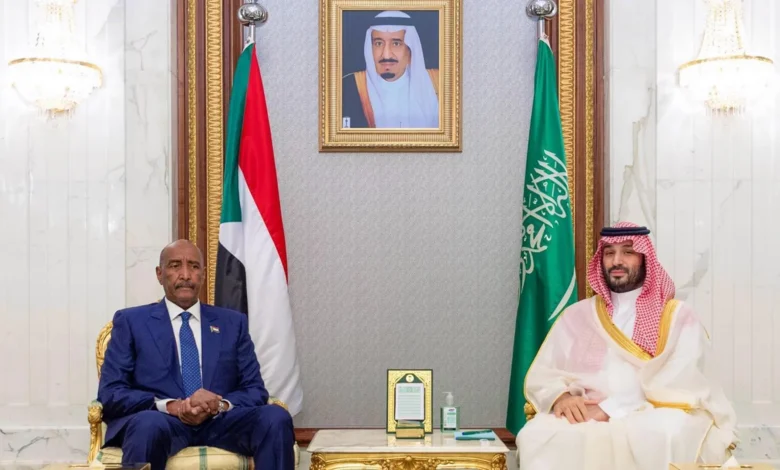
Questions are mounting over Saudi Arabia’s role in Sudan’s war as fighting continues, the humanitarian catastrophe deepens and reports emerge of arms arrangements and military cooperation involving the Sudanese Armed Forces. While Riyadh publicly affirms its support for Sudan’s unity and a political resolution to the crisis, critics argue that any military assistance strengthening the army’s capabilities during ongoing hostilities could help prolong the fighting, even if that is not the supporting state’s declared objective.
The issue is particularly sensitive because Saudi Arabia participates in mediation efforts aimed at ending the war. This makes it essential to clarify the nature of its military relationships with the Sudanese parties and to distinguish political support from security cooperation and direct arms deals. The war that erupted in April 2023 is no longer a limited confrontation between two armed forces. It has become a regional crisis in which external interests intersect with domestic military calculations, and its continuation now depends heavily on the parties’ ability to obtain the resources, equipment and funding needed to keep fighting. Any external role capable of affecting the balance of power on the ground therefore warrants scrutiny, particularly if it is not accompanied by tangible steps to press for a ceasefire.
Concerns about prolonging the war stem from the fact that supplying weapons, equipment and funding can alter the warring parties’ assessments of their prospects for victory. When one side believes it can replenish its losses and secure fresh supplies, it may become less willing to make political concessions and more determined to continue military operations until it achieves its objectives. Conversely, strengthening one side may push its opponent to seek additional sources of weapons and external support, turning the war into a competition for supplies that diplomatic initiatives alone may struggle to stop. If military assistance linked to Saudi Arabia were shown to be strengthening combat operations without clear conditions for de-escalation, this would raise serious questions about the consistency of that policy with public calls for peace. However, establishing direct Saudi military support requires reliable information about the supplier, the equipment involved, its delivery routes and its recipient. Not every political relationship or commercial transaction can be treated as conclusive evidence of direct military involvement. Political responsibility for the effects of external support must rest on verifiable facts rather than inference alone.
Against this backdrop, reports of a potential $1.5 billion Pakistani arms deal for Sudan have attracted considerable attention, with some analyses suggesting that Saudi Arabia played an intermediary role. These reports open a broader debate about military cooperation among states with ties to Sudan and its impact on the prospects for a political settlement. Brokering an arms deal, if the details are confirmed, does not necessarily prove that the intermediary state supplied the weapons itself. Nor does it automatically establish that the purpose was to prolong the war. Timing nevertheless matters: any major deal strengthening military capabilities during an active conflict can influence the parties’ assessments of the balance of power and their chances of securing victory. Greater transparency about these arrangements is therefore needed, alongside clarification of whether they address specific defensive requirements or could contribute to an expansion of military operations. Any military supplies should also be subject to the relevant legal controls, taking into account the risks that weapons could be used to escalate the conflict or commit violations against civilians.
The political dimensions of Riyadh’s relationship with the Sudanese army cannot be overlooked. Maintaining close ties with Sudan’s official institutions may give Saudi Arabia influence over any future settlement and enable it to protect its security and economic interests in the Red Sea. However, stronger relations with the military leadership should not undermine the prospects for a transition to civilian rule or give any armed actor unrestricted power to determine the country’s future. Sudan needs a settlement that addresses the roots of the crisis, rebuilds state institutions and ensures civilian participation in shaping the next phase, rather than an agreement confined to redistributing influence among armed parties. If Riyadh views the army as a state institution that must be preserved, support for that institution should also be tied to respect for the law, the protection of civilians and serious engagement in a political process that ends the war. If, instead, external assistance encourages the belief that outright military victory is possible, prospects for a settlement may recede and humanitarian suffering may continue, even while supporting states publicly endorse peace.
The continuation of the war cannot, however, be explained by Saudi Arabia’s role alone. Sudan’s conflict is driven by multiple domestic and regional factors, including struggles over power and resources, rivalries among military leaders, interventions by various foreign actors, and financing and supply networks that sustain the fighting. Holding one state entirely responsible for prolonging the war would therefore fail to reflect the complexity of the situation. Ignoring the impact of potential external support would be equally mistaken. Independent investigations are needed into the routes through which weapons, money and supplies reach both sides, the actors strengthening their capabilities, and those actors’ compliance with international rules. Diplomatic efforts should also be accompanied by practical measures to curb arms flows and facilitate humanitarian access. Negotiations alone may not be sufficient while the parties remain able to replenish their losses and continue military operations. Given its regional relationships and its ability to communicate with the parties to the conflict, Saudi Arabia could play a more effective role by using its influence to support a comprehensive ceasefire and linking any future cooperation to progress towards a settlement.
The human cost of the war remains the most important measure by which to judge the policies of all actors, whether domestic or foreign. Millions of Sudanese face displacement, hunger and the collapse of essential services, while infrastructure and productive sectors are destroyed and the prospects for economic recovery diminish over time. Under such circumstances, decisions about arms supplies cannot be separated from their potential consequences for civilian lives. Nor can the balance of power be treated as a purely military matter detached from its social and humanitarian implications. If foreign supplies are shown to be escalating or prolonging the fighting, those responsible should face clear demands for accountability and explanation, and should review their policies in line with their legal and humanitarian obligations. If allegations lack sufficient evidence, independent verification remains essential to establish responsibility accurately and prevent the issue from being exploited in political campaigns that do not serve civilians.
Ultimately, whether Saudi Arabia is helping to prolong Sudan’s war by supplying the army cannot be determined simply through the circulation of allegations. It requires documented evidence explaining the nature of the support, the channels through which it moves and its impact on military operations. Nevertheless, regional responsibility requires Riyadh, and all states connected to the conflict, to provide clear assurances that their relationships with the Sudanese parties do not become a means of sustaining the war or obstructing a settlement. A state with political and economic influence can use it to move the parties towards peace, just as its policies can directly or indirectly alter their calculations. The real test of any Saudi role lies in its results on the ground: does it help secure a ceasefire, reduce arms flows and open humanitarian corridors, or leave the parties locked in an open-ended confrontation, each hoping to improve its military position? Ending the war requires Sudanese political will and responsible regional support. It also demands that civilian interests and Sudan’s sovereignty take precedence over geopolitical calculations. Continued fighting will not guarantee stability for any country in the region. Instead, it threatens to spread instability while leaving the Sudanese people to bear the heaviest cost.